
Japandi
Dove la serenità giapponese incontra il calore scandinavo — lo stile Japandi è l'arte di possedere meno, vivere meglio e arredare con intenzione.
Lo stile Japandi fonde il wabi-sabi giapponese con l'hygge scandinavo in un design d'interni costruito su materiali naturali, neutri caldi e semplicità intenzionale. Visualizzalo nel tuo spazio con Homeify.
Cos'è lo Stile Japandi?
Lo stile Japandi è il design d'interni che risponde a una domanda che pochi si pongono: cosa succede quando la disciplina giapponese incontra il comfort scandinavo? Il risultato è una stanza che appare calma e profondamente vivibile — essenziale abbastanza da lasciarti pensare, calda abbastanza da farti restare. Si fonda su due filosofie: il wabi-sabi e l'hygge. Insieme creano spazi dove una ciotola in ceramica artigianale con uno smalto irregolare sta accanto a un morbido plaid in lana su una panca in rovere — e tutto sembra perfettamente al suo posto.
Ciò che rende lo stile Japandi più di una tendenza passeggera è il suo rifiuto di scegliere tra bellezza e funzione. Ogni oggetto guadagna il suo posto attraverso utilità o significato — mai per abitudine o impulso. La palette cromatica si ispira alla natura: sabbia calda, crema morbido, salvia attenuato e noce profondo. I materiali sono sempre naturali, sempre tattili — legno che mostra la sua venatura, lino che si piega onestamente, pietra che mantiene il fresco. Nel 2026, l'arredamento Japandi evolve verso toni più scuri e avvolgenti: rovere affumicato, noce espresso e antracite profondo stanno sostituendo la palette più chiara, creando quello che i designer chiamano Dark Japandi — interni cocoon che sembrano un rifugio protettivo.

Palette Colori Japandi
I colori Japandi seguono la regola 60-30-10: neutri caldi come base, toni medi per profondità e accenti scuri con parsimonia. Ogni tonalità viene dalla natura — pensa a suoli forestali, ciottoli di fiume e argilla essiccata.
Sabbia Calda
Pareti di base (60% della palette) — caldo e avvolgente, crea la base serena dell'intera stanza
Lino Morbido
Tessuti e soffitti — un bianco avorio luminoso che apre lo spazio senza la freddezza del bianco puro
Antracite
Dettagli d'accento (10% della palette) — cornici, maniglie e tocchi scuri che ancorano i toni più morbidi
Verde Salvia
Connessione con la natura — piante, smalti ceramici e tocchi organici che legano interno ed esterno
Noce
Mobili protagonisti — ricco e profondamente caldo, il legno iconico Japandi che si scurisce con il tempo
Bianco Crema
Luce e finiture — riflette la luce naturale delicatamente, creando uno sfondo luminoso per i pezzi in legno scuro
Galleria d'Ispirazione Japandi
Ispirazione stanza per stanza per visualizzare lo stile Japandi nella tua casa — dal soggiorno sereno alla cucina essenziale.

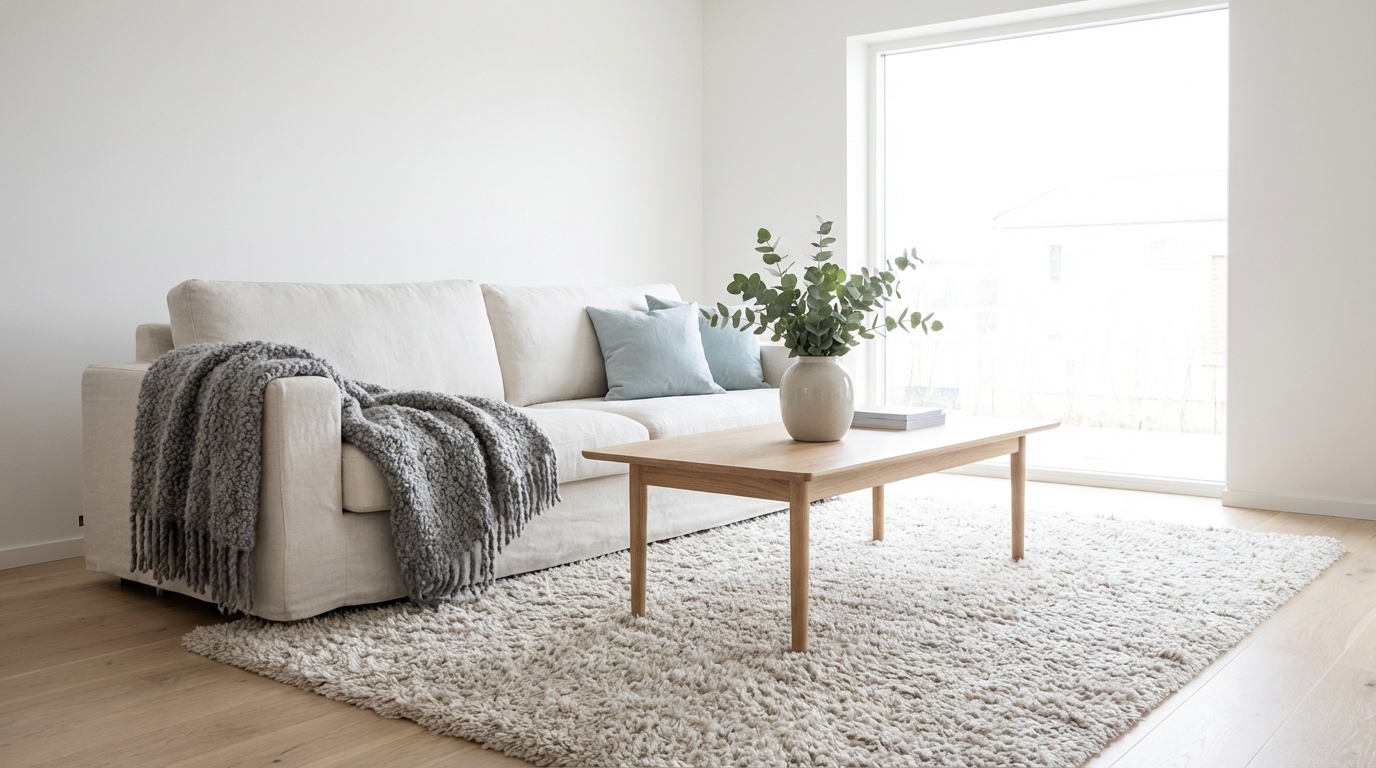
Salotto con linee pulite e noce caldo

Letto a piattaforma con ceramiche wabi-sabi

Cucina in rovere opaco con stoviglie artigianali

Ceramiche wabi-sabi su consolle in legno naturale

Lavabo in pietra e mobile in teak

Angolo lettura con cuscini zabuton
Consigli di Design Japandi
Segui la Regola del Colore 60-30-10
L'armonia Japandi nasce dalla proporzione, non dal caso. Copri il 60% delle superfici con un neutro caldo di base (sabbia, crema o grigio perla), il 30% con toni medi (tortora, greige o terra di Siena tenue), e riserva solo il 10% per accenti profondi (nero inchiostro, noce o verde muschio). Questo impedisce alla palette di risultare piatta o caotica — testa ogni colore in situ, perché un beige caldo può sembrare freddo in una stanza esposta a nord.
Abbraccia l'Imperfezione Wabi-Sabi
L'anima del Japandi sta nell'imperfezione. Scegli ceramiche fatte a mano con smalti irregolari al posto di set perfetti da fabbrica. Prediligi mobili dove la venatura del legno è visibile e le giunture sono oneste. Nella tradizione giapponese, il kintsugi — l'arte di riparare la ceramica rotta con oro — celebra il danno come parte della storia di un oggetto. Porta questa filosofia a casa tua: una ciotola in gres scheggiata ha più carattere di una impeccabile.
Solo Materiali Naturali
Lo stile Japandi esclude categoricamente plastica, cromo lucido, vetro colorato e sintetici visibili. Costruisci la tua stanza con legno (rovere chiaro o noce scuro), lino lavato, pietra grezza, ceramica artigianale, bambù, juta e lana. Questi materiali invecchiano con grazia — un tavolo in noce che si scurisce nel tempo, il lino che si ammorbidisce ad ogni lavaggio — raccontando una storia che le superfici sintetiche non potranno mai raccontare.
Meno Mobili, Più Spazio
Nel design giapponese, lo spazio vuoto — chiamato ma — è una presenza attiva che dà agli oggetti respiro e all'occhio riposo. Prima di aggiungere un pezzo, chiediti: questo semplifica o complica? Una sedia scultorea dice più di tre generiche. Mantieni le superfici per lo più libere e i contenitori nascosti. La bellezza del Japandi sta nello spazio tra gli oggetti.
Illuminazione Calda e Stratificata
LED freddi a soffitto distruggono istantaneamente l'atmosfera Japandi. Sostituisci i lampadari con fonti calde stratificate: lanterne in carta washi per una luce diffusa, lampade da terra con paralume in lino per luce indiretta, e candele per il calore serale. Punta a LED caldi a 2700K — il colore del sole tardo pomeridiano. Usa dimmer ovunque possibile, e lascia che più punti luce morbidi sostituiscano un'unica fonte intensa.
Porta la Natura in Casa con Intenzione
Le piante nello stile Japandi non sono un ripensamento decorativo — sono elementi di design intenzionali. Un singolo bonsai su una mensola, rami secchi disposti in un vaso di ceramica seguendo i principi dell'ikebana, o una felce in vaso in un angolo aggiungono vita senza disordine. Scegli una forte presenza botanica per stanza piuttosto che disperdere piccole piante ovunque. L'approccio giapponese: meno piante, più significato.
Soggiorno Japandi
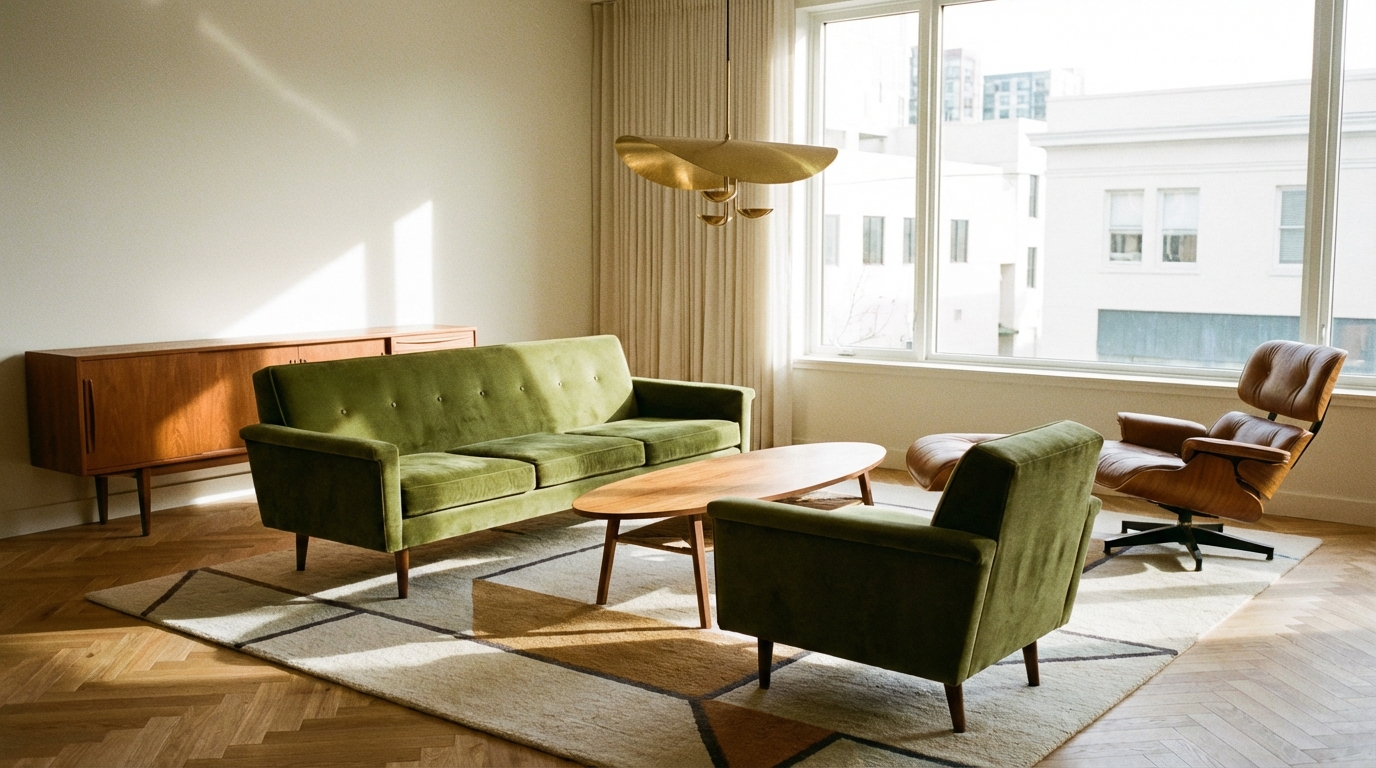
Il soggiorno Japandi è una lezione magistrale di comfort contenuto. Parti da un divano basso in lino lavato naturale — gambe in legno a vista, linee pulite, nessuna curva superflua. Abbinalo a un tavolino rotondo in noce che ancora lo spazio senza dominarlo. Mantieni il pavimento visibile: un singolo tappeto in juta o lana intrecciata definisce l'area seduta senza coprire la stanza da parete a parete. Aggiungi uno o due cuscini zabuton per un angolo lettura che richiama l'informalità giapponese.
L'illuminazione fa la differenza. Dimentica il lampadario centrale — stratifica più fonti di luce calda: una sospensione in carta washi sopra l'area seduta, una lampada da terra con paralume in lino accanto al divano, e candele raggruppate sul tavolino per l'hygge serale. L'arte a parete dovrebbe essere singola e forte — un grande quadro d'ispirazione naturale in una cornice semplice, o una singola composizione ikebana su una mensola flottante. Il soggiorno Japandi riesce quando il tuo sguardo può attraversare l'intera stanza senza inciampare nel disordine, e ogni superficie ti invita a sederti, riposare o semplicemente respirare.

Camera da Letto Japandi
La camera da letto Japandi è il tuo rifugio — spogliata di tutto ciò che non aiuta il riposo. Il pezzo centrale è un letto a piattaforma basso in noce massello o rovere, vestito con biancheria in lino lavato color crema, grigio morbido o sabbia calda. Elimina del tutto la testiera, oppure scegline una semplice in legno massello — niente capitonné, niente imbottiture. I comodini dovrebbero essere asimmetrici: uno alto, uno basso, riflettendo il principio wabi-sabi che la simmetria perfetta è priva di vita.
Sulle superfici non dovrebbe esserci nulla che non serva al sonno o alla pace: una lampada dai toni caldi, un libro, forse un piccolo vaso in ceramica. Dipingi le pareti in un tono terroso caldo — estendendo anche al soffitto si crea un effetto cocoon che approfondisce la calma. Scegli tende a tutta altezza in lino naturale per filtrare dolcemente la luce. Un plaid pesante in lana ai piedi del letto e un tappeto intrecciato accanto aggiungono calore sotto i piedi nelle mattine fredde. La regola è assoluta: se un oggetto non ti aiuta a riposare, non appartiene a questa stanza.

Cucina Japandi
La cucina Japandi è il luogo dove l'artigianalità incontra il rituale quotidiano. Scegli mobili opachi in rovere chiaro o noce caldo con ante push-to-open — nessuna maniglia visibile ad interrompere le linee pulite. Sostituisci i pensili superiori con mensole flottanti aperte su almeno una parete, esponendo un set curato di ciotole in ceramica artigianale, tazze in gres e uno o due barattoli in vetro. Mantieni i piani di lavoro quasi interamente liberi: un tagliere in legno, un portautensili in ceramica e una singola pianta aromatica in vaso sono tutto ciò che serve.
Per le superfici, piani in pietra naturale o cemento opaco completano il legno senza competere. Scegli nero opaco o ottone spazzolato per rubinetteria e accessori — mai cromo lucido. Una sospensione singola in carta washi o ottone invecchiato centra lo spazio di lavoro con luce calda e diffusa. La cucina Japandi funziona perché ogni oggetto visibile è uno che usi davvero: le ciotole in ceramica sono quelle in cui mangi, i taglieri in legno sono quelli su cui affetti. Non c'è decorazione per esposizione — solo strumenti onesti, disposti con cura.

Domande Frequenti
Lo stile Japandi è un design d'interni che fonde il wabi-sabi giapponese e l'hygge scandinavo in un'estetica coerente. Privilegia materiali naturali (noce, lino, pietra), palette neutre calde e semplicità intenzionale — ogni oggetto guadagna il suo posto attraverso funzione o significato.
Parti dalla regola del colore 60-30-10: 60% neutri caldi sulle pareti, 30% toni medi nei tessuti, 10% accenti scuri nei mobili. Scegli solo materiali naturali — niente plastica né cromo. Mantieni le superfici per lo più libere e stratifica l'illuminazione calda a 2700K al posto di LED freddi a soffitto.
La palette Japandi si ispira alla natura: sabbia calda, crema morbido, salvia tenue e noce profondo. Nel 2026, la tendenza si sposta verso toni più scuri — rovere affumicato, noce espresso e antracite — creando quello che i designer chiamano Dark Japandi.
Assolutamente — lo stile Japandi è più popolare che mai nel 2026, evolvendosi verso palette più scure e avvolgenti note come Dark Japandi. Rovere affumicato, noce espresso e antracite profondo stanno sostituendo i neutri più chiari. Con Homeify, puoi visualizzare sia il Japandi classico che il Dark Japandi nelle tue stanze in meno di 30 secondi.
Questo articolo ti è stato utile?
Scarica
Trasforma qualsiasi stanza con l'intelligenza artificiale — scarica Homeify e inizia a ridisegnare la tua casa gratis.