Home Staging Tips: How to Stage a House for Sale in 2026
21 proven home staging tips to sell faster — learn how to stage a house for sale inexpensively, room by room, with budgets and AI visualization.
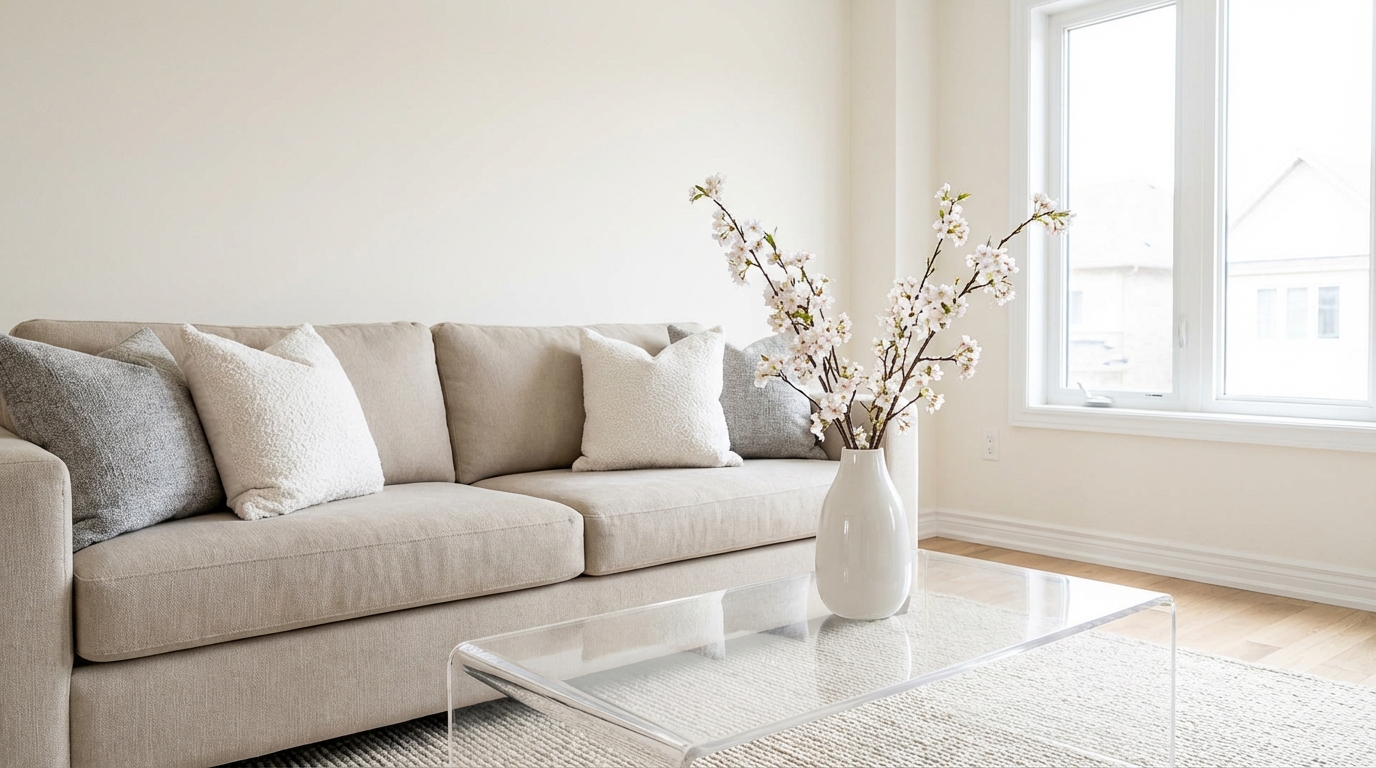
The best home staging tips come down to three moves: declutter every surface, repaint bold walls in warm neutrals, and maximize natural light. Staged homes sell 33-50% faster and for up to 10% more. Preview how to stage your house for sale with Homeify before spending a cent.
21 Home Staging Tips: How to Stage a House for Sale
Home staging is the practice of preparing a property for sale by highlighting its best features and helping buyers picture themselves living there. It is not decorating — it is strategic depersonalization. You remove what makes the home yours, and you add what makes it everyone’s.
The data backs it up: the National Association of Realtors reports that 81% of buyer’s agents say staging helps clients visualize a property as their future home. The Real Estate Staging Association found that staged homes spend 33% to 50% less time on the market. And according to a 2023 NAR survey, 23% of buyer’s agents reported that staging increased the offered price by 1% to 5% compared to similar unstaged homes.
The good news: you can stage a house for sale inexpensively without hiring a professional or spending thousands. Most of the tips below cost nothing — just time and effort. For the changes that involve color, furniture, or layout decisions, AI visualization tools like Homeify let you test ideas on a photo of your actual room before committing.
This guide covers 21 home staging tips organized by priority — start with the high-impact basics, then work through room-by-room details including how to stage a living room, bathroom, and home office for photos and open houses.
Tips for Staging Your Home: The High-Impact Essentials
These are the non-negotiables. Skip any of these and buyers will notice. Whether you are learning how to stage a house for the first time or refreshing a property you have staged before, these five tips deliver the biggest return.
1. Declutter Every Surface
The single most important staging step costs nothing. Remove at least 50% of visible objects from every counter, shelf, and table. Pack away personal collections, excess books, small appliances you rarely use, and anything that makes a surface look crowded.
Closets count too — buyers will open them. Aim for 20-30% open space in each closet to create the impression of generous storage. If you need to, rent a temporary storage unit or use a relative’s garage. It is worth it.

2. Deep Clean Everything
From baseboards to grout lines, every surface must be spotless. Buyers notice what you have stopped seeing: soap scum on shower doors, grease splatter behind the stove, dust on ceiling fan blades.
- Kitchen and bathrooms get the most scrutiny — scrub every tile, polish every fixture
- Windows inside and out — clean glass lets in more natural light
- Floors — refinish hardwood if scratched, steam clean carpets, replace damaged tiles
- Walls — wipe down scuff marks, patch nail holes, touch up paint chips
Consider hiring professional cleaners for a one-time deep clean. Budget: $200-$400 for a full house. It is the highest return-on-investment staging expense.
3. Depersonalize the Space
Family photos, children’s artwork on the fridge, religious items, political memorabilia — all of it needs to go. Buyers must imagine their own life in the home, and personal items anchor the space to your identity.
Pack away all family photographs and replace them with neutral artwork or mirrors. Remove name plaques, monogrammed towels, and any decor that reflects a specific lifestyle. The goal is a clean slate that any buyer can project onto.
4. Make Every Small Repair
Loose door handles, dripping faucets, squeaky hinges, cracked switch plates, running toilets — these tiny issues signal neglect. A buyer who spots three small problems will wonder what bigger problems are hiding.
Walk through every room with a notepad and fix everything:
- Tighten loose knobs, handles, and towel bars
- Replace burned-out bulbs, cracked outlets, and chipped tiles
- Fix leaky faucets, running toilets, and sticking doors
- Patch holes and cracks in walls, then touch up paint
Budget for all minor repairs: typically under $100 in parts.
5. Paint Bold Walls in Warm Neutrals
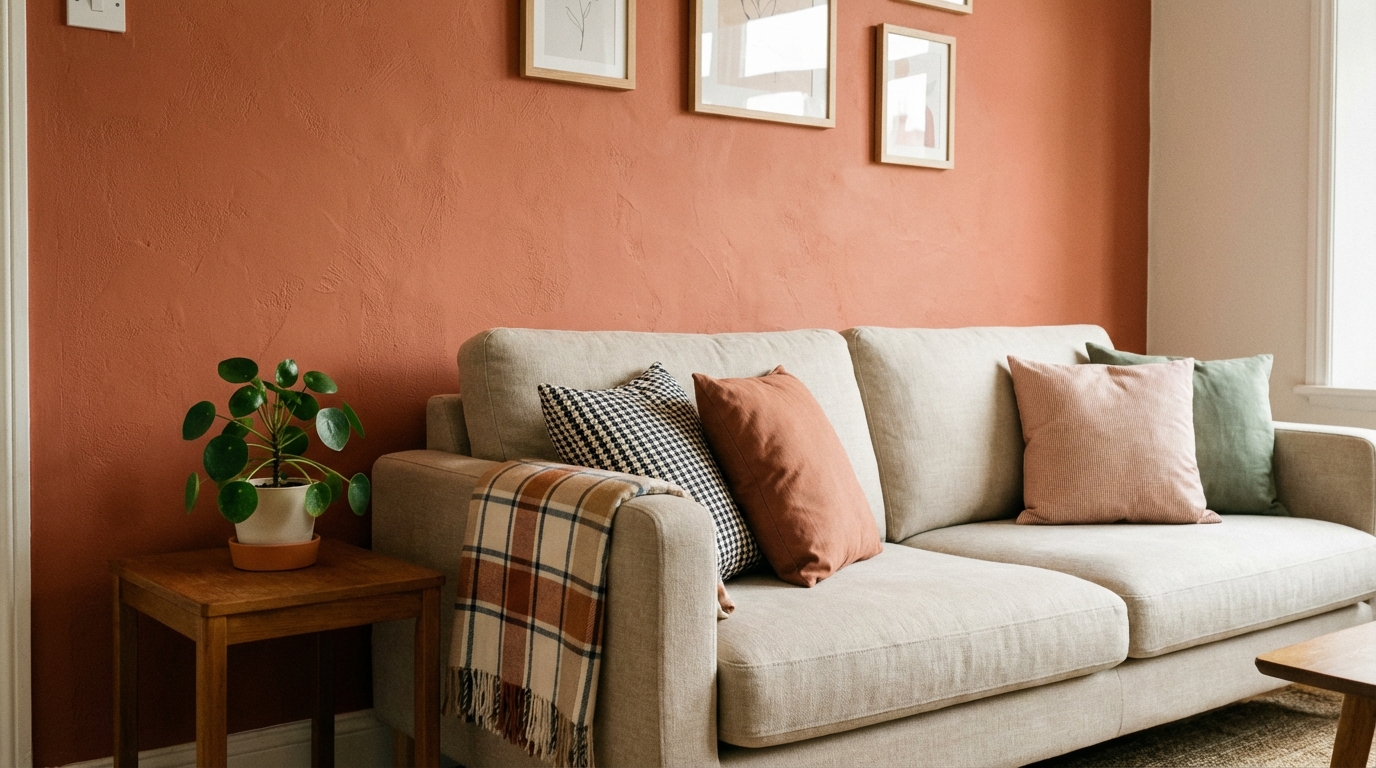
That lime-green accent wall or deep purple bedroom may express your personality, but it narrows your buyer pool. Repaint any bold or polarizing color in a warm neutral — think greige (grey-beige), soft taupe, warm white, or light sand.
Avoid pure white — it feels stark and cold under artificial light. The sweet spot is a neutral with just enough warmth to feel inviting. Benjamin Moore’s Revere Pewter, Sherwin-Williams Accessible Beige, or Farrow & Ball Skimming Stone are reliable choices.
One coat of neutral paint in the right rooms (living room, master bedroom, kitchen) is the single best return on any staging investment. Cost: $30-$50 per room for DIY paint.
Want to test the color before committing? Photograph the room and try different palettes with Homeify — you can compare warm beige, greige, and white side by side in seconds.

Furniture and Layout
How you arrange furniture matters as much as what furniture you have.
6. Pull Furniture Away From the Walls
The biggest layout mistake sellers make: pushing everything against the walls. This makes rooms feel like waiting rooms, not homes. Instead, create a floating conversation area — pull the sofa 40-50 cm from the wall, angle armchairs toward each other, and define the seating zone with a rug.
In small rooms, this counterintuitively makes the space feel larger by creating defined pathways and a sense of intentional design.
7. Remove Excess Furniture
If you have to squeeze past a piece of furniture, it needs to go. Each room should feel spacious and easy to move through. A good rule: remove one-third of the furniture from every room.
That extra armchair, the oversized entertainment center, the second bookshelf — put them in storage. Buyers are buying square footage, and they need to see it.
8. Give Every Room a Purpose
A spare bedroom used as a dumping ground is wasted potential. Every room should instantly communicate what it is: a guest bedroom, a home office, a reading nook. Place a simple bed and side table in that junk room, or set up a desk and chair to show it as a workspace.
Even awkward spaces — under the stairs, a deep alcove, a half-landing — should be staged with intention. A small desk and a framed print turn dead space into a “charming home office nook.”
Lighting and Atmosphere
Lighting sells houses. Dark rooms feel small, dated, and uninviting.
9. Maximize Natural Light
Open every blind, pull back every curtain, and clean every window — inside and out. Natural light makes rooms feel larger, cleaner, and more welcoming.
- Remove heavy drapes and replace with sheer panels if needed
- Trim hedges blocking windows on the exterior
- Place mirrors opposite windows to bounce light deeper into the room
- Keep windows clean — dirty glass can reduce light transmission by up to 40%
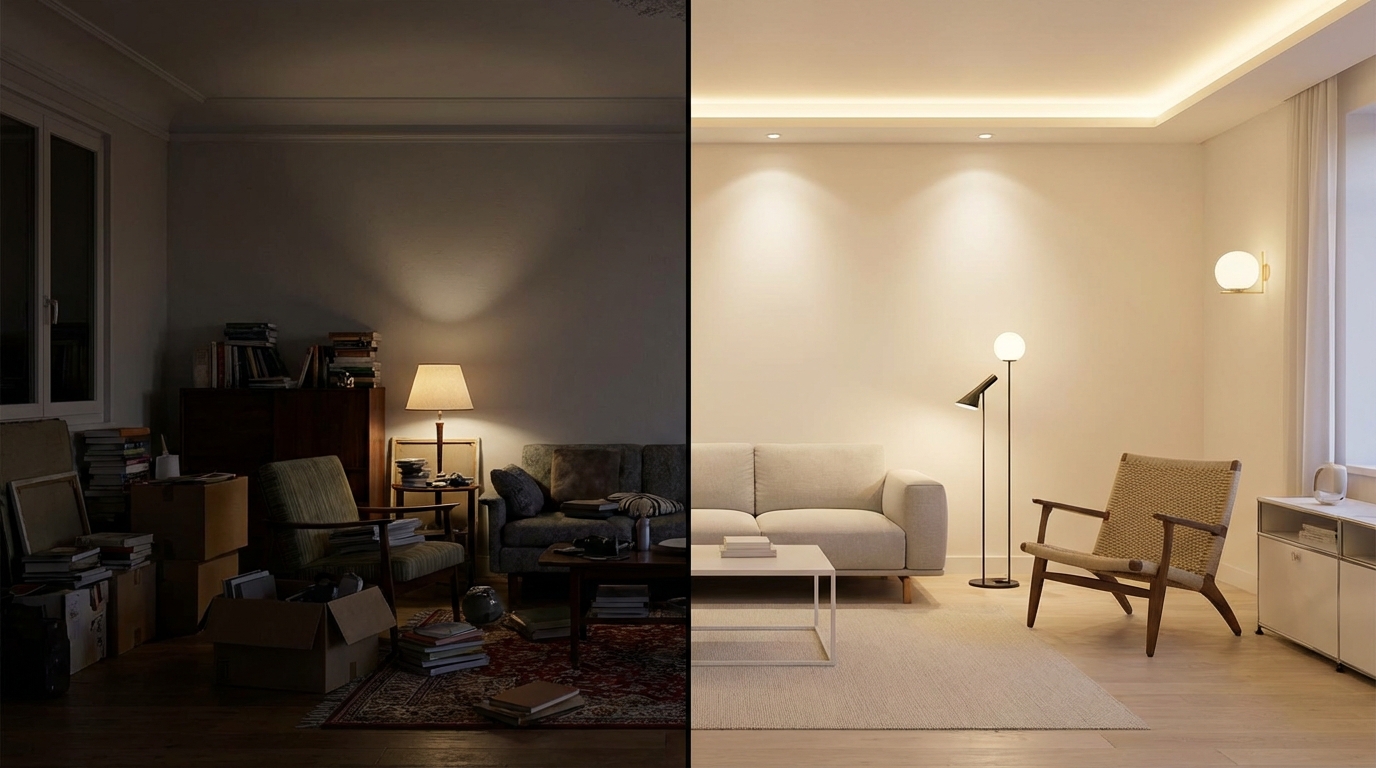
10. Layer Three Light Sources
For rooms without abundant natural light, or for evening showings, layer lighting:
- Ambient — overhead pendant or flush mount at 2700-3000K for warm white
- Task — table lamps on side tables, a reading lamp by an armchair
- Accent — LED strips behind shelving, a picture light above artwork
Replace any outdated fixtures — a modern pendant light in brushed brass or matte black instantly updates a room. Check that every single bulb works and matches in color temperature.
11. Create a Welcoming Scent
Bad smells kill deals. Pet odors, cooking smells, damp, and cigarette smoke are immediate deal-breakers for most buyers.
- Deep clean carpets, upholstery, and curtains to remove embedded odors
- Open windows for at least an hour before showings
- Use subtle scents — fresh flowers, a light linen candle, or a bowl of lemons in the kitchen
- Avoid strong air fresheners — they make buyers wonder what you are masking
- Pet owners: steam clean all rugs and upholstery, hide pet bowls, toys, and litter boxes before every open house or showing
Room-by-Room Staging Tips for Selling Your Home
Focus your time and budget on the three rooms buyers care about most: living room, kitchen, and master bedroom. The following tips for staging a home to sell cover each space with specific, actionable advice.
12. Home Staging Tips Living Room: Create an Inviting Conversation Area
The living room sets the tone for the entire house and is where home staging tips make the biggest visual difference. Arrange seating symmetrically around a focal point — the fireplace, a large window, or a media wall.
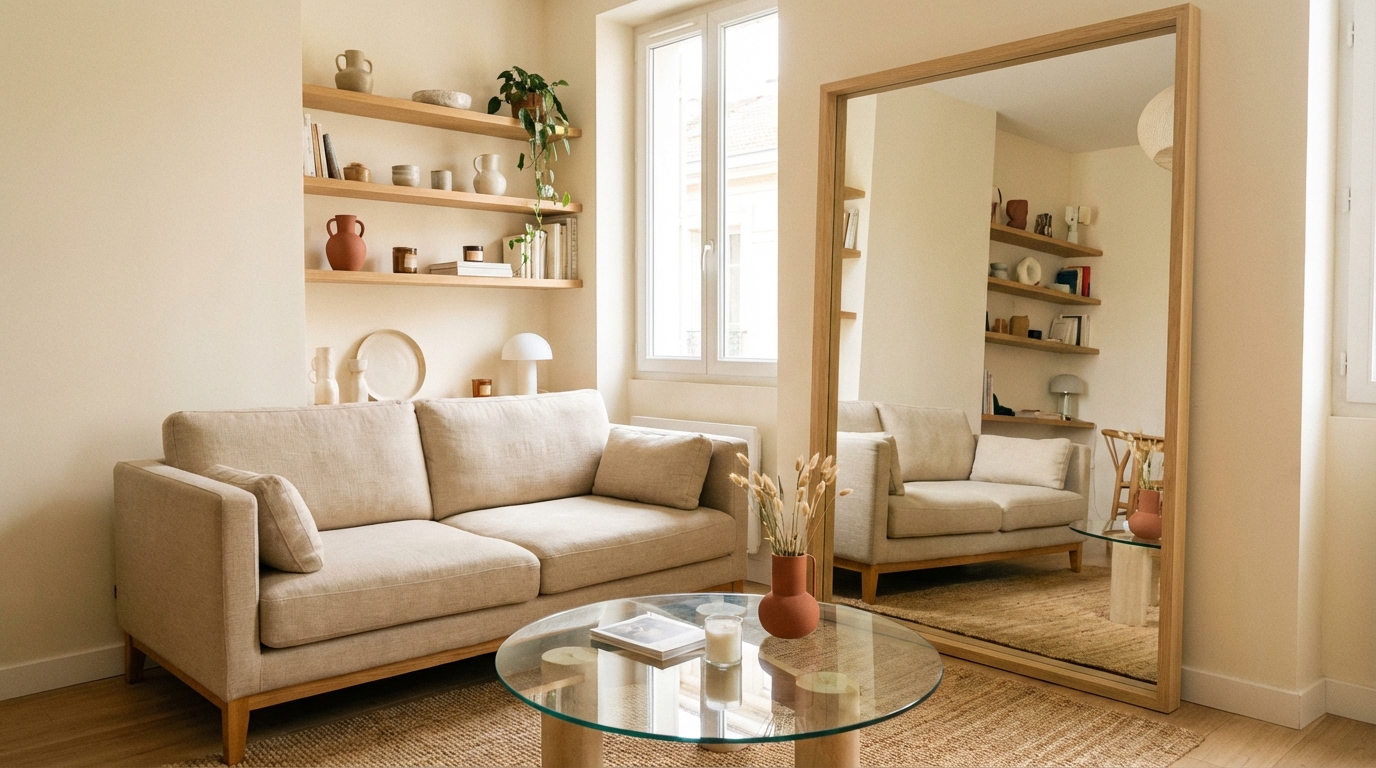
- Coffee table: clear except for one book, a small plant, and a decorative tray
- Throw pillows: 2-3 per sofa in neutral or soft accent tones — not a mountain of cushions
- Blanket: one folded throw on the arm of the sofa adds warmth
- Rug: large enough that all seating legs rest on it — at least 240 x 170 cm for a standard living room
For inspiration on neutral living room staging, see how warm tones work in a beige living room.

13. Kitchen: Clean, Clear, and Functional
Kitchens sell houses. Buyers open every drawer and cabinet, so the inside matters as much as the outside.
- Counters: remove everything except 2-3 curated items — a wooden cutting board, a fruit bowl, a potted herb
- Cabinets: organize neatly, remove mismatched containers, show 30% empty space
- Appliances: hide the toaster, the blender, and the coffee maker — they clutter the counter
- Fixtures: replace dated handles with modern brushed brass or matte black hardware — costs under $50 for an entire kitchen
If your kitchen has dark or dated cabinets, consider painting just the lower cabinets in a current neutral tone while keeping the uppers white. Photograph your kitchen and try different combinations in Homeify to find the right balance.

14. Master Bedroom: A Calm Retreat
The master bedroom should whisper relaxation. Strip it down to essentials: bed, two side tables, one dresser, and minimal decor.
- Bedding: crisp, hotel-quality linens in white or soft neutral — no patterns, no bright colors
- Pillows: 4 sleeping pillows + 2 decorative shams, neatly arranged
- Side tables: one lamp and nothing else — no alarm clocks, no phone chargers, no pill bottles
- Closet: the master closet will be inspected — organize by color, remove half the clothes, show open space
For a calming palette, consider the soft mineral tones described in our white bedroom guide.
15. How to Stage a Bathroom for an Open House
Buyers judge cleanliness through bathrooms. Knowing how to stage a bathroom for an open house comes down to one principle: every surface must be immaculate.
- Counters: clear everything — one soap dispenser, one small plant, nothing else
- Towels: hang fresh, matching white towels — rolled for display
- Shower/tub: re-caulk if discolored, replace a worn shower curtain with a crisp white one
- Mirror: clean, streak-free, with updated lighting above
A small pedestal sink can make a tiny bathroom feel instantly larger than a bulky vanity cabinet.
16. Dining Room: Set the Scene
An empty dining table looks cold. Set it with simple place settings — white plates, linen napkins, a single low centerpiece — to help buyers imagine hosting dinner parties.
Keep the arrangement simple: 4-6 place settings maximum, even if the table seats more. Too many settings make the room feel crowded.
For dining room staging ideas with mixed natural materials, consider linen runners, ceramic plates, and brass candleholders.
17. Home Office: Show Productive Potential
With remote work firmly established, a dedicated workspace is a selling point. Stage a clean desk facing or perpendicular to the window, a comfortable chair, and minimal accessories — a lamp, a small plant, one framed print.
Keep cables hidden, the desk surface clear, and the overall feel calm and functional.
Curb Appeal and Outdoor Spaces
First impressions start at the curb. Many buyers will drive by before booking a visit — if the exterior does not impress, they will not come inside.
18. Make the Front Entry Irresistible
The front door is the first thing buyers touch. Make it count:
- Power wash the driveway, walkway, and siding
- Repaint the front door in a classic color — black, navy, or a bold accent
- Add potted plants — blooming flowers flanking the door
- Place a new doormat and ensure the porch light works
- Install clear, modern house numbers
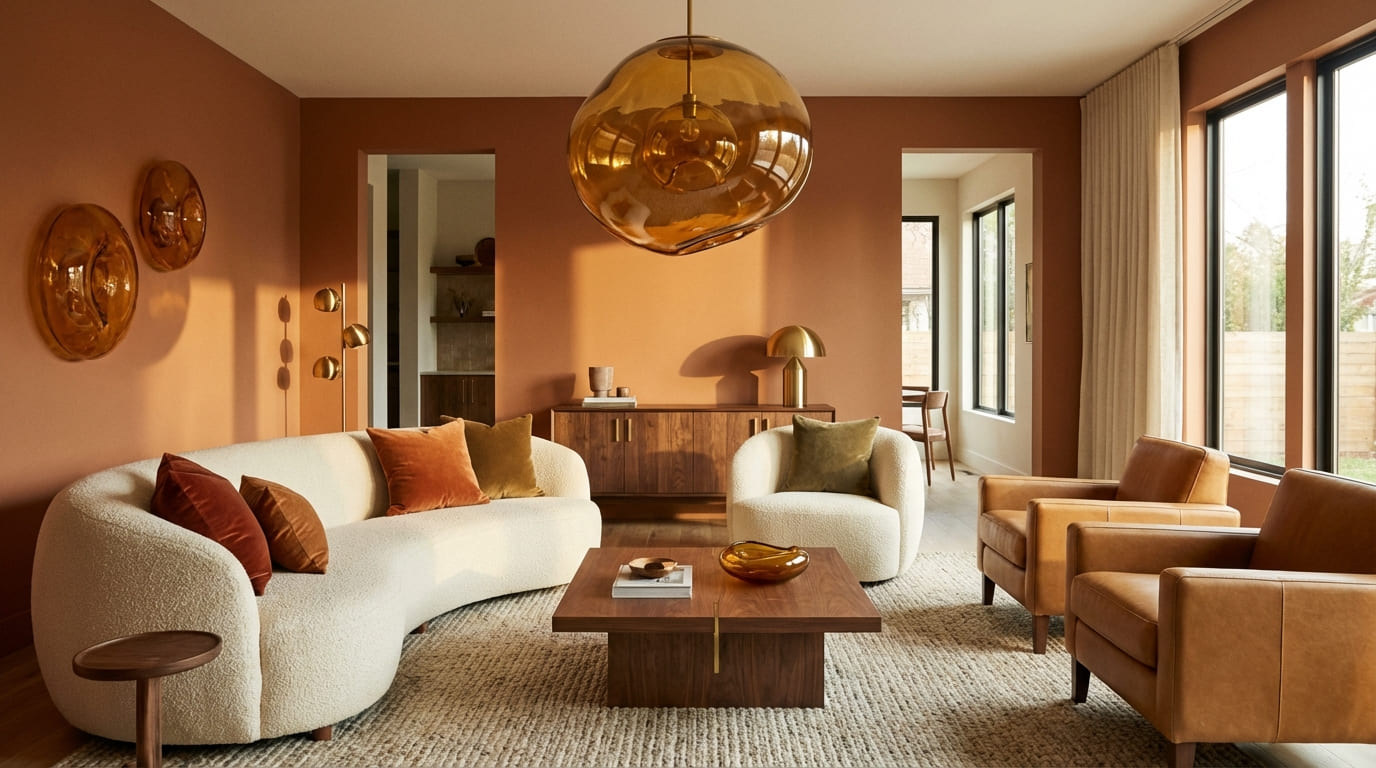
For entryway inspiration with a warm, welcoming tone, a single statement element is enough.

19. Stage Outdoor Living Areas
Even a small balcony or patio should be staged. A café table with two chairs, a small potted plant, and a folded throw create a scene that says “imagine having coffee here.”
- Mow, edge, and weed the lawn — a neglected yard signals a neglected house
- Prune hedges and trees — especially anything blocking windows or the front path
- Clean the deck or patio — power wash, replace damaged boards, add outdoor cushions
- Light the path — solar walkway lights cost under $30 and dramatically improve evening curb appeal
How to Stage a House for Sale Inexpensively With AI
20. Use AI to Test Before You Invest
Traditional professional staging costs $2,000-$10,000 — furniture rental, designer fees, and setup time. For sellers learning how to stage a house for sale inexpensively, or for vacant properties, virtual staging with AI offers a powerful alternative.
With Homeify, you can photograph any room and instantly visualize it staged with different furniture, colors, and styles — 80+ design styles available, result in under 30 seconds. This is how to stage a house for photos without moving a single piece of furniture. Use it to:
- Test paint colors before buying — compare greige, taupe, and warm white side by side
- Visualize furniture layouts — see how a floating sofa arrangement looks before moving anything
- Try different styles — would the living room sell better scandinavian or minimalist?
- Stage vacant rooms virtually — furnish empty spaces with AI-generated furniture for listing photos
21. Think Seasonally
Stage for the season you are selling in:
- Spring/Summer: fresh flowers, open windows, highlight outdoor spaces, clean the pool or fire pit
- Autumn: warm throw blankets, seasonal wreath on the door, cozy lighting
- Winter: fire in the fireplace, warm beverages available during showings, focus on cozy interior warmth
Home Staging Tips Checklist at a Glance
| Area | Top Priority | Budget | Time |
|---|---|---|---|
| Whole House | Declutter + deep clean every room | $0-$400 | 1-2 days |
| Walls | Repaint bold colors in warm neutrals | $30-$50/room | 1 day/room |
| Living Room | Float furniture, 3 light layers, neutral pillows | $50-$150 | 2-3 hours |
| Kitchen | Clear counters, update hardware, organize cabinets | $30-$50 | Half day |
| Master Bedroom | Hotel-quality bedding, clear side tables | $100-$200 | 1-2 hours |
| Bathrooms | Immaculate clean, white towels, re-caulk | $20-$50 | 2-3 hours |
| Curb Appeal | Power wash, potted plants, fresh doormat | $50-$100 | Half day |
| Virtual Staging | AI visualization of colors, layouts, and styles | Under $50 | Minutes |
The common thread across every home staging tip: show the home’s potential, not your personal life. Buyers need to see space, light, and possibility. Everything else — the family photos, the bold paint, the overstuffed closets — is noise.
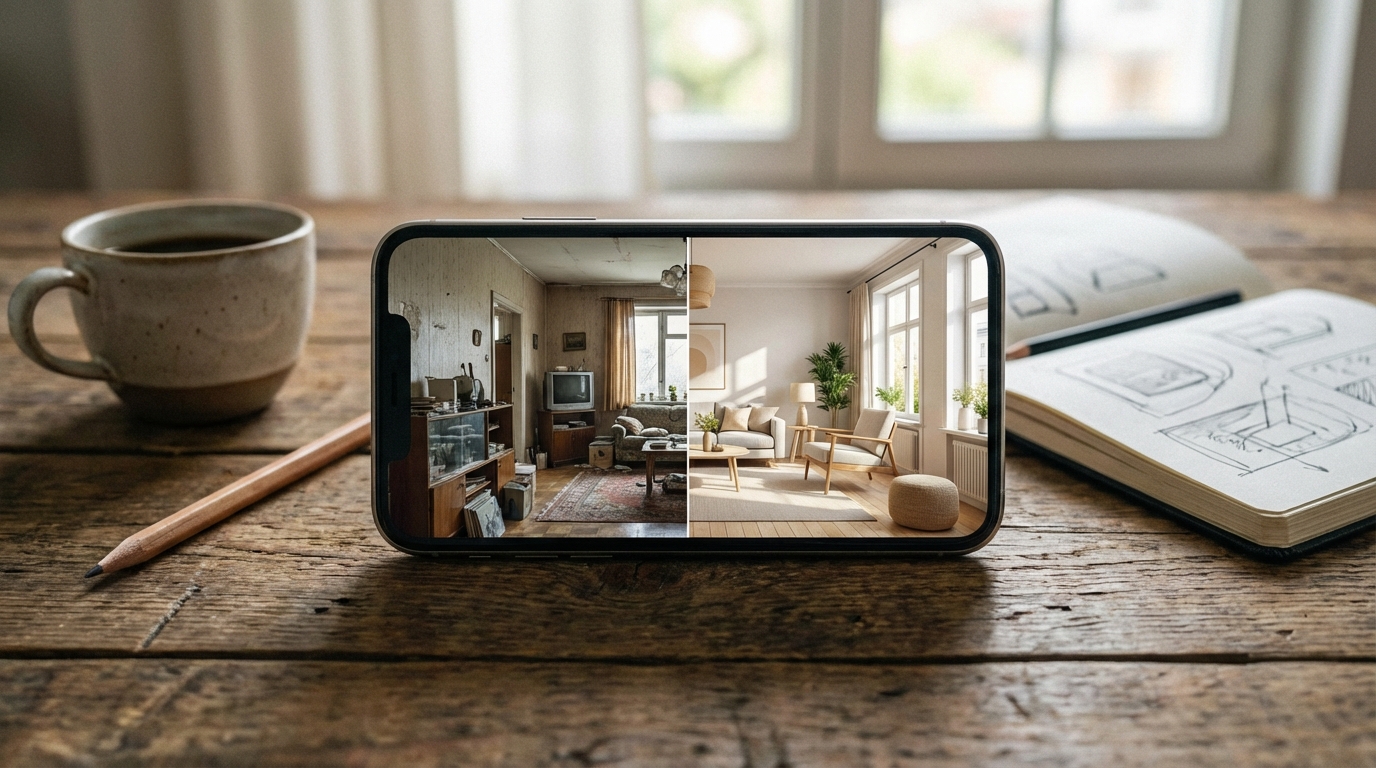
Now that you know how to stage a house for sale, put these staging home tips into practice. Photograph your rooms and test ideas instantly with Homeify — preview before and after transformations, try neutral color palettes, and experiment with furniture layouts, all from your phone.
Frequently Asked Questions
To stage a house for sale, start with the three highest-impact moves: declutter every surface, repaint bold walls in warm neutrals, and maximize natural light. Then focus on the three rooms buyers care most about — living room, kitchen, and master bedroom. Remove personal items so buyers can picture themselves in the space, and add layered lighting for warmth.
You can stage a house for sale inexpensively by focusing on free or low-cost changes: declutter ruthlessly, deep clean every surface, rearrange existing furniture into floating layouts, and repaint one or two rooms in warm neutrals ($30-$50 per room for DIY paint). Add matching white towels and hotel-quality bedding for under $200 total. Virtual staging with Homeify costs under $50 per year.
The best home staging tips for a living room: pull furniture 40-50 cm away from the walls to create a floating conversation area, remove at least 50% of decorative objects, choose neutral throw pillows, and layer three light sources — ambient, task, and accent. A single oversized plant or a vase of fresh flowers adds life without clutter.
Stage a bathroom for an open house by clearing every personal product from visible surfaces. Hang fresh matching white towels, replace any discolored caulk, add a small green plant, and ensure the mirror is streak-free with bright, updated lighting above it. Budget: $20-$50 for towels, caulk, and a plant.
With Homeify, photograph any room and instantly see it staged in 80+ design styles. Test neutral color palettes, furniture arrangements, and material changes in seconds — before buying a single can of paint. Compare before and after side by side from your phone.
Discover More
Was this article helpful?
Download Homeify Free
Transform any room with AI — download Homeify and start redesigning your home for free. The AI room design app trusted by thousands on iOS.
