
Minimalist Style
The art of owning less, choosing better, and designing rooms where every object earns its place.
Minimalist design strips rooms to essential elements — clean lines, quality materials, and intentional simplicity. See how less becomes more in your own space with Homeify.
What is Minimalist Style?
Minimalist style is interior design stripped to its essence: only what functions, only what matters, only what you would choose again today. It is not about empty rooms or deprivation — it is about intention. Every piece of furniture, every color on the wall, every object on a shelf is there because it earned its place through utility or genuine meaning. The result is a home that feels spacious even in a small apartment, calm even during a chaotic week, and effortlessly beautiful because nothing competes for attention.
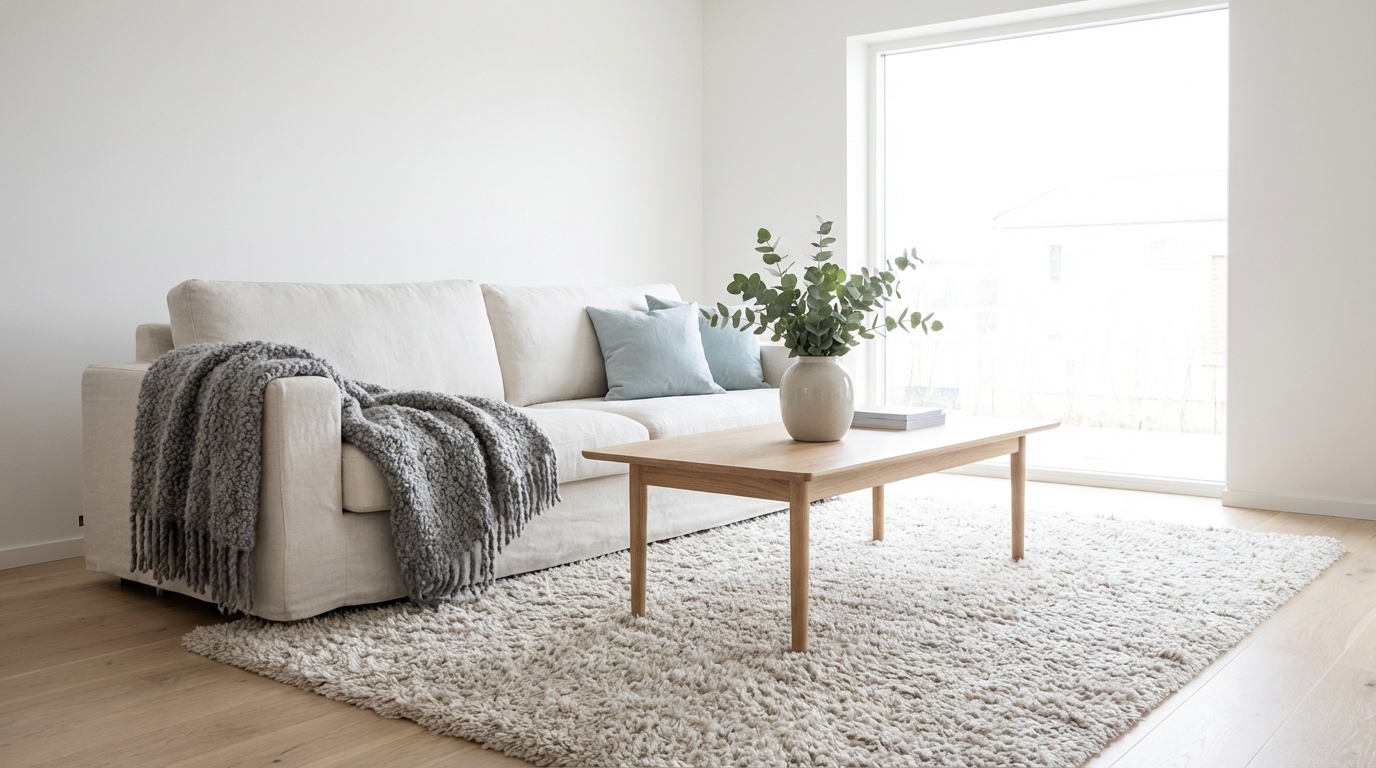
Born as an art movement in the 1960s as a reaction to excess, minimalist decor has evolved far beyond stark white boxes. In 2026, the dominant evolution is warm minimalism — rooms that keep the clean lines and restrained palette but layer in natural textures, organic curves, and imperfect handmade objects. Think bouclé wool on a linen sofa, a raw oak shelf with visible knots, a handmade ceramic vase with an uneven glaze. The philosophy remains the same — less is more — but the execution has become warmer, more personal, and more livable. Minimalism today is not about how little you own, but about how intentionally you choose what stays.

Minimalist Color Palette
Minimalist palettes follow strict restraint: a white or off-white base, warm neutral mid-tones for depth, and a single dark accent to anchor the room. Every color should feel inevitable, not chosen.
Pure White
Primary wall surface (60% of palette) — opens the room completely and reflects every source of natural light
Warm Gray
Accent surfaces and textiles — soft enough to recede, warm enough to prevent the space from feeling clinical
Off White
Ceilings and trim — a gentler alternative to pure white that adds subtle warmth without visible color
Charcoal
Grounding contrast (10% of palette) — furniture frames, light fixtures, and hardware that anchor the lighter tones
Pale Oak
Flooring and wood pieces — the warm mid-tone that connects the white walls to the dark accents naturally
Stone
Sculptural objects and stone surfaces — muted and organic, adds depth without competing with the clean palette
Minimalist Inspiration Gallery
Room-by-room inspiration to visualize minimalist decor in your own home — from serene bedrooms to streamlined kitchens.

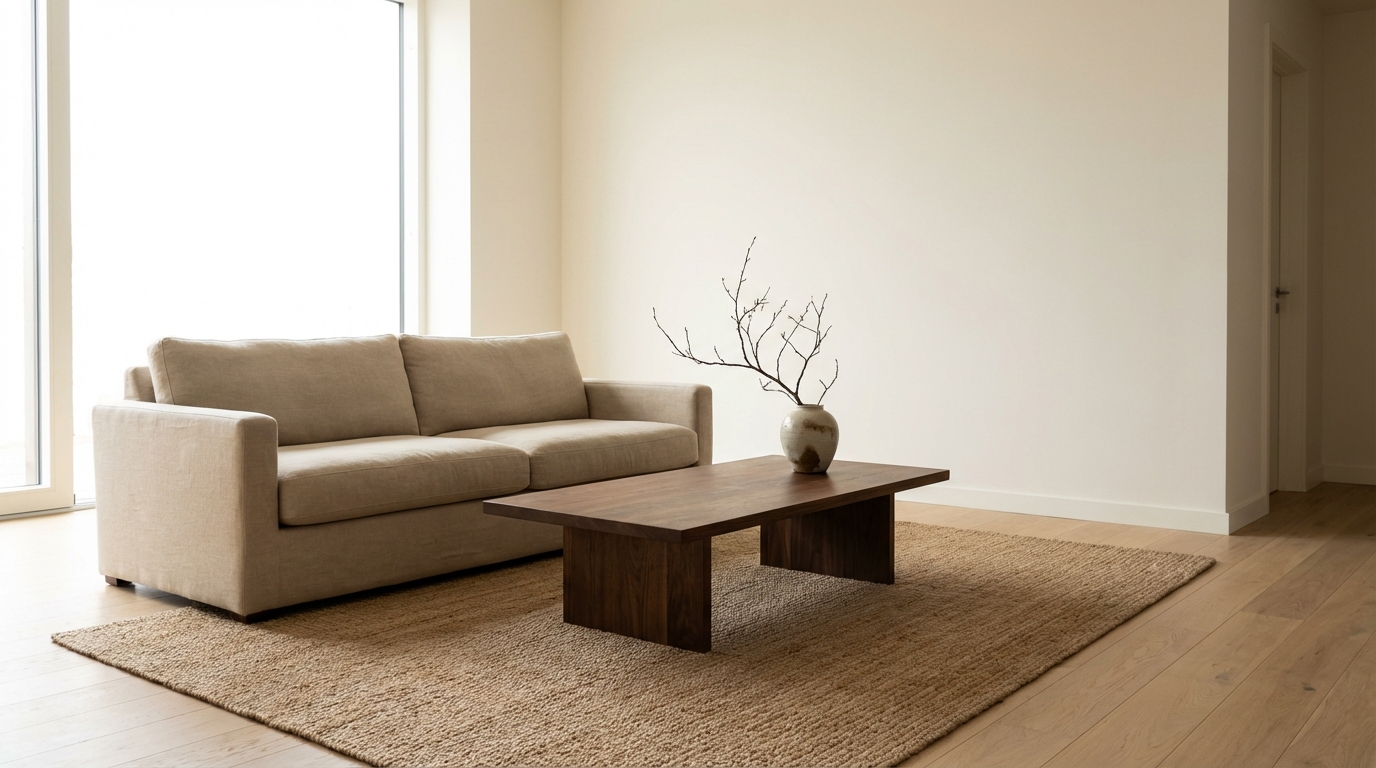
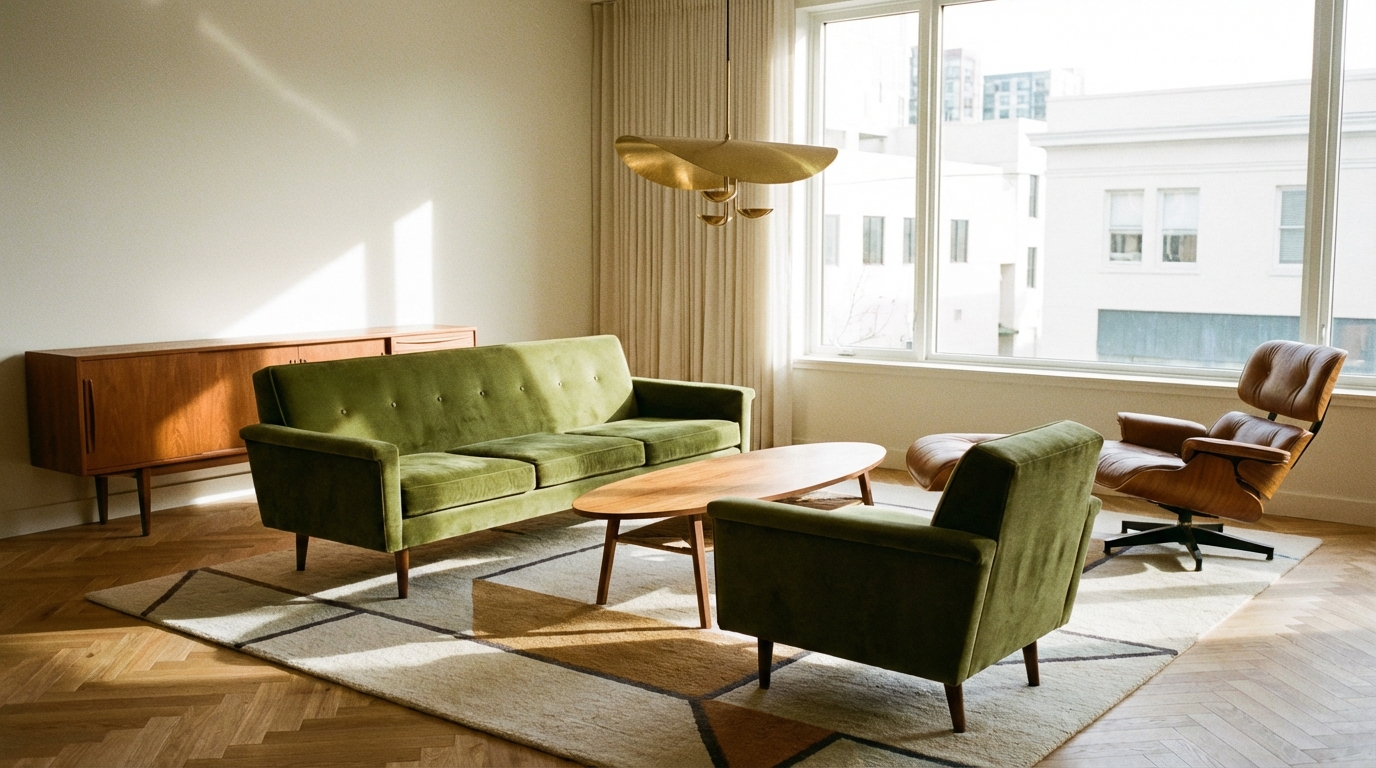
Low-profile seating with oak and open space

Platform bed with linen and soft pendant glow

Handleless cabinets and clear stone counters

Floating vanity with frameless mirror

Entryway reduced to bench, hooks, and one plant

Desk with nothing but a lamp and a notebook
Minimalist Design Tips
Start with a Ruthless Edit
Minimalism begins with subtraction, not shopping. Go room by room and remove every object that does not serve a clear function or bring genuine emotional value. Be honest — that stack of magazines, the third throw pillow, the decorative tray holding nothing — they dilute the room's calm. A good test: if you would not buy it again today, it does not earn its place.
Invest in Fewer, Better Pieces
One solid oak dining table will outlast and outperform three flat-pack replacements. Minimalism rewards quality because every piece is visible and exposed — there is nowhere for cheap materials to hide. Choose furniture with honest construction: visible wood grain, clean joinery, natural textiles that soften with age. Spend more on less, and every object becomes a quiet statement.
Design Around Hidden Storage
The secret to a minimalist room that actually works for daily life is storage you cannot see. Built-in wall cabinets, under-bed drawers, push-to-open kitchen units, and entryway closets behind flush doors keep possessions accessible but invisible. The rule: if it is not beautiful enough to display, it needs a home behind a door.
Let Negative Space Breathe
Empty space is not wasted space — it is the most powerful design element in a minimalist room. Leave walls partially bare, keep surfaces mostly clear, and resist the urge to fill every corner. In Japanese design, this is called ma — the intentional void that gives every remaining object room to be noticed and appreciated. A room with breathing room feels larger, calmer, and more expensive than one packed with furniture.
Layer Warm Lighting at 2700K
Cold overhead LEDs are the fastest way to make a minimalist space feel sterile. Replace single ceiling fixtures with layered warm sources: a linen-shaded floor lamp beside the sofa, a simple pendant over the dining table, and candles for evening warmth. Aim for 2700K bulbs — the color temperature of golden hour. Use dimmers everywhere, and let pools of soft light replace harsh, uniform brightness.
Add Texture to Prevent Flatness
An all-white room with smooth surfaces reads as cold, not calm. Layer tactile contrast: a bouclé wool throw on a linen sofa, a raw stone bowl on an oak shelf, a woven jute rug on polished concrete. The 2026 evolution of minimalism — warm minimalism — relies on these textural layers to create depth and comfort without adding visual clutter. Touch should be as considered as sight.
Minimalist Living Room
The minimalist living room succeeds when your eye can cross the entire space without snagging on clutter. Start with a low-profile sofa in a neutral fabric — washed linen, bouclé wool, or soft cotton — with visible legs that let the floor flow underneath. One coffee table in solid oak or walnut, round or rectangular, anchored on a single area rug that defines the seating zone without covering the full floor. Wall art should be singular: one large piece in a simple frame, or a single floating shelf with two or three carefully chosen objects.
Skip the bookshelf stuffed with trinkets — choose closed storage cabinets that hide everything you do not want to see daily. A single floor lamp with a linen shade provides warm evening light beside the sofa, while natural daylight does the heavy lifting during the day. If the room has a television, mount it flush to the wall with cables hidden. The minimalist salon is not about having nothing — it is about having only what serves rest, conversation, and calm.

Minimalist Bedroom
A minimalist bedroom has one purpose: rest. The centerpiece is a low platform bed — no ornate headboard, no canopy, no excessive throw pillows. Dress it in white or warm sand linen bedding, one fitted sheet, one flat sheet, two pillows. That is it. Nightstands should be simple and small: a single surface for a lamp, a glass of water, and a book. Nothing else belongs there.
Paint the walls in warm white or pale cream — never cool blue-white, which reads clinical under bedroom light. Choose floor-length curtains in natural linen for gentle light filtering during the day and complete blackout at night. A single wool throw folded at the foot of the bed adds texture without clutter. The closet should be behind closed doors — open wardrobes and clothing racks break the visual quiet. A minimalist chambre works when there is literally nothing in sight that reminds you of work, errands, or decisions.

Minimalist Kitchen
The minimalist kitchen is the hardest room to get right because kitchens are inherently full of objects. The solution is total concealment: choose handleless cabinets with push-to-open mechanisms in matte white or light oak. Appliances should be integrated behind cabinet fronts whenever possible — built-in dishwasher, hidden microwave, panel-ready refrigerator. The countertop should be almost entirely clear: a cutting board, a kettle, and nothing else visible.
For surfaces, choose matte stone or concrete-effect countertops that complement the cabinetry without pattern or contrast. A single pendant light in brushed brass or matte black centers the workspace. Open shelving works only if you are disciplined: one shelf with matching ceramic bowls, two glass jars, and a small plant is beautiful. Three shelves of mismatched mugs, spice jars, and cookbooks is the opposite of minimalist. The cuisine succeeds when it looks almost unused — every tool has a drawer, every ingredient has a cupboard, and the surfaces whisper rather than shout.

Frequently Asked Questions
Minimalist design strips a room to its essential elements — clean lines, neutral palette, and zero clutter. Every object earns its place through function or meaning. The goal is not emptiness, but intentional simplicity where quality replaces quantity.
The secret is texture and material quality. A single linen sofa, a solid wood table, and a hand-woven rug create warmth through tactile richness rather than visual abundance. Layer lighting at different heights and add one botanical element per room.
Minimalist palettes rely on whites, warm grays, and soft beige as foundations. In 2026, warmer minimalism is rising — off-white, sand, and clay tones replace stark white. Accents stay muted: charcoal, sage, and pale wood.
Minimalist interior design is evolving into warm minimalism in 2026 — off-white, sand, and clay replace stark white, while textured materials add depth. With Homeify, visualize warm minimalism, modern minimalist, or Japandi-minimal in your own rooms in under 30 seconds.
Was this article helpful?
Download Homeify Free
Transform any room with AI — download Homeify and start redesigning your home for free. The AI room design app trusted by thousands on iOS.