Home Staging Before & After: Room Transformations
See real home staging before and after pictures — room-by-room renovation transformations with budgets, techniques, and exterior ideas to sell or refresh your space.
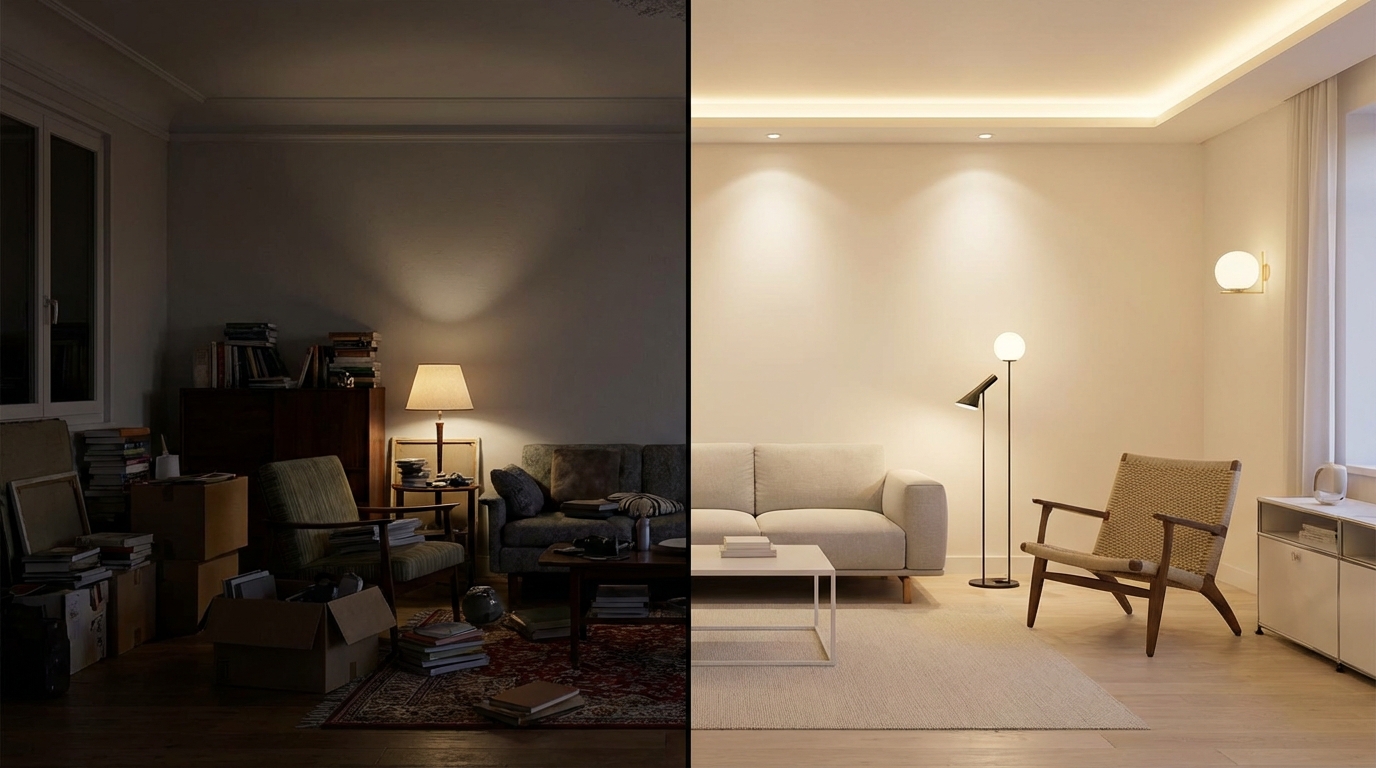
Home staging before and after transformations prove that decluttering, neutral colors, and strategic lighting can make any room sell-ready — often for under 500 € per room. Preview your own before and after home staging results with Homeify before spending a euro.
Before and After Home Renovations: What Staging Actually Changes
A room that has been lived in for years accumulates layers of personal taste, worn surfaces, and furniture that no longer fits the space. The result is a room that feels smaller, darker, and less inviting than it actually is. Home staging before and after reveals the gap between how a space looks and how it could look — by stripping those layers back and replacing them with a neutral, aspirational version that lets anyone see the room’s true potential.
The transformation does not require a full renovation budget. The most impactful home staging changes cost under 500 € per room: a fresh coat of paint in a warm neutral, removing 50% of visible objects, repositioning furniture to open circulation paths, and adding strategic lighting. The before and after difference is dramatic — rooms look larger, brighter, and more modern without moving a single wall.
This guide walks you through home staging before and after transformations for every major room, with specific techniques, before and after home renovations with cost breakdowns, and the principles that make each transformation so striking. Whether you are preparing to sell, refreshing an old home, or staging an exterior, the process is the same: declutter, neutralize, light, and style.
Living Room Home Staging Before and After
The living room sets the emotional tone of an entire home. Buyers form an opinion within 7 seconds of entering, and a cluttered or dark living room kills interest before they see any other room. Living room staging consistently produces the most dramatic home staging before and after pictures because the changes — decluttering, repainting, relighting — are visible in a single frame.
Before: What Typically Goes Wrong
Most living rooms suffer from three problems: too much furniture blocking circulation, personal items that prevent buyers from projecting themselves, and a single overhead light that flattens the space. Dark walls, mismatched furniture, and overflowing bookshelves make the room feel smaller than its actual square meters.
After: The Transformation
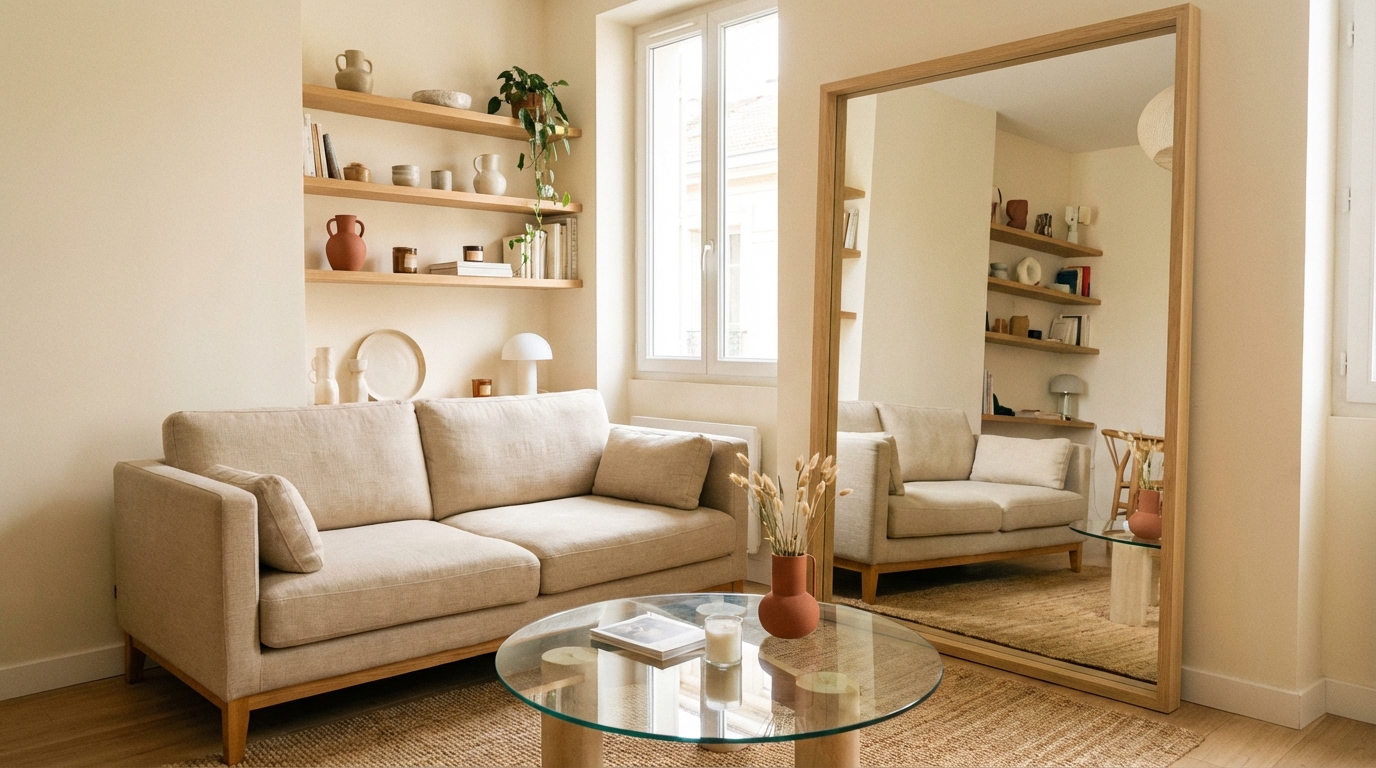
Remove at least 30-50% of furniture and decorative objects. Keep the sofa, one coffee table, and one accent piece — nothing more. Repaint bold or dated walls in a warm neutral (off-white, greige, soft beige). Replace heavy curtains with light-filtering panels that let daylight flood in. Add a floor lamp and a table lamp to create depth through layered lighting.

The result: a living room that feels open, bright, and universally appealing — the kind of home staging before and after pics that make listing photos irresistible. Pair this with a Scandinavian or minimalist aesthetic for the broadest appeal. Budget for a living room staging: 200-400 € (paint, curtains, two lamps, decorative cushions).
Kitchen Renovation Before and After With Cost
The kitchen is the most scrutinized room during a property visit. Buyers inspect surfaces, open cabinets, and judge cleanliness more harshly here than anywhere else. A kitchen home renovation before and after can range from a cosmetic refresh to a full remodel — but even the budget version produces striking results.
Before: Common Problems
Cluttered countertops covered in appliances, dated cabinet doors in dark wood or orange-toned finishes, stained grout, and poor lighting above the workspace. The kitchen feels cramped even when the layout is generous.
After: The Quick Transformation

Clear every countertop down to three items maximum: a cutting board, a plant, and one decorative object. Deep-clean grout lines and reseal if needed. If cabinets are dated but structurally sound, paint them in a light tone — white, soft grey, or sage green — for under 150 € in paint supplies. Replace old handles with modern brushed-brass or matte-black hardware (budget: 30-80 € for a full set). Add under-cabinet LED strips for task lighting.
For kitchen staging that complements a bold color transformation, see our black kitchen ideas page for inspiration on contrast approaches.
Bedroom Staging Before and After: The Hotel Effect
A bedroom should feel calm, restful, and spacious. Buyers want to imagine retreating here at the end of the day. Bedroom staging before and after transformations are among the simplest to execute because the formula is straightforward: strip, whiten, symmetrize.
Before: The Typical State
Personal photos everywhere, mismatched bed linens, cluttered nightstands, and no clear color scheme. The room feels like someone else’s private space, which is exactly the wrong impression for selling.
After: The Hotel Effect

Strip the room to essentials: bed, two nightstands, one lamp per side. Invest in hotel-quality white or neutral bed linen (budget: 80-200 €). Remove all personal photos and replace with one or two simple prints. Add a throw blanket at the foot of the bed and two accent cushions. Paint the walls a soft, calming tone — pale grey, blush, or warm white.
The goal is the “hotel effect”: a space so clean and inviting that anyone can picture themselves waking up there. For color inspiration, our white bedroom ideas page shows how light tones create a restful atmosphere.
Bathroom Home Staging Before and After
A bathroom does not need to be luxurious — it needs to be spotlessly clean and well-lit. Buyers judge bathrooms on hygiene above all else, which is why bathroom home staging before and after pictures show the most dramatic difference with the smallest investment.
The Quick Fix Checklist
- Re-grout or bleach all tile joints until they look new
- Replace stained or worn shower curtain and bath mat (budget: 20-40 €)
- Remove every personal product from visible surfaces — shampoo bottles, razors, makeup
- Add matching white towels rolled or folded neatly (budget: 30-50 €)
- Replace the light fixture if it is dim or yellowed — a bright, modern fixture makes the room feel cleaner
- Add one green plant (real or high-quality artificial) for life
Budget for a full bathroom staging refresh: 100-250 €. For modern bathroom design ideas, see our modern bathroom page.
Entryway Staging: The 7-Second First Impression
The entryway is the first and last thing anyone sees — and for before and after exterior home renovations, it is the transition point between curb appeal and interior staging. A cluttered entrance with shoes piled up and coats overflowing signals chaos — even if the rest of the home is pristine.
The Minimal Entryway Formula

Keep the entryway to three elements maximum: a console table or narrow shelf, a mirror, and one coat hook or slim rack. Remove all shoes, bags, and seasonal items. Add a small plant or a decorative tray for keys. If the space allows, a slim bench invites visitors to sit down and creates a welcoming pause between outside and inside.
A well-staged entryway takes under 30 minutes to achieve and costs nothing if you already own a mirror and a surface. For more entryway inspiration, see our entryway ideas page.
Old Home and Mobile Home Renovation Before and After
Small spaces and older properties require a specific staging approach: every centimeter counts, and the wrong furniture kills the illusion of space before you even start decluttering. Old home renovation before and after results are especially rewarding because dated finishes — dark wood paneling, popcorn ceilings, brass fixtures — respond dramatically to even minor updates. The same principles apply to mobile home renovation before and after projects, where compact floor plans amplify every change.
The first rule is scale. Replace any oversized sofa with a compact two-seater under 160 cm. Swap a standard dining table for a round table under 90 cm diameter or a fold-down wall-mounted model. Use mirrors to double the perceived depth — a large mirror opposite the window is the single most effective trick in small-space staging.
For studios, define zones without physical walls: use a rug to anchor the living area, position the sofa as a divider between sleeping and living zones, and keep the sleeping area visible but clearly delineated with a change in lighting tone. Avoid room dividers and curtains that chop the space into smaller fragments.
Color is critical in small apartments. Stick to one color family throughout the entire space — warm whites and soft greys work best — so the eye flows continuously from room to room without interruption. Any accent color should appear as a small touch (a cushion, a plant pot) rather than a wall.
For detailed small-space staging strategies, see our small living room guide. If you are staging a studio specifically, our cozy studio apartment ideas page covers the layout principles.
Staging a Home Office
With remote work now standard, buyers actively look for a functional workspace. A room staged as an office adds perceived value — even if the space is small.
The staging formula is simple: a slim desk (no deeper than 60 cm) positioned facing or perpendicular to the window, an ergonomic chair, and a single shelf or floating bookcase for supplies. Clear the desk to three items maximum: a lamp, a plant, and a notebook or closed laptop. Hide all cables with clips or a cable management tray.
Paint the accent wall behind the screen in a concentration-friendly tone — deep navy, forest green, or charcoal grey — while keeping the remaining walls in a light neutral. Add a task lamp set to 4000K (neutral white) for the desk and an ambient light at 2700K (warm white) for the rest of the room.
For more home office staging ideas, see our home office ideas page.
Home Staging Before and After: Techniques That Work in Every Room
Regardless of the room, five techniques appear in every successful staging:
Declutter ruthlessly. Remove 50% of visible objects. If it does not serve the room’s function or beauty, box it up. Store boxes off-site or in a garage — never in a closet that buyers might open.
Neutralize the color palette. Repaint bold or dated walls in warm neutrals: off-white, greige, or soft beige. Paint is the highest-ROI staging investment — a room-sized repaint costs 50-100 € in materials and transforms the space completely.
Layer the lighting. Replace single overhead fixtures with a combination of ambient, task, and accent lighting. Set bulbs to 2700-3000K for warm white. Buyers respond to bright, warm rooms.
Depersonalize completely. Remove family photos, children’s artwork on the fridge, religious items, and sports memorabilia. The goal is a blank canvas where any buyer sees themselves, not the current owner.
Style with intention. Add a few carefully chosen items: fresh flowers, matching towels, a single coffee-table book, coordinated cushions. These items cost under 100 € total and signal that the home is cared for.
Virtual vs Physical Home Staging: Before and After Comparison
Traditional physical staging involves renting furniture, hiring a home stager, and setting up each room for viewings. It costs 1,500-5,000 € for a full apartment and takes several days to install. The furniture rental alone runs 500-2,000 € per month, with a typical minimum commitment of one to three months. Add the home stager’s consultation and project management fee (300-800 €), transport, and any minor repairs, and the total adds up quickly.

Virtual staging flips the equation: photograph an empty or outdated room, and AI generates a photorealistic furnished version in seconds. The cost drops to under 50 € per year with tools like Homeify, which offers 80+ design styles and instant home staging before and after comparisons. The resulting before and after pictures are indistinguishable from physical staging photos in online listings.
Virtual staging works best for listing photos and online marketing — where the vast majority of buyers form their first impression before ever visiting in person. Physical staging still wins for in-person viewings where buyers walk through the space and touch surfaces. The smartest approach combines both: use virtual staging to test and choose your look across multiple styles, then apply the best version physically for viewings. This hybrid method saves thousands of euros in trial-and-error with rented furniture.
When to Choose Each Approach
- Virtual staging is ideal for: vacant properties going straight to listing, landlords staging rental listings, homeowners exploring ideas before committing to any purchase
- Physical staging is ideal for: high-value properties where in-person viewings are decisive, homes that are already partially furnished, open houses with significant foot traffic
- Hybrid approach works for: most residential sales — test virtually, then stage the three most important rooms (living room, kitchen, primary bedroom) physically
How to Choose Colors for Home Staging
Color choice can make or break a staging project. The goal is not to create a design statement — it is to create a backdrop that flatters the space and lets buyers project their own style onto it.
Start with warm neutrals as the base: off-white (not pure white, which reads cold), greige, soft linen, or pale sand. These tones reflect natural light without creating the sterile feeling of an all-white room. Apply the base color to every wall, ceiling, and trim in the home for visual continuity.
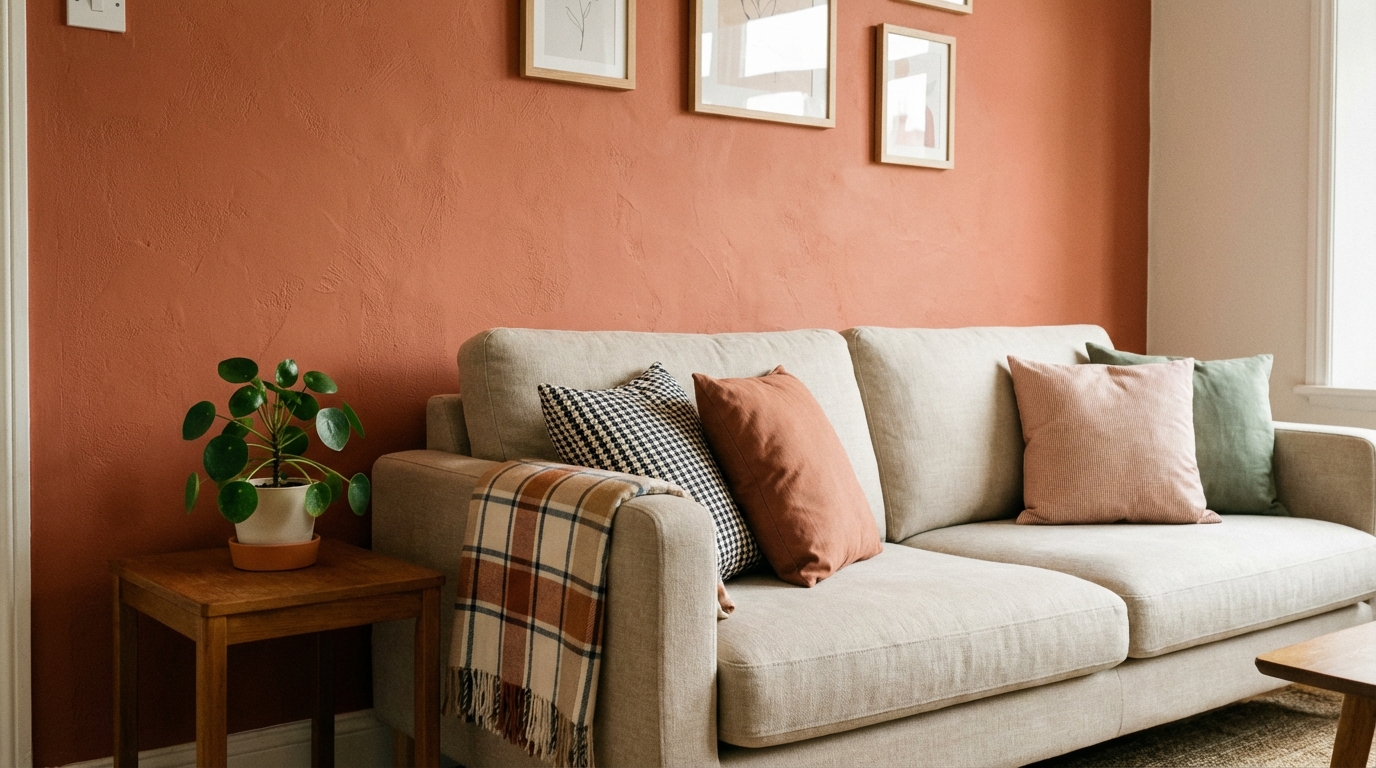
For accent walls, use a single deeper tone in the room that needs the most help. A living room with limited natural light benefits from a warm taupe or sage green accent wall that adds depth without darkening the space. Avoid trendy colors (neon, hot pink, electric blue) — they narrow the appeal.
The 60-30-10 rule applies perfectly to staging: 60% neutral walls and large surfaces, 30% soft complementary tone on furniture and textiles, 10% accent color in cushions and decorative objects. For a complete guide on color associations that work in every room, see our color combination guide.
Before and After Home Renovations With Cost Breakdown
Not every staging project requires thousands of euros. If your budget is under 300 € for the entire home, you can still achieve impressive before and after home renovations with cost kept to a minimum. Focus on three high-impact, low-cost interventions:
Paint one room. A single room repaint with quality paint costs 50-100 € in materials. Choose the room that needs it most — usually the living room or entryway. One freshly painted room changes the feel of the entire home because it sets a standard visitors carry through every subsequent room.
Upgrade textiles. New cushion covers, a throw blanket, matching towels, and fresh bed linen transform surfaces without touching walls or furniture. Budget 80-120 € for a full set across the main rooms. Choose a single neutral palette — warm whites, soft greys, natural linen — and apply it everywhere for visual coherence.
Fix the lighting. Replace every dim or yellowish bulb in the home with bright LED bulbs at 2700K (warm white). Add one floor lamp in the living room and one table lamp per bedroom nightstand. Budget 50-80 € for bulbs and one affordable lamp. Good lighting alone makes rooms feel significantly larger and more inviting.
These three interventions — paint, textiles, lighting — account for roughly 80% of the visual impact of a full staging project at a fraction of the cost. For current style trends that work well on a budget, check our 2026 decor trends guide.
Common Home Staging Before and After Mistakes to Avoid
Over-staging with too many accessories. A room with fifteen cushions, seven candles, and three stacks of books looks like a catalog set, not a home. Keep decorative items to five or fewer per room.
Ignoring odors. Fresh paint and clean surfaces mean nothing if the house smells of pets, cooking, or damp. Air out every room, deep-clean soft furnishings, and skip artificial air fresheners — they signal that something is being masked.
Leaving one room unstaged. Buyers remember the worst room, not the best. A beautifully staged living room followed by a cluttered spare bedroom undermines the entire effort.
Staging for your own taste instead of the market. Hot pink accent walls and bold art collections appeal to a narrow audience. Neutral staging with subtle color accents attracts the broadest pool of buyers.
Skipping exterior home renovations. Before and after exterior home renovations start at the front door, garden path, and outdoor seating area — these form the first impression before anyone steps inside. Paint the front door, clear the path, pressure-wash the facade, and add a simple plant by the entrance.
Home Staging Before and After: Impact at a Glance
| Room | Key Transformation | Budget Estimate | Time to Stage | Style Inspiration |
|---|---|---|---|---|
| Living Room | Declutter 50%, neutral repaint, layered lighting | 200-400 € | 1 weekend | Scandinavian |
| Kitchen | Clear counters, paint cabinets, new hardware | 100-300 € | 2-3 days | Minimalist |
| Bedroom | Hotel-quality linen, depersonalize, calm palette | 80-200 € | Half day | Japandi |
| Bathroom | Deep clean, matching towels, bright light fixture | 100-250 € | Half day | Minimalist |
| Entryway | Three-element rule: console, mirror, hook | 0-150 € | 30 minutes | Scandinavian |
Every budget in this table covers materials only — no professional stager fees. The fastest way to create your own home staging before and after pictures: photograph each room with Homeify and preview the transformation in 80+ styles instantly.
Frequently Asked Questions
Home staging before and after pictures reveal how decluttering, neutral paint, and strategic lighting transform a dated room into a buyer-ready space — often without structural changes. The most dramatic before and after results come from removing 50% of visible objects, repainting bold walls in warm neutrals, and adding layered lighting. These photos prove that staging is about perception, not renovation.
A cosmetic home renovation before and after — paint, lighting, textiles — costs 200-500 € per room. A full apartment staging with rented furniture runs 1,500-5,000 € including the home stager's fee (300-800 €) and furniture rental (500-2,000 €/month). Virtual staging with AI tools starts at under 50 € per year, giving you before and after comparisons in seconds.
Yes. Industry data consistently shows that staged homes sell significantly faster — often in weeks rather than months. Buyers struggle to visualize potential in empty or cluttered spaces. Home staging before and after transformations remove that barrier by presenting a finished, aspirational version of each room.
Physical staging involves real furniture and accessories placed in the property for viewings and photos. Virtual staging uses AI to digitally furnish photos of empty or outdated rooms. Physical staging costs 1,500-5,000 € and takes days to set up; virtual staging costs under 50 € and delivers results in seconds. Both produce compelling before and after pictures, but virtual staging is faster and cheaper.
With Homeify, photograph any room and see it transformed instantly into 80+ design styles — from minimalist to Scandinavian to japandi. Compare your home staging before and after side by side in under 30 seconds, before hiring a stager or buying a single can of paint.
Discover More

Was this article helpful?
Download Homeify Free
Transform any room with AI — download Homeify and start redesigning your home for free. The AI room design app trusted by thousands on iOS.
