Pienen olohuoneen sisustus: pohjaratkaisu, kalusteet ja säilytys ahtaaseen tilaan
Pienen olohuoneen sisustus suomalaiseen kerrostaloasuntoon: pohjaratkaisu, kompaktit kalusteet, vertikaalinen säilytys ja värivinkit avaramman tunnelman luomiseen.
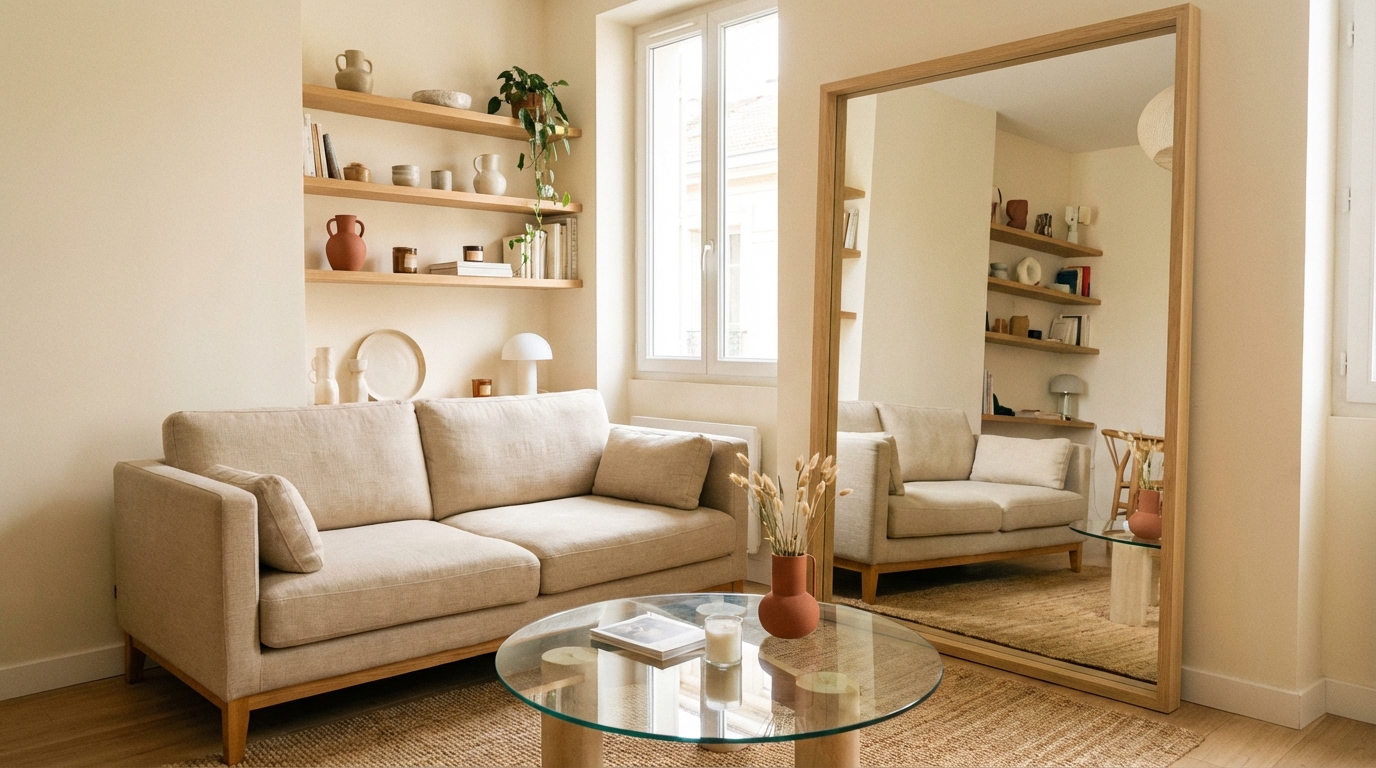
Kolme sääntöä toimivalle pienelle olohuoneelle: 70 cm kulkuväylä kalusteiden ympärille, säilytys korkeussuunnassa ja vaaleat värit jotka siirtävät seiniä taaksepäin. Testaa pohjaratkaisu omassa huoneessasi Homeify-sovelluksella ennen kuin siirrät ainoaakaan kalustetta.
Pienen olohuoneen sisustus — näin teet siitä avaran tuntuisen
Alle 20 m² olohuone ei ole tuomittu näyttämään ahtaalta. Ero pienen tukehduttavan tilan ja tarkoituksellisesti kodikkaan olohuoneen välillä on kalusteiden sijoittelussa, kalustevalinnoissa ja katseen ohjauksessa. Kuten suomalaiset kalustebrändit toistavat editoriaalisissaan: pienen olohuoneen sisustus voi olla yhtä toimiva, viihtyisä ja avaran tuntuinen kuin suuri — kun tilaa suunnittelee fiksusti.
Useimmat tekevät saman virheen: ostavat standardikokoisia kalusteita, lykkäävät ne seiniä vasten ja ihmettelevät miksi huone tuntuu silti täyteen ahdetulta. Ratkaisu ei ole ostaa vähemmän vaan ostaa fiksummin. Kompakti kaksikko sohva sijoitettuna 80 cm irti seinästä luo kulkuväylän taakseen ja vapauttaa huoneen keskustan. Pyöreä sohvapöytä jonka halkaisija on alle 70 cm päästää liikkumaan ilman törmäyksiä. Kelluvat seinähyllyt korvaavat kirjahyllyn ja vapauttavat lattian kokonaan.
Suomalaisessa kontekstissa pienen olohuoneen teema on erityisen relevantti: kerrostaloasuntojen olohuoneet ovat tyypillisesti 12–20 m² uusissa kerrostaloissa, vanhempien yksiöiden ja kaksioiden olohuoneista ne ovat vielä pienempiä. Suomalainen sisustaja on tottunut ratkaisemaan tätä haastetta, ja tämä opas kokoaa parhaat käytännöt huone kerrallaan.
Pienen olohuoneen sisustuksen kolme periaatetta
Ennen kuin sukellamme yksityiskohtiin, pidä mielessä kolme periaatetta jotka toistuvat jokaisessa onnistuneessa pienessä olohuoneessa:
- Tilan on hengittää — jokaisen kalusteen ympärillä on oltava tyhjää tilaa joka antaa silmälle tauon. Pieni olohuone ei kärsi siitä että kalusteita on vähän, vaan siitä että ne on ahdettu liian lähelle toisiaan. Anna sohvan, sohvapöydän ja säilytysratkaisun välille konkreettista välimatkaa.
- Lattia näkyy — kun lattiaa pystyy näkemään kalusteen alta tai vierestä, tila tuntuu visuaalisesti suuremmalta. Tämä on syy miksi näkyvät jalat sohvassa, kohotetut tv-tasot ja kelluvat hyllyt ovat pienen olohuoneen parhaita kavereita. Lattian visuaalinen jatkuvuus on ilmainen tilantäydennystyökalu.
- Jokaisella esineellä on oma tarkoituksensa — jos kaluste tai koriste-esine ei palvele toimintaa eikä tunnelmaa, se ei ansaitse paikkaansa pienessä olohuoneessa. Tämä on tarkin sääntö joka erottaa harkitun pienen tilan täyteen ahdetusta tilasta.
Nämä kolme periaatetta — tilan hengittävyys, lattian näkyvyys ja jokaisen esineen tarkoitus — ovat punainen lanka kaikissa alla olevissa konkreettisissa vinkeissä.
Tämä opas vie sinut jokaisen päätöksen läpi: pohjaratkaisustrategiat neliömäisille ja suorakulmaisille olohuoneille, oikean kokoiset kalusteet, säilytys joka piilottaa sotkun, värit jotka siirtävät seiniä taaksepäin, ja valaistus joka tekee huoneesta loistavan sen sijaan että synkentäisi sen. Olohuoneesi on 10 m², 15 m² tai 20 m², periaatteet pysyvät samoina — jokainen senttimetri ratkaisee, eikä yhtäkään saa hukata.
Pohjaratkaisu huoneen muodon mukaan
Ennen kuin ostat ainoaakaan kalustetta, ota mittanauha ja piirrä nopea pohjapiirros paperille tai puhelimeen. Olohuoneesi muoto ratkaisee kaiken: minne sijoittaa sohva, mistä kuljetaan ja minne katse osuu kun astut huoneeseen. Tilan havaintoa tutkivat suunnittelijat toistavat saman havainnon: huoneet avoimella näkymälinjalla sisäänkäynnin ja ikkunan välillä näyttävät huomattavasti isommilta kuin huoneet joissa kaluste tukkii katseen.
Neliömäinen olohuone
Neliömäinen olohuone — yleensä 4 × 4 m tai 4,5 × 4,5 m suomalaisessa kerrostalossa — antaa tasapainon vaikutelman mutta usein puuttuu luontainen fokuspiste. Sijoita kaksi kompaktia nojatuolia tai pieni kaksikko sohva kasvotusten ja niiden väliin pyöreä sohvapöytä. Tämä symmetrinen asettelu vetää katseen sisäänpäin ja luo mittasuhteen tunteen. Kiinnitä matala tv-taso seinää vasten ja ripusta televisio sen yläpuolelle vapauttaaksesi lattian.
Jos tarvitset enemmän istuimia, kulmasohva toimii neliömäisessä olohuoneessa vain jos se on sijoitettu kahta vierekkäistä seinää vasten ja vastakkainen kulma jää täysin vapaaksi liikkumiselle. Vältä kalusteiden sijoittamista neliömäisen olohuoneen keskelle — se tukkii näkymälinjat ja kutistaa tilan.
Suorakulmainen olohuone

Pitkulainen olohuone — esimerkiksi 3 × 6 m suomalaisessa rivitalossa tai vanhassa kerrostalossa — tarjoaa luontaisen etuna: voit luoda erillisiä vyöhykkeitä sen pituudelle. Sijoita sohva poikittain pitkän seinän nähden, noin kahden kolmasosan kohdalle huoneesta, erottamaan oleskelualueen ruokailu- tai työnurkasta. Matto sohvaryhmän alla ankkuroi visuaalisesti elämisalueen.
Kulkuväylän osalta säilytä vähintään 70 cm leveä reitti koko huoneen pituudelle. Vältä kalusteiden sijoittamista molempien pitkien seinien viereen: se luo käytäväefektin. Jätä yksi seinä lähes tyhjäksi ja keskitä kalustus vastapuolelle.
Oikean kokoiset kalusteet pieneen olohuoneeseen
Yleisin virhe pienessä olohuoneessa on ylimitoitettu kalustus. Kolmen istuttava sohva joka on suunniteltu 30 m² olohuoneeseen nielee 15 m² olohuoneen kokonaan.
Sohvat ja istuimet

Alle 15 m² huoneeseen etsi kaksikko sohva enintään 160 cm leveydeltä. Kompaktit mallit ohuilla käsinojilla ja kohotetuilla jaloilla päästävät valon kulkemaan alta — mikä tekee huoneesta visuaalisesti kevyemmän. Tyylit näkyvillä jaloilla — skandinaavinen ja mid-century modern — toimivat erityisen hyvin pienissä tiloissa. Nojaa tähän periaatteeseen: kun lattia näkyy, tila tuntuu isommalta.
Tarvitsetko lisäistuimia ilman pysyvää tilavaikutusta? Lisää rahipari tai kompakti nojatuoli joka on siirrettävissä kun ei käytetä. Lattiatyyny konsolin alle ilmestyy esiin kun vieraat saapuvat ja katoaa sitten.
Jos haluat kulmasohvan, valitse L-malli jonka divaani-osa on enintään 90 cm syvyydestä. Sijoita divaani seinää vasten, ei keskelle huonetta. Osa malleista sisältää säilytyslaatikon divaanin alla — erinomainen tilansäästö suomalaiseen yksiöön.
Sohvapöydät ja sivupöydät
Sohvapöytä ei saa olla yli puolet sohvan pituudesta. 160 cm sohvalle se tarkoittaa enintään 80 cm pöytää. Pyöreät ja soikeat pöydät poistavat terävät kulmat ja parantavat liikkumista — saat useita senttimetrejä lisää kulkuväylää verrattuna saman pinta-alan suorakulmaiseen pöytään.
Sisäkkäiset pikkupöydät ovat pienen tilan paras ratkaisu: vedä pienemmät pöydät esiin kun vieraita on, pinoa ne kun tarvitset tilaa. Kolmen pöydän setti maksaa 80–250 € IKEA Suomesta tai JYSKistä ja korvaa sekä sohvapöydän että sivupöydät. Yksi suomalaisten suunnittelijoiden toistama vinkki: valitse pöytä jolla on kevyt ja jalallinen rakenne — paksusta pöytälevystä ja massiivisista jaloista valmistettu jykevän näköinen pöytä syö visuaalista tilaa enemmän kuin sama pöytä ohuella metalli- tai puurungolla. Pyri rakenteisiin jotka näyttävät kevyiltä myös visuaalisesti.
Kalusteiden materiaalivalinnat pieneen tilaan
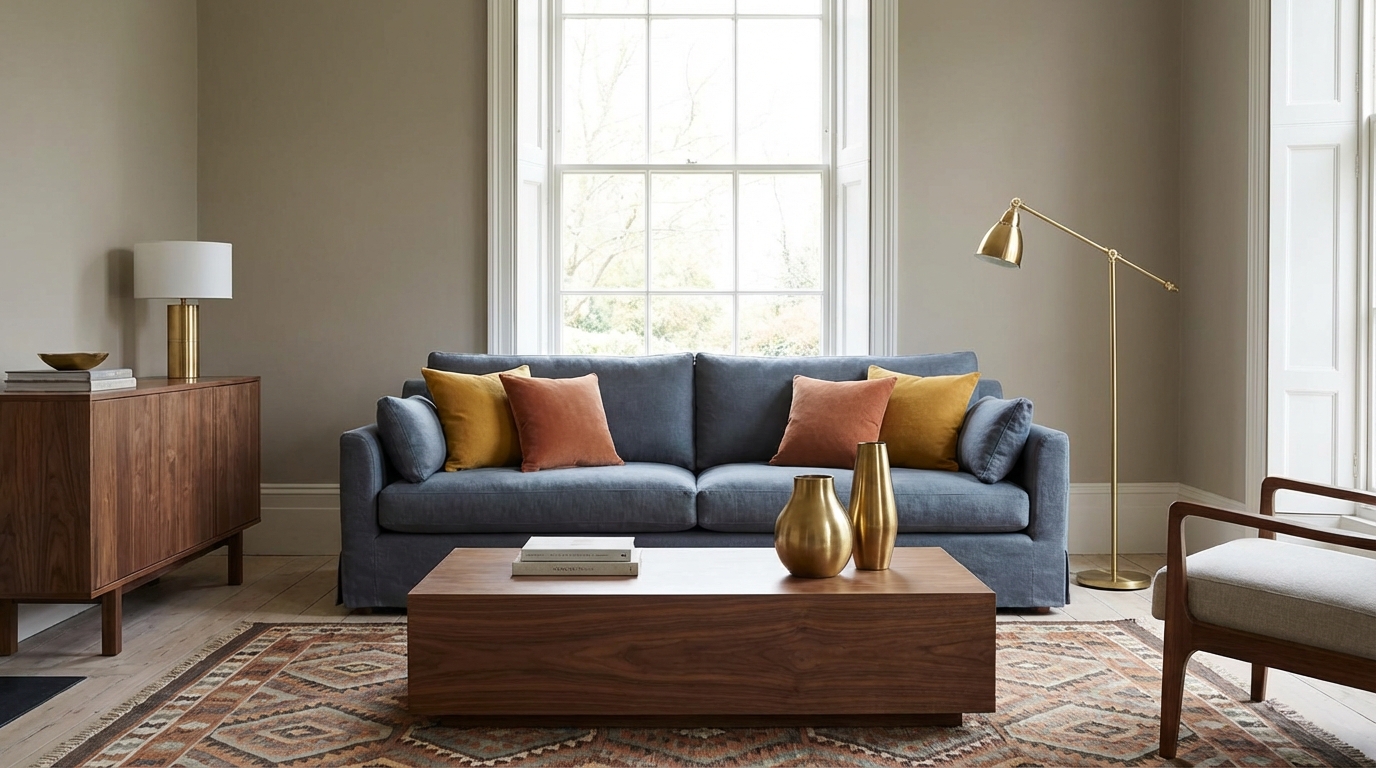
Sen lisäksi miten valitset kalusteet kokoluokkien mukaan, materiaalit vaikuttavat suoraan siihen miltä pieni olohuone tuntuu. Suosi kevyitä puu- ja metallirakenteita — vaalea tammi, pyökki, koivu tai ohut musta metalli pitävät huoneen kevyenä. Vältä raskasta tummaa pähkinäpuuta tai paksua mahonkia: ne tekevät pienestä huoneesta painavan näköisen jopa silloin kun mittasuhteet olisivat oikein. Tekstiileissä pellava ja puuvilla toimivat paremmin kuin paksu sametti — ne hengittävät visuaalisesti samalla tavalla kuin kalusteet.
Säilytysratkaisut jotka vapauttavat lattian
Pienessä olohuoneessa näkyvä sotku kutistaa huoneen nopeammin kuin tummat seinät. Avain on vertikaalinen säilytys — rakenna ylöspäin ulospäin sijaan.
Lattiasta kattoon

Yksi kirjahylly lattiasta kattoon — 30 cm syvyys, 80 cm leveys — sisältää enemmän kuin kaksi standardia lipastoa, vieden samalla kolmasosan lattiapinta-alasta. Sijoita se sisäänkäyntiä viereiselle seinälle jotta se ei ole ensimmäinen mitä näet. Vuorottele suljetut osiot (johdoille, kaukosäätimille, lehdille) ja avohyllyt (kirjoille ja muutamalle koriste-esineelle). Sääntö: kaksi kolmasosaa suljettua, yksi kolmasosa avointa siistiä lopputulosta varten.
Monikäyttöiset kalusteet
Jokaisen kalusteen pienessä olohuoneessa on ansaittava paikkansa kahdesti. Kannelisen rahi säilyttää viltit, lautapelit ja ylimääräiset tyynyt. Tv-taso laatikoilla piilottaa multimedia-tarvikkeet. Eteisen penkki toimii kenkäsäilytyksenä ja lisäistuimena. Jopa sohva voi osallistua — moni kompakti malli tarjoaa liukuvia laatikoita tai nostettavia istuimia.
Kelluvat seinähyllyt ovien, ikkunoiden ja kulmien yläpuolella hyödyntävät kuolleen tilan jonka useimmat ohittavat. 15 cm syvyinen hylly karmin yläpuolella riittää kirjoille, pienille kasveille tai koristerasioille — ja se vetää katseen ylöspäin antaen vaikutelman korkeammasta katosta.
Värit ja seinät jotka avartavat pientä olohuonetta
Väri on tehokkain työkalu huoneen koon havainnon manipuloimiseksi. Periaate on yksinkertainen: vaaleat värit heijastavat valoa, tummat värit imevät sen. Suomalaisessa kerrostaloasunnossa, jossa valoa on talvella vähän ja kesällä paljon, tämä periaate on vielä keskeisempi kuin keskimäärin.
Aloita lämpimistä neutraaleista sävyistä kaikilla seinillä: murrettu valkoinen, hiekanruskea (harmaa-beige) tai pehmeä pellava. Vältä puhdasta valkoista — se näyttää kylmältä keinovalossa, ja suomalaisessa marraskuun valossa vielä enemmän. Lämmin neutraali heijastaa päivänvalon säilyttäen syvyyttä jota puhdas valkoinen ei pysty tarjoamaan.
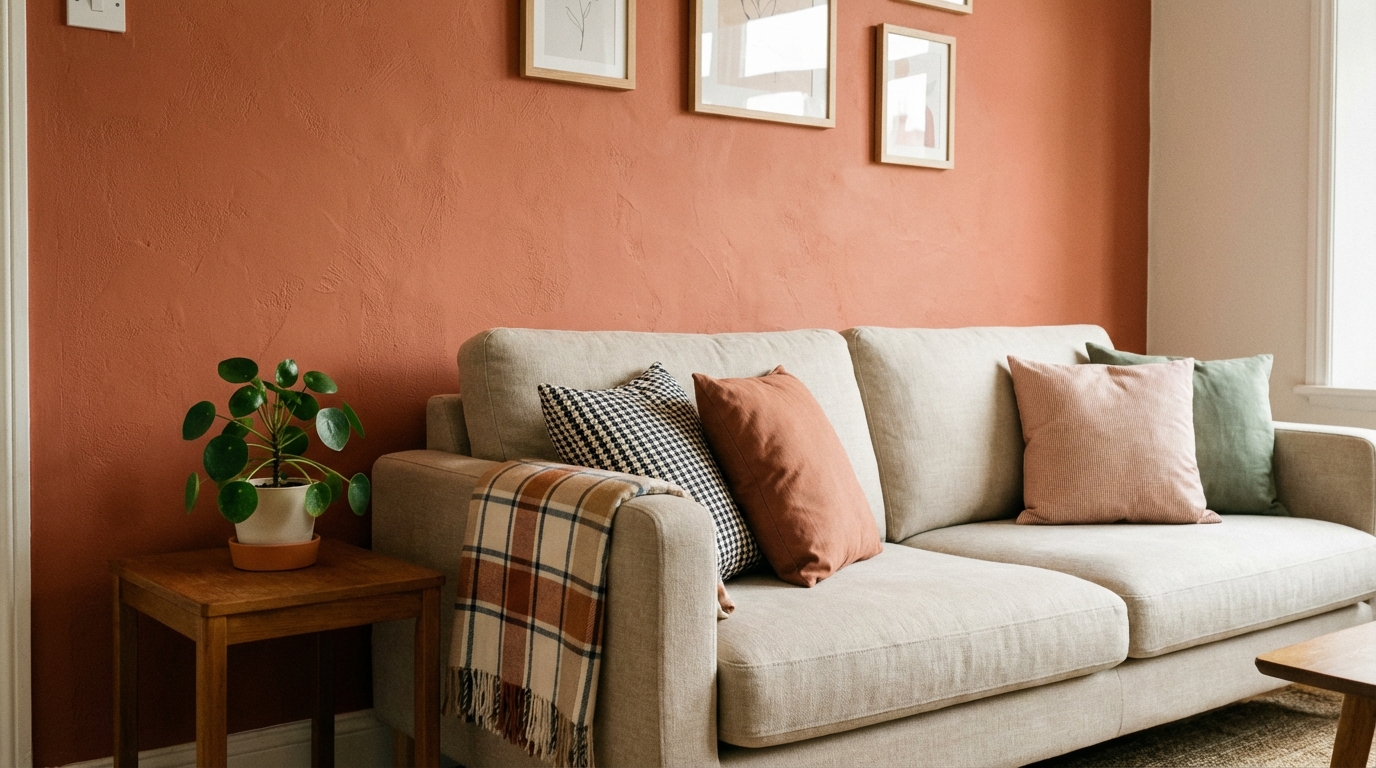
Yksittäiselle aksenttiseinälle valitse seinä jonka näet ensimmäisenä astuessasi sisään. Syvempi sävy — salvianvihreä, tummansininen tai lämmin terrakotta — luo visuaalista syvyyttä ja vetää katsetta, antaen vaikutelman että huone on pidempi. Sijoita vaaleita kalusteita tätä seinää vasten kontrastin säilyttämiseksi.
Katto merkitsee myös. Sen maalaaminen samaan väriin seinien kanssa pyyhkii rajan seinän ja katon välillä, mikä avartaa huonetta korkeudessa. Jos kattosi on jo valkoinen, jatka seinän väriä 10–15 cm katon puolelle hienovaraisen “nostetun” efektin saamiseksi. Suomalaisessa kerrostaloasunnossa joissa sisäkorkeus on yleensä 2,5 m, jokainen visuaalinen senttimetri ylöspäin auttaa.
Värien yhdistämiseen pieniin tiloihin tutustu värivalinnan oppaaseen. Ja jos kallistut maan sävyihin, beigeen olohuoneen ideoissa näytetään miten neutraalit toimivat oikeissa tiloissa.
Pieni olohuone ja avokeittiö

Avoin keittiö-olohuone on suomalaisten alle 50 m² asuntojen normi. Haaste on saada kaksi erillistä vyöhykettä toimimaan yhdessä ilman fyysisiä seiniä.
Tehokkain erotin on sohva itsessään: sijoita se selkä keittiöön päin. Se luo selkeän psykologisen rajan tukkimatta valoa tai näkymälinjoja. Lisää matala kirjahylly tai konsoli (80–90 cm korkea) sohvan taakse vahvistamaan erotusta ja saadaksesi lisäsäilytyspintaa.
Lattiamateriaalin vaihdokset ovat myös tehokkaita: parketti tai laminaatti olohuonen puolella, laatta keittiön puolella. Materiaalin vaihtuminen viestii vyöhykkeen vaihtumisesta vaikka tila olisi täysin avoin.
Keittiösaareke täyttää kolme tehtävää: työtaso, aamiaisbaari ja vyöhykkeen erotin. Jos keittiösi on liian kapea saarekkeelle, korkea pöytä 60 cm syvyydellä rajan kohdalla tekee saman vaikutuksen. Pidä molemmat tilat samassa väripaletissa jotta kokonaisuus luetaan yhtenä yhtenäisenä huoneena — yhteensopimattomat tyylit pirstaloittavat pienen avoimen tilan.
Olohuone ja ruokailutila samassa tilassa
Kun olohuoneesi toimii myös ruokailutilana, avain on joustava kalustus joka mukautuu päivän mittaan.
Pyöreä pöytä halkaisijaltaan 90–100 cm mahduttaa neljä henkilöä mukavasti ja vie vähemmän tilaa visuaalisesti kuin suorakulmainen pöytä. Levitettävät mallit lähtevät 70 cm kompaktista koosta arkikäyttöön ja venyvät 120 cm:iin kun vieraita saapuu. Sijoita se keittiöalueen lähelle tai seinää vasten pitääksesi huoneen keskustan avoimena.
Jos tila on todella tiukka, poista ruokailupöytä kokonaan. Seinälle taittuva pöytä maksaa 50–200 € ja katoaa kokonaan aterioiden jälkeen. Yhdistä se pinottaviin tuoleihin jotka tallentuvat tasaisesti seinää vasten.
Olohuoneen ja ruokailunurkan visuaaliseen erottamiseen aseta matto sohvaryhmän alle ja jätä ruokailualue paljaaksi, tai vaihda kattovalaisin tyyppiä kahden vyöhykkeen välillä. Minimalistinen lähestymistapa toimii tässä parhaiten — vähemmän esineitä tarkoittaa että jokainen vyöhyke pysyy hyvin määriteltynä.
Valaistuksen kikat jotka avartavat pientä olohuonetta
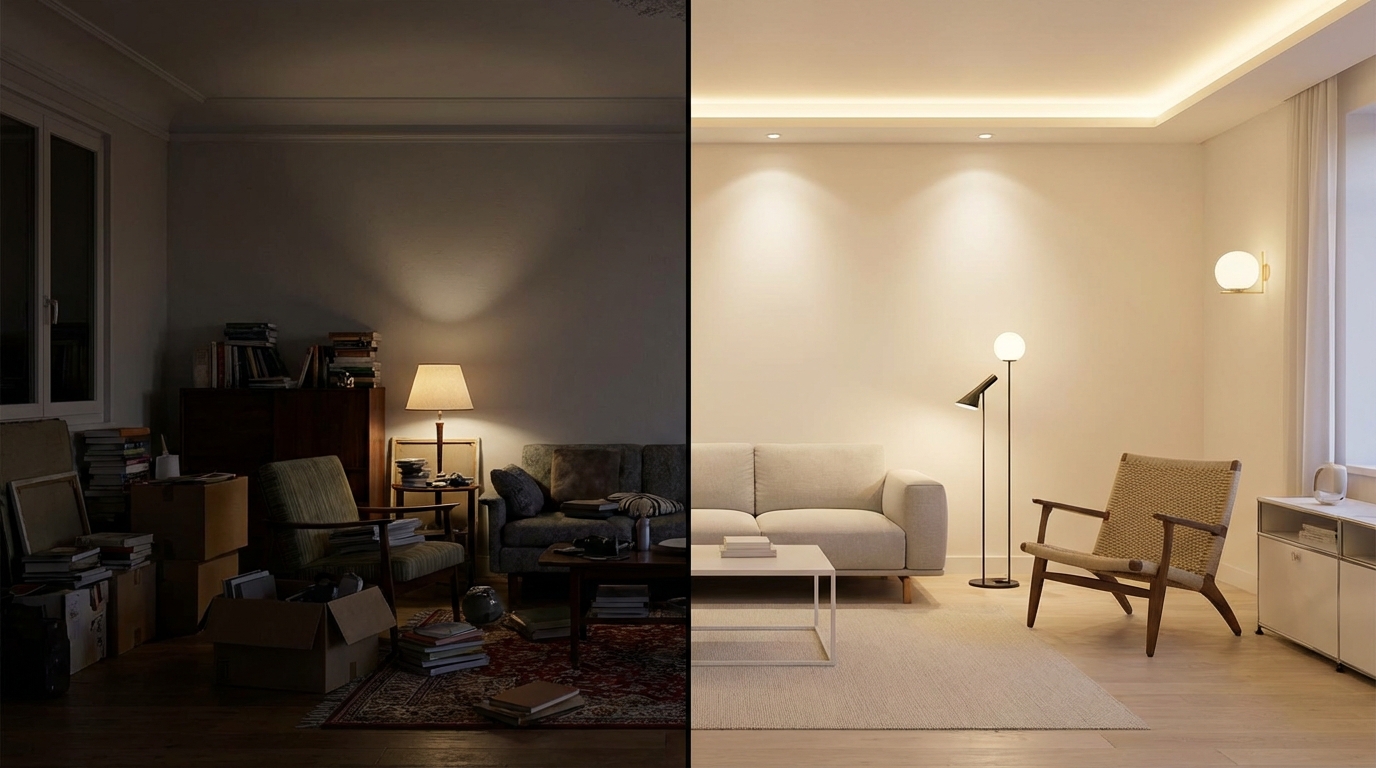
Yksi kattovalaisin litistää huoneen ja korostaa sen rajoja. Ratkaisu: kerrosta kolme valotyyppiä eri korkeuksilla.
- Yleisvalo kattovalaisimesta tai uppovalaisimista yleistä valaistusta varten. Valitse kattoon kiinnitettävä valaisin — pendant-mallit matalassa huoneessa syövät korkeutta. Suomalaisessa kerrostaloasunnossa kanssa 2,5 m sisäkorkeudella tämä on kriittistä.
- Työvalo lattiavalaisimena sohvan vieressä tai pöytälamppuna lukunurkkaan, luomaan kohdistettuja valoaltaita. Ohut kaarivalaisin kulkee sohvan yläpuolelta viemättä lattiatilaa.
- Aksenttivalo LED-nauhoilla TV:n takana, hyllyjen sisällä tai kalusteiden alaosissa, luomaan valon hohdon joka työntää seiniä taaksepäin. Säädä ne 2700–3000 K (lämmin valkoinen) kodikasta tunnelmaa varten.
Tehokkain temppu: älä koskaan valaise kaikkia kulmia yhtä voimakkaasti. Joidenkin alueiden jättäminen pehmeään hämärään antaa huoneelle syvyyttä ja saa sen tuntumaan suuremmalta kuin tasainen valaistus. Sijoita peilit ikkunoita vastapäätä heijastamaan päivänvaloa syvemmälle huoneeseen — tämä yksittäinen temppu voi muuttaa pohjoiseen päin olevan olohuoneen valoisaksi tilaksi.
Peilit ja visuaaliset tempit tilan avartamiseen

Peili on vanhin avartamistemppu — ja edelleen tehokkain. Iso peili (vähintään 120 × 80 cm) sijoitettuna ikkunaa vastapäätä tuplaa havaitun luonnonvalon ja luo illuusion toisesta huoneesta lasin takana.
Sijoita peilit istuvan henkilön silmien tasolle (noin 120 cm lattiasta keskeltä) heijastamaan hyödyllisintä osaa huoneesta. Lattiapeili nojattuna seinää vasten kevyellä kulmalla lisää syvyyttä ja toimii itsenäisenä koriste-elementtinä.
Peilien lisäksi muut visuaaliset tempit auttavat:
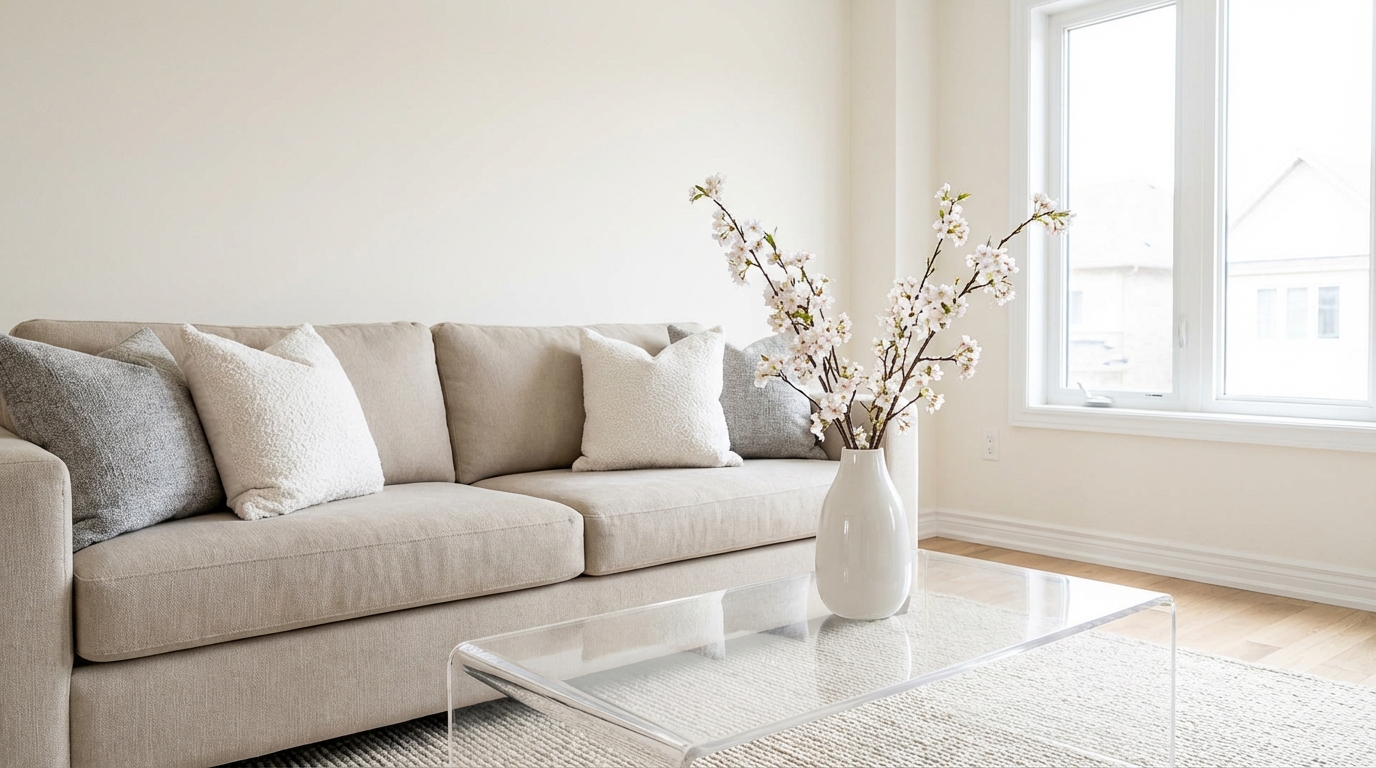
- Lasi- tai akryyli-kalusteet (sohvapöydät, sivupöydät) vievät fyysistä tilaa viemättä visuaalista tilaa — valo kulkee niiden läpi.
- Pystyraidat verhoissa tai tapeteissa vetävät katseen ylöspäin ja saavat katon näyttämään korkeammalta.
- Yksi iso matto joka peittää suurimman osan lattiasta yhtenäistää tilan. Useat pienet matot pirstaloivat huoneen.
- Näkyvät jalat kaikissa kalusteissa: sohva, tv-taso ja kaappi näkyvillä jaloilla paljastavat lattian alta, ja näkyvä lattia = havaittu tila.
Tekstiilit ja kasvit jotka täydentävät pientä olohuonetta
Kun kalustus on paikallaan, tekstiilit ja viherelementit muuttavat toimivan tilan lämpimäksi ja eletyn tuntuiseksi.
Verhoiksi valitse paneelit jotka putoavat katosta lattiaan — vaikka itse ikkuna olisi lyhyt. Kangas joka kulkee katosta lattiaan pidentää seinää ja saa huoneen näyttämään korkeammalta. Pysy kevyissä materiaaleissa: pellava, puuvillaharso tai puoliläpinäkyvä polyesteri. Paksut tummat samettiverhot sulkevat huoneen itseään vasten — ja suomalaisessa kerrostaloasunnossa pimeällä kaudella se on viimeinen mitä haluat.
Yksi iso matto (vähintään 160 × 230 cm sohvaryhmälle) ankkuroi istuinalueen ja vaimentaa ääntä — välttämätöntä kerrostaloasunnoissa joiden kova lattia luo kaikuja jotka tekevät pienistä huoneista ontoja. Valitse matto neutraalissa sävyssä, sävyä tummempana kuin lattiasi: se määrittelee alueen ilman että tukahduttaa sitä.
Kasveiksi panosta jälleen korkeuteen. Pothos roikkuva korkealta hyllyltä tai sileä sansevieria nurkassa tuo elämää viemättä lattiapinta-alaa. Vältä isoja lattialle asetettavia ruukkuja jotka kilpailevat neliömetreistä kalustuksen kanssa. Kolme pientä kasvia eri korkeuksilla antaa tarkoituksellisemman — ja avaramman — lopputuloksen kuin yksi iso lattiakasvi.
Tyynyt ja peitot lisäävät viimeisen mukavuuskerroksen, mutta sääntö on pidättyvyys: kolme tyynyä ja yksi peitto per sohva, ei enempää. Tämän rajan ylittävä määrä saa sohvan näyttämään pienemmältä kuin se on, koska puolet siitä katoaa tarvikkeiden alle.
Yleiset virheet pienessä olohuoneessa — vältä nämä
Suomalaiset sisustusammattilaiset toistavat samoja viittä virhettä toistuvasti analysoidessaan pieniä olohuoneita:
- Kaikkien kalusteiden lykkääminen seiniä vasten. Se vaikuttaa loogiselta — enemmän vapaata lattiaa keskellä — mutta se luo kalusterenkaan tyhjyyden ympärille. Siirrä sohvaa 30–50 cm irti seinästä, ja huone saa heti dynaamisuutta.
- Liian pienen maton valitseminen. Maton on oltava tarpeeksi iso jotta kaikkien istuinten etujalat lepäävät päällä. Pieni matto huoneen keskellä pirstaloi tilan ja saa sen näyttämään pienemmältä.
- Vertikaalisen ulottuvuuden sivuuttaminen. Jos hyllysi loppuvat 150 cm:iin, hukkaat huoneesi yläkolmanneksen. Vie säilytys kattoon asti ja käytä ylähyllyjä harvoin käytettäviin esineisiin.
- Luonnonvalon tukkiminen. Paksut verhot, kaluste ikkunan edessä, tummat kehystykset: kaikki tämä vähentää havaittua tilaa. Vaihda läpikuultaviin verhoihin tai filtterirullakaihtimiin ja pidä ikkuna-alue vapaana — erityisen tärkeää suomalaisessa pohjoisen valon kontekstissa.
- Sisustuksen ylikuormittaminen. Pienessä olohuoneessa viisi hyvin valittua esinettä on kauniimpaa kuin viisitoista miten sattuu. Sovella museosääntöä: jokainen koriste-esine tarvitsee tyhjää tilaa ympärilleen tullakseen arvostetuksi.
Pienen olohuoneen ratkaisut yhdellä silmäyksellä
| Pinta-ala | Suositeltu sohva | Sohvapöytä max | Avainprioriteetti | Sopiva tyyli |
|---|---|---|---|---|
| Alle 10 m² | Pieni kaksikko, max 140 cm | 60 cm pyöreä | Vertikaalinen säilytys, taittuva ruokailu | Minimalistinen |
| 10–15 m² | Kompakti kaksikko, max 160 cm | 70 cm pyöreä tai 80 × 50 cm | Monivyöhyke, sisäkkäiset pöydät | Japandi |
| 15–20 m² | Pieni kulma tai kolmen istuttava, max 200 cm | 80 cm pyöreä tai 100 × 60 cm | Vyöhykejako, aksenttiseinä | Skandinaavinen |
| 20–25 m² (avoin pohja) | Kulmasohva + nojatuoli tai 2 × kaksikko | 90 cm pyöreä tai 110 × 60 cm | Keittiön erotin, joustava ruokailunurkka | Mid-century modern |
Pienen olohuoneen sisustus eri elämäntilanteissa
Yksi koko ei sovi kaikille edes pienen olohuoneen sisällä. Suomalaiset asumismuodot tuovat omat erikoisuutensa joiden mukaan painotuksia kannattaa säätää:
Yksiössä (yleensä 20–30 m² kokonaispinta-ala): olohuone ja makuutila ovat samaa tilaa. Sohva voi olla vuodesohva, ja vyöhykejakajana toimii usein kirjahylly tai matto. Säilytys nousee korkeuteen pakon sanelemana — jokainen seinämetri on käytettävä. Tämä on tila jossa monikäyttöiset huonekalut todella ratkaisevat: vuodesohva päivän ja yön käyttöön, säilytysrahi joka toimii myös istuimena, ja seinään kiinnitettäviä hyllyjä jotka eivät vie lattiatilaa.
Kaksiossa (35–55 m²): olohuone on yleensä erillinen huone, mutta kapea ja tyypillisesti yhdistetty avokeittiöön. Tässä korostuu kahden vyöhykkeen erotus pehmeillä rajoilla — sohvan selän käyttö, lattiamateriaalin vaihtuminen, ja yhtenäinen väripaletti molempien tilojen yli.
Kolmiossa (50–70 m²): olohuone on usein 16–22 m² ja se on selvästi oma huoneensa. Tässä mahtuu kolmen istuttava sohva tai pieni kulmasohva. Avain on yhden hyvin valitun statement-elementin (iso kattovalaisin, taideteos seinällä, tunnusomainen nojatuoli) lisääminen ilman että muu huone muuttuu sotkuiseksi.
Vanhassa rintamamiestalossa tai jugend-asunnossa: korkea sisäkorkeus (3 m+) avaa täysin uuden ulottuvuuden — säilytys voi nousta paljon korkeammalle, ja seinäkorkeat verhot toimivat dramaattisemmin. Mutta vanhan rakennuksen ikkunat ovat usein pieniä ja symmetrisesti sijoitettuja, mikä rajoittaa pohjaratkaisua. Hyödynnä korkeutta täysillä.
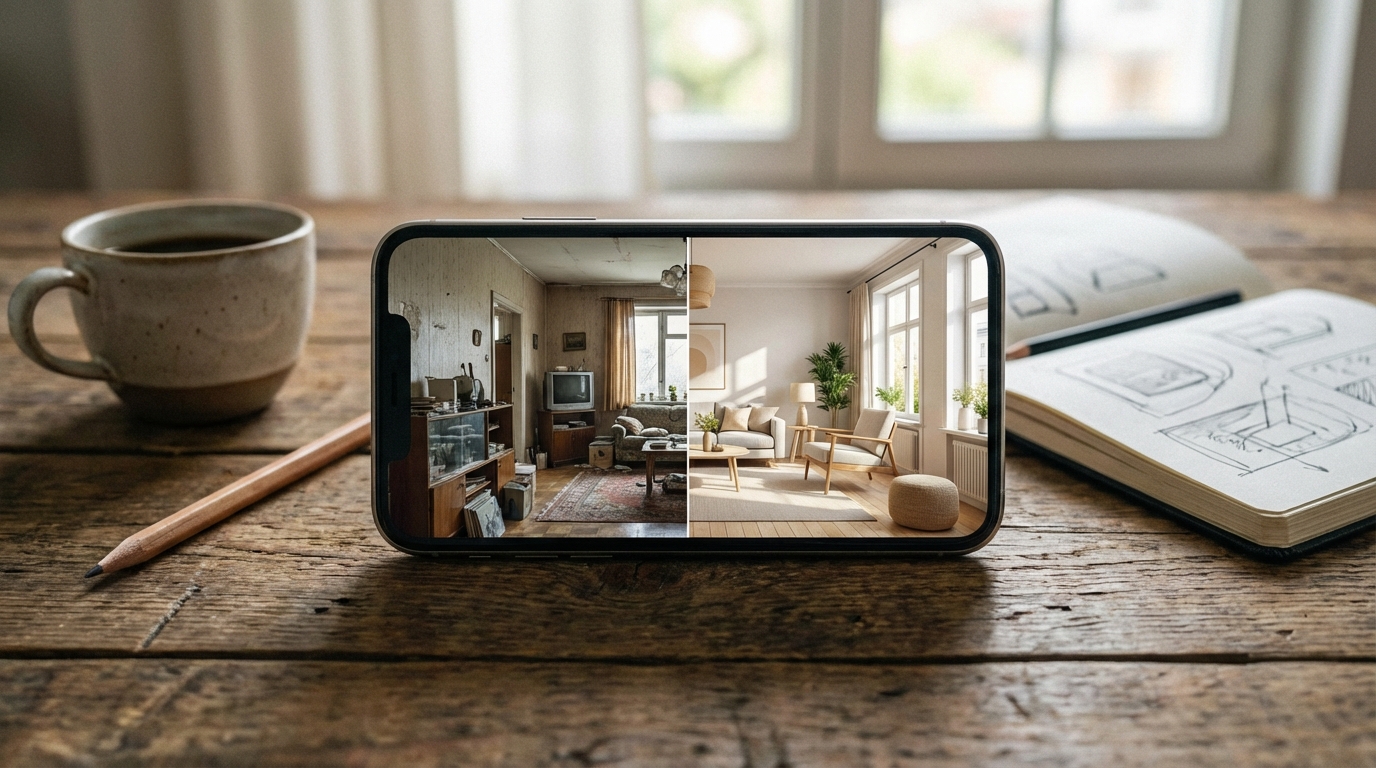
Jokainen mitta tässä alla olevassa taulukossa on lähtökohta — huoneesi muoto, ovien sijainti ja ikkunoiden asema merkitsevät yhtä paljon kuin pelkät neliömetrit. Varmin tapa testata ennen ostamista: valokuvaa olohuoneesi Homeify-sovelluksella ja esikatso erilaisia asetteluja ja kalustetyylejä heti.
Usein kysytyt kysymykset
Aloita mittaamalla huone ja piirrä yksinkertainen pohjapiirros. Sijoita sohva pisimmän seinän viereen tai käytä sitä alueiden jakajana. Jätä vähintään 70 cm kulkuväylä jokaisen kalusteen ympärille mukavaa liikkumista varten. Valitse sohvapöytä jonka halkaisija tai pituus on enintään 80 cm, äläkä tuki ikkunoita tai ovia. Neliömäisessä olohuoneessa kokeile kahta pientä sohvaa kasvotusten; suorakulmaisessa olohuoneessa sijoita sohva poikittain luodaksesi erilliset vyöhykkeet.
Lämpimät neutraalit sävyt toimivat parhaiten: murrettu valkoinen, hiekanruskea, puuteri ja vaalea harmaa heijastavat luonnonvaloa ja siirtävät seinät visuaalisesti taaksepäin. Maalaa katto saman sävyn kanssa kuin seinät häivyttääksesi rajan. Kontrastia varten lisää yksi aksenttiseinä syvempään sävyyn — tummansininen, metsänvihreä tai lämmin terrakotta — luodaksesi syvyyttä sulkematta tilaa. Suomalaisen kerrostaloasunnon pohjoisessa valossa lämpimät neutraalit ovat erityisen tärkeitä — kylmä puhdas valkoinen tekee pienestä huoneesta marraskuussa kliinisen näköisen.
Määrittele jokainen vyöhyke visuaalisesti ilman seiniä. Käytä eri lattiamateriaaleja (parketti olohuonen puolella, laatta keittiön puolella), aseta sohva selkä keittiöön päin pehmeäksi jakajaksi, tai asenna matala kirjahylly kahden alueen väliin. Keittiösaareke toimii baarina ja ruokailupisteenä. Pidä molemmat tilat samassa väripaletissa jotta kokonaisuus näyttää johdonmukaiselta. Tämä ratkaisu on yleinen suomalaisessa kaksiossa ja kolmiossa joissa tilaa on vähän.
Panosta korkeuteen: kirjahylly lattiasta kattoon kolminkertaistaa säilytyskapasiteettisi verrattuna perinteiseen lipastoon, samalla lattiapinta-alalla. Käytä suljettuja kaappiosia arkitavaroille ja varaa avohyllyt vain muutamalle koriste-esineelle. Valitse monikäyttöiset kalusteet — rahi laatikolla, sohvapöytä laatikoilla, tv-taso lokeroilla. Kelluvat seinähyllyt ovien ja ikkunoiden yläpuolella hyödyntävät kuolleen tilan jonka useimmat ohittavat.
Käytä Homeify-sovellusta: valokuvaa huoneesi ja näe se välittömästi muunnettuna. Testaa minimalistinen asettelu, skandinaavinen paletti tai japandi-tunnelma — kaikki omassa todellisessa tilassasi alle 30 sekunnissa. Yli 80 tyyliä, vertaa rinnan ennen kuin sitoudut ainoaakaan ostokseen.
Lue lisää
Oliko tästä artikkelista apua?
Lataa
Muunna mikä tahansa huone tekoälyn avulla – lataa Homeify ja aloita kotisi sisustussuunnittelu ilmaiseksi.
