
Työhuoneen sisustus
Tummansininen tehosteseinä, ergonominen pohja ja kerroksittain ladattu valaistus — etätyökoti, joka kestää myös Suomen pitkän kaamoksen.
Hyvä työhuoneen sisustus rakentuu työpöydän sijoittamisesta luonnonvalon lähelle, kerroksittain ladatusta valaistuksesta ja älykkäästä säilytyksestä, joka pitää sotkun näkymättömissä. Esikatsele suunnitelmasi Homeifyn avulla ennen muutoksia.
Etätyöhuone ansaitsee oikean suunnittelun
Suomalainen etätyökulttuuri kypsyi pandemian jälkeen eikä ole peruuntunut: monet tekevät hybridityötä, ja työhuone on muuttunut hetkellisestä järjestelystä kodin tärkeimmäksi huoneeksi. Silti useimmat työhuoneet näyttävät edelleen jälkikäteen ajatellulta. Kannettava ruokapöydällä, taittotuoli autotallista lainattuna, paperipino, joka ei koskaan löytänyt hyllyä. Jos vietät kahdeksan tuntia päivässä tässä tilassa, sen pitäisi tehdä yhtä paljon työtä kuin sinunkin ja näyttää siinä hyvältä.
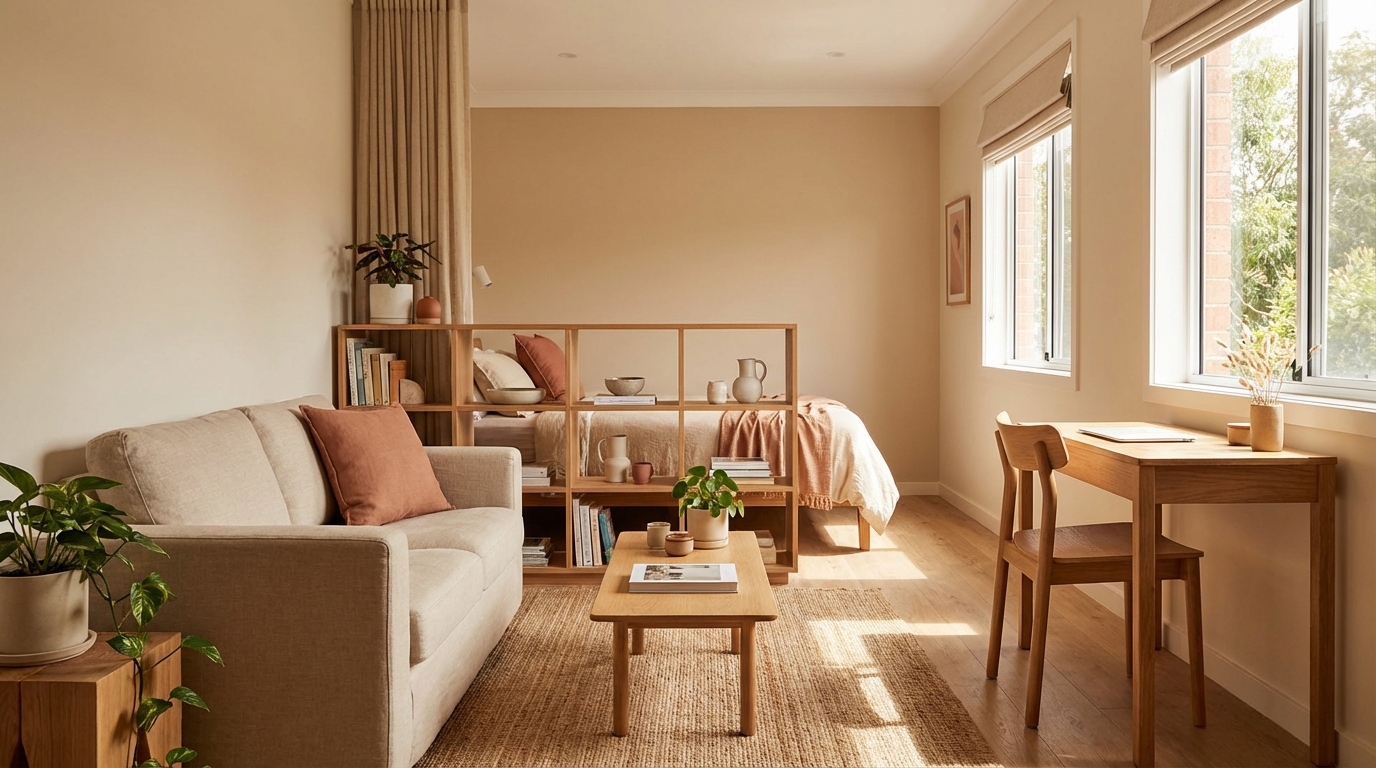
Työhuoneen suunnittelu ei tarkoita kalleimman työpöydän ostamista. Se tarkoittaa tarkoituksellisuutta: väripaletin valitseminen, joka auttaa keskittymään, työpöydän sijoittaminen sinne missä valo todella ulottuu, säilytys, joka estää sotkua palaamasta, ja valaistus, joka muuttuu päivän mukana. Olipa sinulla erillinen huone tai olohuoneesta veistetty kulma, nämä päätökset erottavat työtilan, jota pelkäät, sellaisesta, johon astut energialla. Jos työhuonettasi on yhdistettävä vierashuoneeseen tai olohuoneen kulmaan — hyvin yleinen suomalainen ratkaisu kerrostaloissa — pidä työpiste järjestyksessä suljettujen kaappien avulla. Jos tila on vielä tiiviimpi, katso miten yksiön sisustus jakaa työ- ja levotilan samalla neliömetrillä, ja miten minimalistinen tyyli pitää työpöydän rauhallisena myös videopuhelun taustalla. Homeifyn tekoäly antaa testata seinävärit, työpöytäpaikat ja sisustustyylit suoraan oman tilasi valokuvassa — jokainen päätös tehdään luottavaisesti, ei arvauksin.

Työhuoneen väripaletti
Kuusi sävyä, jotka tasapainottavat keskittymisen ja mukavuuden — maadoittavia syvälle työlle, lämpimiä koko päivän istunnoille.
Tummansininen
Tehosteseinän väri (25 %) — maadoittava, älyllinen sävy, joka terävöittää keskittymistä ja toimii erityisen hyvin kirjastotyyppisessä työhuoneessa
Lämmin kerma
Pääseinät ja katto (40 %) — pitää huoneen valoisana ja tasapainottaa tumman tehosteseinän, estäen luolavaikutuksen, joka tappaa iltapäivän tuottavuuden
Pähkinäpuunruskea
Työpöytä ja hyllyt (15 %) — rikas keskisävyinen puu, joka sopii kauniisti tummansiniseen ja messinkiin, tuoden lämpöä ilman visuaalista painoa
Harjattu messinki
Vetimet ja valaistus (10 %) — työpöytälamppu, laatikoiden vetimet tai hyllykiinnikkeet harjatussa messingissä nostavat toiminnallisen huoneen tyyliteltyyn
Salviavihreä
Toissijainen tehoste tekstiileissä (5 %) — pellavaverho tai työpöytäjärjestäjä salviassa tuo orgaanisen rauhan ja rikkoo tummansininen-puu-paletin
Pehmeä valkoinen
Listat, hyllyt ja kattoyksityiskohdat (5 %) — terävän valkoinen hylly tummansinistä seinää vasten luo kontrastin, joka saa molemmat värit laulamaan
Työhuoneen inspiraatiogalleria
Kuusi lähestymistapaa työhuoneen sisustukseen — kotoisesta nurkkauksesta kirjastotyyliseen työtilaan.

Tummansininen tehosteseinä ankkuroi pähkinäpuutyöpöydän ja messinkivalaisimen

Kelluvat hyllyt ja ikkunaan päin oleva työpöytä maksimoivat luonnonvalon

Kasvit ja lämmin puu luovat zen-työtilan keskittyneeseen työhön

Kompakti työnurkkaus veistettynä olohuoneen kulmasta

Galleriaseinä printeillä tuo persoonallisuutta pieneen työhuoneeseen

Lattiasta kattoon ulottuva kirjahylly muuttaa työhuoneen yksityiseksi kirjastoksi
Vinkit työhuoneen sisustamiseen
Sijoita työpöytä luonnonvalon lähelle
Sijoita työpöytäsi niin, että luonnonvalo tulee sivulta tai edestä — ei koskaan suoraan näytön takaa, mikä luo häikäisyn, eikä takaasi, mikä jättää kasvosi varjoon videopuheluissa. Ikkunaa kohti tai siihen kohtisuoraan oleva työpöytä antaa päivänvaloa työpinnalle, näkymän, joka lepuuttaa silmiä tehtävien välillä, ja imartelevan etuvalon kameratapaamisille. Suomen kaamosaikana tämä on vielä tärkeämpää — luonnonvaloa on niin vähän, että jokainen säde pitää saada käyttöön.
Yksi tehosteseinä keskittymistä varten
Yksi tehosteseinä syvässä tummansinisessä, metsänvihreässä tai hiilenharmaassa työpöydän takana luo polttopisteen ja luonnollisen taustan videopuheluille ilman että tila tuntuu pieneltä. Pidä loput kolme seinää lämpimässä kermassa tai pehmeässä valkoisessa kirkkauden säilyttämiseksi. Tämä yhden seinän lähestymistapa antaa kokeilla rohkeaa väriä murto-osalla kustannuksista — yksi seinä vie noin kaksi litraa maalia ja yhden iltapäivän.
Investoi tuoliin ennen kaikkea muuta
Vietät enemmän tunteja työtuolissa kuin missään muussa omistamassasi huonekalussa. Ergonominen tuoli säädettävällä lannerangan tuella, istuinsyvyydellä ja käsinojilla ei ole ylellisyys — se on edellytys työtilalle, jota voit todella käyttää kahdeksan tuntia päivässä. Varaa työhuoneen budjetistasi reilu osuus nimenomaan tuoliin — se on ainoa huonekalu, joka kantaa ruumistasi koko työpäivän. Kaunis työpöytä ei merkitse mitään, jos selkäsi särkee klo 15. Etsi tuoleja hengittävällä mesh-selkänojalla ja istuinkorkeusalueella 42–52 cm.
Piilota kaapelit, näytä esineet
Mikään ei tuhoa stylattua työpöytää nopeammin kuin laturien ja jatkojohtojen sotku. Reititä kaapelit työpöydän aukon tai pöydän alle asennetun kaapelitarjotin kautta, ja käytä yhtä jatkojohtoa, joka on piilotettu huonekalun taakse. Kun kaapelit katoavat, sinulla on tilaa hoitaa työpöytäpinta: messinki työpöytälamppu, keramiikkakynäpidike, yksi kasvi ja muistivihko. Siinä se. Selkeä työpöytä neljällä tarkoituksellisella esineellä näyttää paremmalta — ja toimii paremmin — kuin pinta, joka on hautautunut vempaimien alle.
Rajaa vyöhyke matolla
Jos työhuoneesi sijaitsee makuuhuoneen kulmassa tai avoimen pohjan olohuoneessa, matto työpöydän ja tuolin alla luo visuaalisen rajan, joka kertoo aivoillesi: täällä työ tapahtuu. Valitse lyhyttukkainen tai tasokudottu matto, jotta tuolisi rullaa sujuvasti — paksut tekstuurit taistelevat pyöriä vastaan. Koolla on väliä: maton pitäisi ulottua vähintään 50 cm tuolin yli kaikilta sivuilta, jotta et koskaan rullaa reunan yli keskittyneen istunnon aikana. Lämmin villamatto tai juutti vaimentaa myös ääntä ja vähentää kaikua puheluissa.
Kerrosta kolme valotyyppiä
Pelkkä kattovalo luo kovia varjoja ja silmien rasitusta. Rakenna kolme kerrosta: yleisvalo kattovalaisimesta tai upotetuista spoteista asettaa huoneen kirkkauden, työvalo säädettävällä työpöytälampulla ohjaa keskittyneen valaistuksen työpinnalle, ja tehostevalo hyllylle asennetusta LED-nauhasta tai pienestä pöytälampusta kirjahyllyllä lisää syvyyttä ja lämpöä. Käytä lämpimänvalkoisia lamppuja 2700–3000 K — viileämpi tuntuu kliiniseltä klo 18 jälkeen. Himmennin kattovalossa antaa siirtyä kirkkaasta työtilasta pehmeämpään iltatilaan.
Työpöydän pohjaratkaisu ja ergonomia
Työpöydän sijainti määrittää, miten koko huone toimii. Kultainen sääntö: aseta se sinne, missä luonnonvalo osuu työpintaan ilman näytön häikäisyä. Ikkunaan kohtisuoraan oleva työpöytä — valo tulee ei-hallitsevalta puolelta — on ergonominen ihanne. Jos olet oikeakätinen, valo vasemmalta estää käden varjon kirjoittaessasi.
Syvyydellä on enemmän väliä kuin leveydellä. 60 cm syvä työpinta mahtuu näytölle käsivarren etäisyydellä, näppäimistölle ja muistivihkolle ilman pinottamista. Vakiokorkeus on 72–75 cm — jos työpöytäsi on kiinteässä korkeudessa, säädä tuolisi niin että käsivartesi ovat lattian suuntaisesti ja jalat tasaisesti maassa. Seisontatyöpöydissä näytön pitäisi olla silmän tasolla pienellä alaspäin kallistuksella. Jätä 80 cm tilaa tuolin taakse, jotta voit työntää sen taakse törmäämättä seinään, ja pidä polku ovelle vapaana. Työhuone, johon joudut puristumaan, on työhuone, jota vältät.

Hyllytys ja säilytys, joka todella toimii
Nopein tapa pilata stylattu työhuone on antaa paperin, kaapeleiden ja tarvikkeiden kasaantua työpöydälle. Säilytys tarvitsee järjestelmän, ei pelkkää hyllyä. Aloita pystysuorasti: seinään asennettu kirjahylly tai kelluvat hyllyt työpöydän yläpuolella tai vieressä pitävät hakemistokirjat, kansiot ja koriste-esineet ilman että ne syövät lattiapinta-alaa. Suljettu säilytys — kortistokaappi, lipasto tai työpöytä laatikoilla — piilottaa kaapelien, paperitarjottimien ja tulostintarvikkeiden sotkuisen todellisuuden.
Hyllyille tähtää tasapainoon, jossa toiminnalliset esineet hallitsevat: enemmistö tilasta kirjoille, laatikoille ja kansioille, ja noin kolmannes koristeellisille yksityiskohdille (kasvi, kehystetty valokuva, keramiikkaesine). Tämä pitää hyllyt tarkoituksellisilta eikä sotkuisilta. Merkitse laatikot ja kansiot yhtenäisesti — tasaiset etiketit tai yhden värin säilytyslaatikot luovat visuaalisen rauhan. Kaapelinhallinta on myös säilytystä: asenna kaapelitarjotin työpöydän alle, käytä liimattavia kaapelipidikkeitä työpöydän jalan varrella ja pidä jatkojohto piilotettuna suljetussa laatikossa lattialla. Lopputulos on työtila, joka näyttää harkitulta jokaisesta kulmasta, mukaan lukien webkameran tallentama.

Työhuoneen valaistus tuottavuuteen ja mukavuuteen
Huono valaistus on hiljainen tuottavuuden tappaja. Jos työhuoneesi luottaa yhteen kattovalaisimeen, työskentelet litteässä, varjottomassa valossa, joka rasittaa silmiäsi puoliltapäivin. Korjaus on kerrostaa kolme valolähdettä, jotka palvelevat eri tarkoituksia.
Ensiksi yleisvalo: kattovalaisin tai upotetut spotit, jotka asettavat huoneen kokonaiskirkkauden. Toiseksi työvalo: työpöytälamppu säädettävällä varrella, joka ohjaa keskittyneen valon näppäimistölle ja papereille ilman heijastusta näytöltä. Sijoita se hallitsevan käden vastakkaiselle puolelle, jotta kirjoituskätesi ei luo varjoa. Kolmanneksi tehostevalo: pieni lamppu kirjahyllylle tai LED-nauha näytön takana vähentää kontrastia kirkkaan näytön ja tumman huoneen välillä — silmäväsymyksen pääsyy ilta-istunnoissa. Käytä lamppuja 2700–3000 K lämpimää valoa varten — yli 4000 K tuntuu sairaalalta auringonlaskun jälkeen. Asenna himmennin kattovalaisimeen, jotta voit siirtyä täyden kirkkauden työtilasta pehmeämpään luovan ajattelun tilaan. Suomen kaamosaikana koko valaisuratkaisu ratkaisee, jaksatko marraskuun aamuja vai et. Homeifyn avulla voit testata eri valaisuasetelmia työhuoneesi valokuvassa ennen yhdenkään valaisimen ostoa.

Usein kysytyt kysymykset
Aloita työpöydän sijoittamisesta ikkunan lähelle, jotta luonnonvalo osuu työpintaan ilman näytön häikäisyä. Lisää ergonominen tuoli, työpöytä 72–76 cm korkeudella, oma työvalo ja minimaalinen visuaalinen sotku. Nämä perusasiat merkitsevät paljon enemmän kuin pelkkä estetiikka — hyvin sijoitettu työpöytä ja oikea valaistus voivat muuttaa pienenkin nurkan keskittyneeksi työtilaksi.
Kerrosta kolme valolähdettä: yleisvalo, työvalo ja tehostevalo. Kattovalaisin tai upotetut spotit asettavat yleisen kirkkauden, työpöytälamppu säädettävällä varrella ohjaa keskittyneen valon työpintaan, ja LED-nauha näytön takana vähentää silmien rasitusta ilta-istunnoissa. Kaamoksen aikana tähtää 4000–5000 K aamupäivällä jäljitelläksesi puuttuvaa luonnonvaloa, ja vaihda 2700–3000 K lämpimään valkoiseen klo 17 jälkeen.
Kyllä — työhuone-vierashuone-yhdistelmä on Suomessa erityisen yleinen tilaongelmaan ratkaisuna. Sijoita työpöytä yhden seinän viereen, valitse vuodesohva tai taittosänky toiseen päähän, ja erottele alueet matolla tai kevyellä avohyllyjakajalla. Tärkeää on pitää työpiste järjestyksessä myös vierailujen aikana — sulkeutuvat kaapit ja kannelliset säilytyslaatikot ratkaisevat tämän. Tämä yhdistelmä toimii etenkin kerrostaloissa, joissa erillistä työhuonetta on mahdoton järjestää.
Ota valokuva nykyisestä työtilastasi ja avaa Homeify. Tekoäly muuntaa kuvan yli 80 sisustustyyliin alle 30 sekunnissa, jolloin voit testata seinävärit, työpöydän paikat ja sisustuksen — kaikki suoraan puhelimeltasi.
Oliko tästä artikkelista apua?
Lataa
Muunna mikä tahansa huone tekoälyn avulla – lataa Homeify ja aloita kotisi sisustussuunnittelu ilmaiseksi.