Makuuhuoneen seinän väri ja muut huoneet: täydellinen väriopas
Seinän väri makuuhuoneeseen, olohuoneeseen, keittiöön ja eteiseen: 60-30-10-sääntö, täydennysvärit, valmiit paletit huone kerrallaan ja värin testaus ennen maalausta.
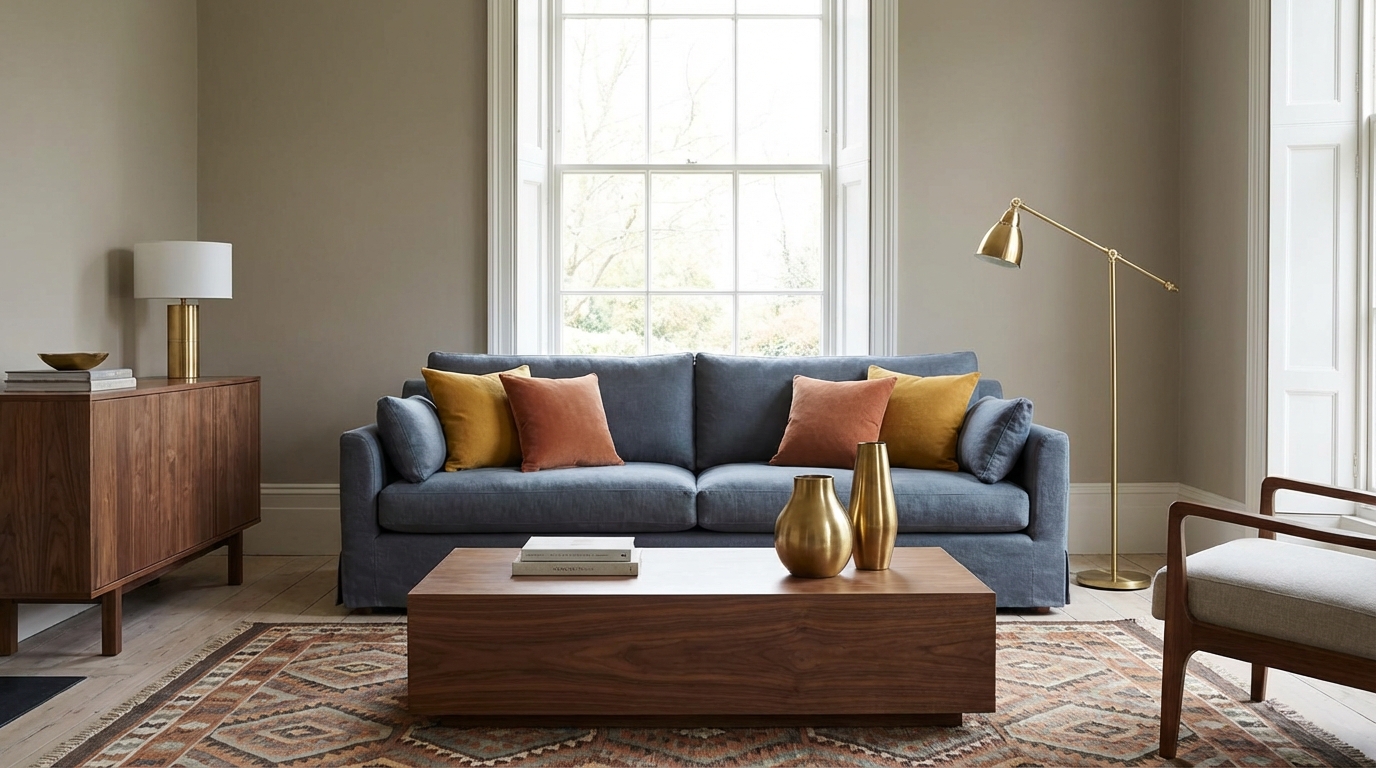
Jokainen onnistunut värien yhdistelmä nojaa kolmeen suhteeseen: 60 % hallitsevaa neutraalia, 30 % tukevaa sävyä, 10 % kirkasta aksenttia. Täydennysvärit luovat energiaa, analogiset paletit rauhaa. Testaa mikä tahansa yhdistelmä omassa huoneessasi Homeify-sovelluksella ennen maalipurkin avaamista.
Näin yhdistät värit sisustuksessa — huone kerrallaan
Yhden värin valitseminen huoneeseen on helppoa. Kolmen tai neljän sävyn saaminen toimimaan yhdessä — seinillä, kalusteissa, tekstiileissä ja koriste-esineissä — siinä moni jumittuu. Tulos? Jälleen yksi täysin valkoinen huone tai pahempaa, kallis uudelleenmaalaus sen jälkeen kun rohkea valinta näytti täydelliseltä värikartassa mutta piinalliselta neljällä seinällä.
Hyvä uutinen: värien yhdistäminen seuraa ennustettavia sääntöjä. Samat periaatteet jotka tekevät auringonlaskusta visuaalisesti tyydyttävän — lämpimät sävyt liukuvat kylmiin, valon ja varjon välinen kontrasti — pätevät suoraan olohuoneeseesi. Sisustusammattilaisilla ei ole mystistä “värisilmää”. He käyttävät järjestelmää. Tämä opas antaa sinulle saman järjestelmän.
Aloitamme väriympyrästä ja kolmesta perusharmonian tyypistä. Sitten käymme läpi konkreettiset, toimiviksi todetut yhdistelmät huone kerrallaan — valmiine paletteineen jotka voit toteuttaa jo tänä viikonloppuna. Jokaisen suosituksen ohessa on vaihtoehto pienemmälle budjetille, ja jokainen osio linkittää syvempään inspiraatioon aihekohtaisella sivulla.
Väripsykologian tutkimus osoittaa että kodin sävyt vaikuttavat mielialaan, tilan havaintoon ja jopa unen laatuun. Tutkimukset liittävät säännöllisesti siniset ja vihreät sävyt makuuhuoneessa pidempään ja palauttavampaan uneen, kun taas kylläiset punaiset ja violetit taipuvat ylistimuloimaan. Värien yhdistelmän valinta ei ole vain estetiikkaa — se on arjen hyvinvoinnin valintaa. Ja suomalaisessa kontekstissa on yksi ylivoimainen erityispiirre: pohjoinen valo. Talvella päivät ovat lyhyet ja valo on kylmä, kesällä valoa on yli 18 tuntia vuorokaudessa. Sama sävy näyttää täysin erilaiselta tammikuun lumeen heijastuvassa kalpeassa valossa ja heinäkuun valoisan yön auringossa.
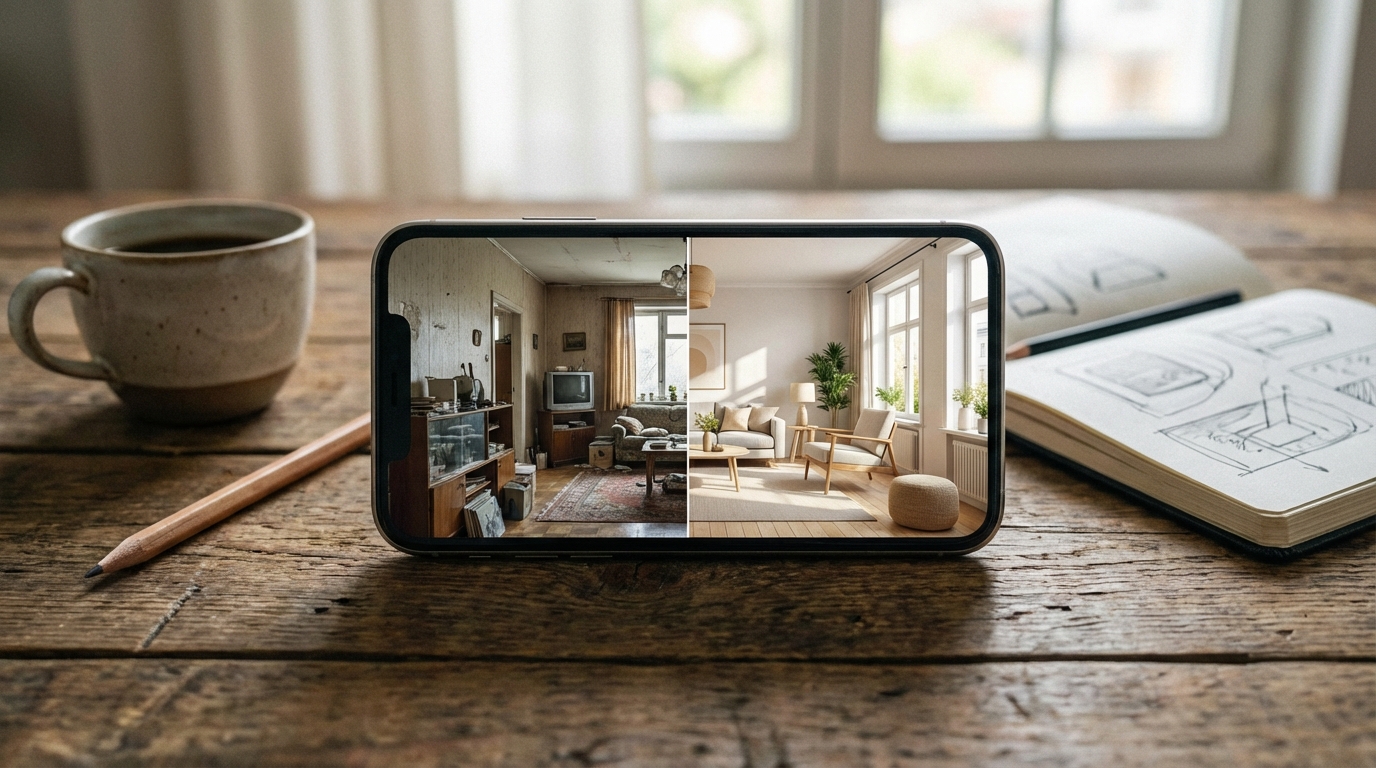
Jos haluat nähdä ennen kuin sitoudut, Homeify antaa sinun valokuvata minkä tahansa huoneen ja esikatsoa kymmeniä paletteja ja tyylejä sekunneissa — nolla riskiä, nolla sitoutumista.
Suomalaiset maalisanastot — mitä kannattaa tietää ennen ostoa
Ennen kuin astut rautakauppaan, muutama suomalaiseen maalivalikoimaan liittyvä peruskäsite säästää sekaannukselta. Kiiltoaste tarkoittaa sitä, kuinka paljon maali heijastaa valoa. Yleisimmät vaihtoehdot kuluttajille ovat täyshimmeä (matta — piilottaa seinien virheet parhaiten ja sopii olohuoneisiin sekä makuuhuoneisiin), himmeä ja puolihimmeä (helpompi puhdistaa, sopii eteisiin ja lastenhuoneisiin) sekä täyskiiltävä (kestää kosteutta ja pesua, käytetään pääasiassa listoihin ja oviin). Seinämaalin perusvalinta on yleensä täyshimmeä tai himmeä.
Sävy, alasävy ja murrettu sävy ovat myös termejä joiden ero maksaa itsensä takaisin. Sävy on pääväri (esimerkiksi vihreä). Alasävy on se hienovarainen suunta johon sävy taittuu (tämä vihreä taittaa keltaiseen, toinen siniseen). Murrettu sävy on värikartan kielellä hieman harmaaseen tai ruskeaan pehmennetty versio puhtaasta väristä — se on Pohjolan suosituin maaliluokka, koska se toimii pohjoisen valon kanssa ilman että tuntuu räiskyvältä.
Värikartta (tai näytepala) on sinun tärkein työkalusi. Älä koskaan valitse sävyä värikartan pienestä neliöstä. Suomessa yleinen käytäntö: testaa isompia paloja seinällä vähintään vuorokauden ajan ja katso lopputulosta sekä päivänvalossa että iltavalossa. Suomalaisen kotien pohjoinen valo näyttää väreistä eri puolen kuin eteläeurooppalaisen kodin ikkunan edessä — pidä se mielessäsi kun luet kansainvälisten sisustusblogien suosituksia.
Väriympyrä ja kolme perusharmoniaa
Väriympyrä on kaikkein käyttökelpoisin työkalu onnistuneen värien yhdistelmän luomiseen. Jokainen sisustussuunnittelija, maalari ja graafinen suunnittelija viittaa siihen. Kun ymmärrät sen toimintaperiaatteen, värien jotka “sopivat yhteen” valitseminen lakkaa olemasta mysteeri ja muuttuu toistettavaksi menetelmäksi.
Täydennysvärit — maksimaalinen kontrasti
Täydennysvärit sijaitsevat väriympyrällä vastakkain toisiaan vasten: sininen ja oranssi, punainen ja vihreä, keltainen ja violetti. Nämä yhdistelmät luovat vahvimman visuaalisen kontrastin — ne “värähtelevät” toistensa vieressä ja vetävät välittömästi katseen puoleensa. Sisustuksessa käytä täydennysväripareja silloin, kun haluat huoneeseen energiaa ja dynamiikkaa.
Temppu on suhteessa. Älä koskaan käytä kahta täydennysväriä samassa määrässä — huone näyttäisi urheilupaidalta. Tee sen sijaan yhdestä väristä hallitseva ja toisesta pistemäinen aksentti — tyynyt, maljakko, yksi nojatuoli. Tummansiniset seinät lämpimän oranssien tyynyjen kanssa. Salvianvihreä keittiö kupariseen valaisimeen yhdistettynä. Siinä on täydennyskontrasti oikein annosteltuna.
Analogiset paletit — vaivaton harmonia
Analogiset värit ovat väriympyrässä vierekkäin: sininen, sinivihreä ja vihreä, tai oranssi, punaoranssi ja punainen. Nämä yhdistelmät tuntuvat luonnostaan harmonisilta koska ne jakavat yhteisen alasävyn. Ne ovat ihanteellisia makuuhuoneisiin, lukunurkkiin ja kaikkiin tiloihin joissa haetaan rauhaa ilman yksitoikkoisuutta.
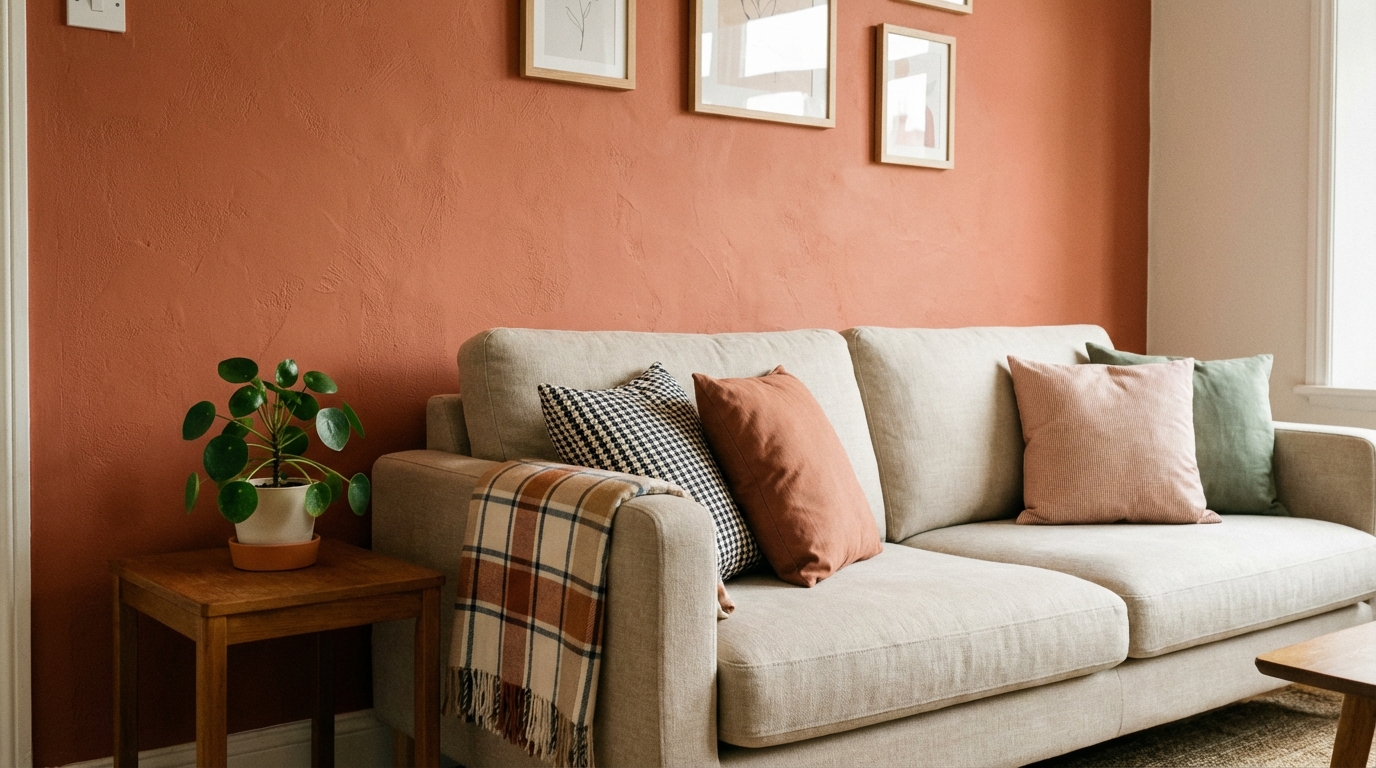
Klassinen analoginen paletti olohuoneeseen: lämmin beige, terrakotta ja puuteri. Kaikki kolme jakavat lämpimän alasävyn, ne sulautuvat visuaalisesti seinien, tyynyjen ja mattojen välillä, eikä yksikään kilpaile huomiosta. Lisää pisara tummaa pähkinäpuuta ankkuroimaan kokonaisuus, ja huone tuntuu tarkoituksellisesti suunnitellulta — ei vain sisustetulta.
60-30-10-sääntö käytännössä
Tämä on suhdeformula joka poistaa epäröinnin. Sovella sitä mihin tahansa huoneeseen:
- 60 % hallitseva väri — seinät ja isot pinnat. Yleensä neutraali: lämmin valkoinen, hiekanruskea, pehmeä hiekka tai vaaleanharmaa
- 30 % tukeva väri — sohva, verhot, iso matto. Rikkaampi sävy joka täydentää pääväriä: kameli, salvia, puuterinsininen
- 10 % aksentti — tyynyt, taide, statement-valaisin, koriste-esineet. Kirkkain väri: sinappi, petrooli, viininpunainen, koralli
Esimerkki olohuoneelle: lämpimän pellavavalkoiset seinät (60 %), liuskekivensininen sohva (30 %) ja sinappi-keltaiset tyynyt (10 %). Suhteet estävät yhtä väriä tukahduttamasta tilaa samalla kun ne ylläpitävät visuaalista kiinnostavuutta.

Olohuoneen seinän väri — näin yhdistät
Olohuone on se tila jossa palettisi antaa sävelen koko kodille. Vieraat muodostavat mielikuvan välittömästi astuessaan sisään — ja värillä on enemmän painoa kuin kalusteilla tai asettelulla. Suomalaisessa kontekstissa olohuoneen pääsävy kantaa lisäksi talven pitkien iltojen painoa: liian kylmä valkoinen tekee huoneesta sairaalamaisen marraskuussa.
Lämpimät neutraalit perusväreinä
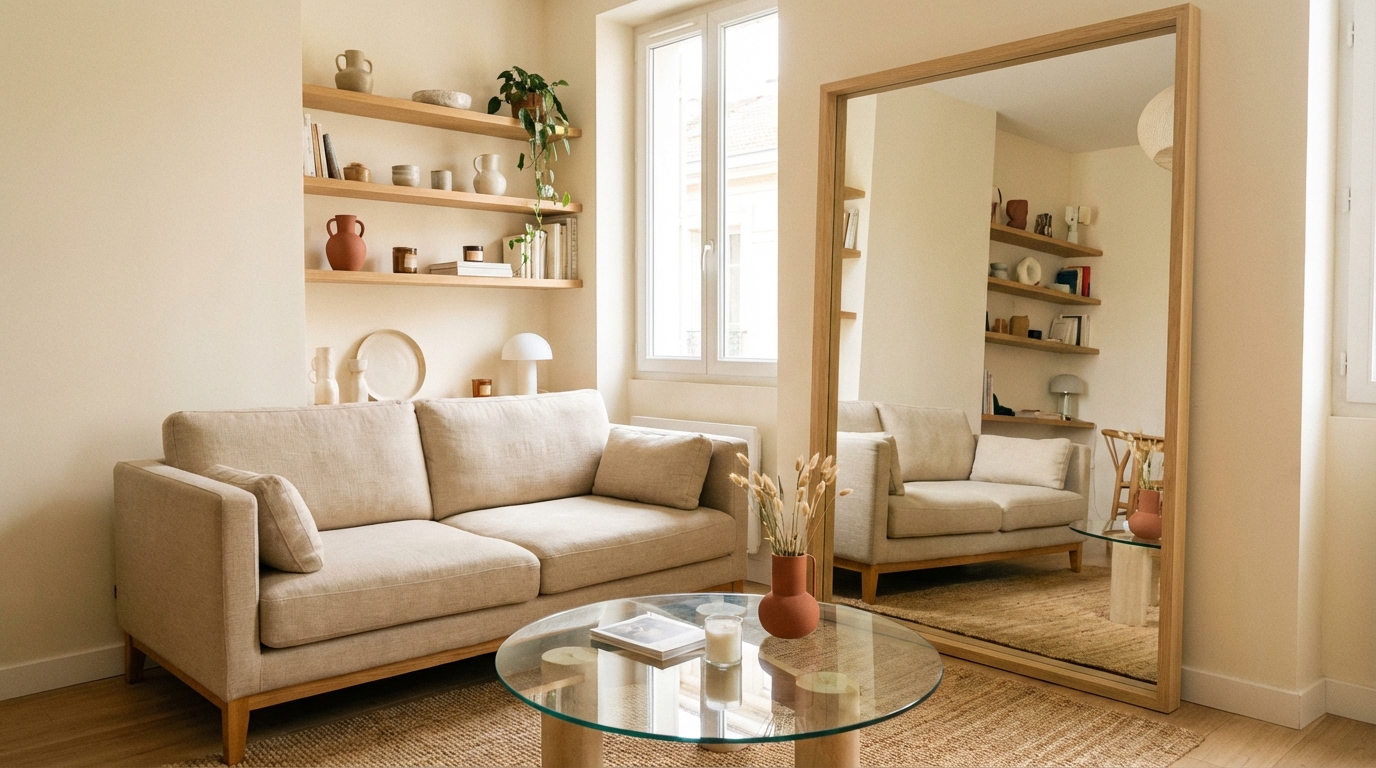
Monipuolisin olohuoneen pohja on lämmin neutraali: hiekanruskea (harmaa-beige), lämmin valkoinen keltaiseen taittuvin alasävyin, tai pehmeä hiekka. Nämä sävyt toimivat lähes minkä tahansa aksentin kanssa ja tekevät huoneesta isomman ja valoisamman näköisen. Vältä puhdasta kylmää valkoista — se näyttää kliiniseltä keinovalaistuksessa ja riitelee puusävyjen kanssa.
Beigeen olohuoneeseen kerrosta tekstuureja fadea estääksesi: kaurahiutaleen värinen pellavasohva, juuttimatto, rottinkinen nojatuoli ja tammitasoinen sohvapöytä. Lämpimän sävyinen monokromatiikka näyttää hienostuneelta eikä tylsältä, koska jokaisella pinnalla on eri tekstuuri joka heijastaa valoa eri tavalla.
Rohkeat aksenttistrategiat
Kun neutraali pohja on kunnossa, tuo kontrastia. Olohuoneen vaikuttavin aksentti on yksi värikäs seinä — ei kaikki neljä. Syvä petroolinsininen korostusseinä sohvan takana, yhdistettynä lämpimänsävyisiin puuhyllyihin ja muutamiin messinkikoristeisiin, luo fokuspisteen joka ankkuroi koko huoneen.

Trendikkäät aksenttiyhdistelmät olohuoneeseen vuodelle 2026:
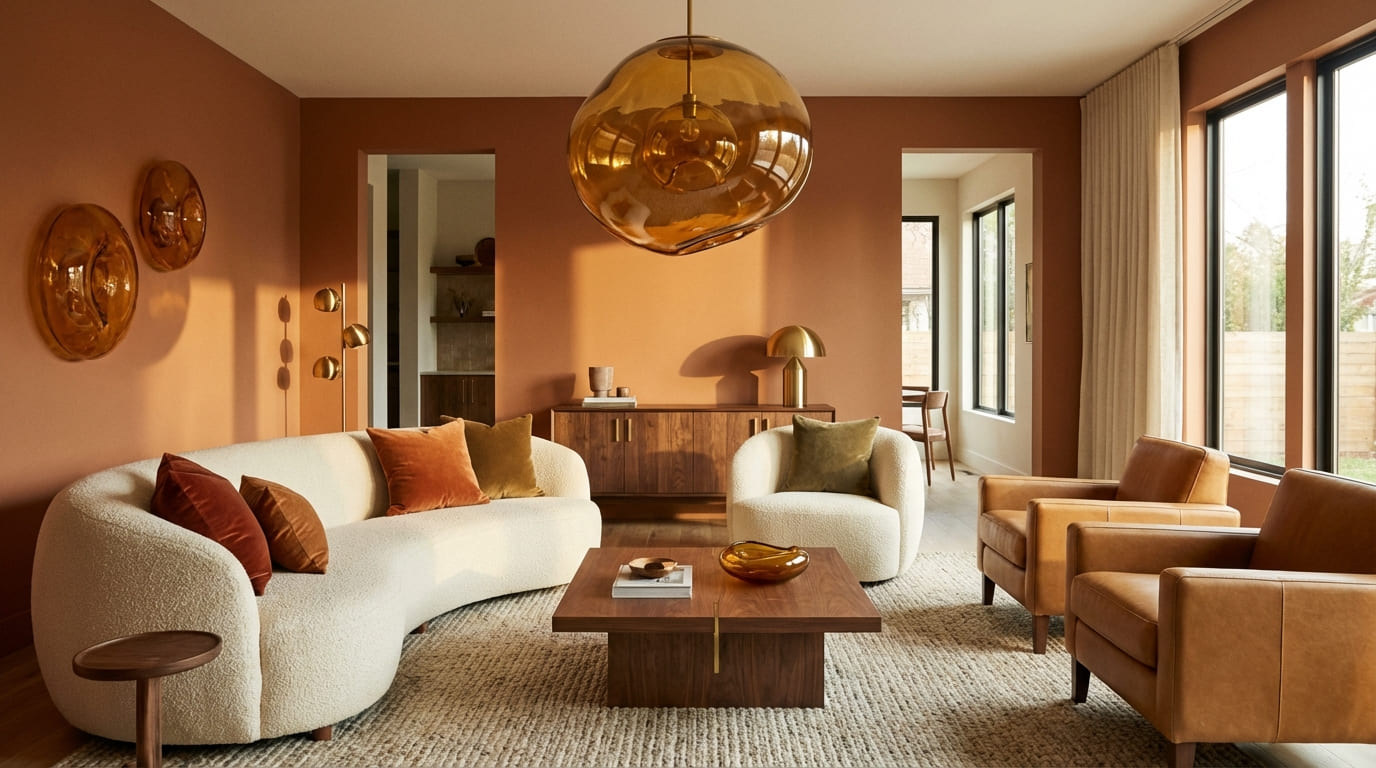
- Terrakottaseinä + kerman värinen kaluste + tummanpähkinän aksentit — maanläheinen, juurtunut
- Petrooli-tyynyt + lämmin beige seinä + messinkivalaisin — hienostunut kontrasti
- Salvianvihreä nojatuoli + lämpimänvalkoinen seinä + luonnonpuu — japandi-rauha
- Sinappiviltit + antrasiittisohva + pähkinäpuun jalat — mid-century modern -energia
Keittiön seinän väri — kontrasti ja koordinointi
Keittiön värivalinnat sitouttavat enemmän kuin olohuoneen — sinun täytyy sitoutua kaappioviin, työtasoihin ja välitiloihin jotka kestävät vuosia. Siksi sävyjen yhdistäminen kannattaa miettiä tarkkaan.
Korkean kontrastin yhdistelmät
Vaikuttavimmat keittiöpaletit pelaavat valoisan ja tumman kontrastilla. Musta keittiö — mattamustat ovet, vaalea tammityötaso ja valkoinen marmorivälitila — on yksi nykyaikaisen suunnittelun vaikuttavimmista yhdistelmistä. Avain on tasapainossa: tummat kaapit tarvitsevat vaaleat työtasot ja avohyllyt jottei tila käy ahdistavaksi.

Muita korkean kontrastin yhdistelmiä keittiössä:
- Tumman vihreät kaapit + messinkivetimet + valkoinen työtaso — klassinen ja odottamaton
- Tummansiniset alakaapit + valkoiset yläkaapit + puutyötaso — kaksivärinen ajaton ratkaisu
- Antrasiitti-saareke + valkoiset reunakaapit + lämpimän puinen kattolista — syvyyttä ilman raskautta
Kaappien ja seinien koordinointi
Kun kaapit ja seinät kilpailevat keskenään, keittiö näyttää kaoottiselta. Sääntö: jos kaapit ovat voimakkaita, seinien on oltava neutraaleja — ja päinvastoin. Valkoiset kaapit kestävät salvianvihreän seinän. Tumman antrasiittiset kaapit vaativat lämpimän valkoisen tai kalpean kerman seinän. Älä koskaan yhdistä vahvaa kaappiväriä vahvaan seinäväriin, ellet tietoisesti luo sävytietä (täysin vihreä keittiö esimerkiksi — mikä toimii loistavasti jos vaihtelet vihreän eri nyansseja).
Makuuhuoneen seinän väri — nukuttavat sävyt
Makuuhuone on se huone jossa väripsykologia painaa eniten. Vietät kahdeksan tuntia vuorokaudessa näiden sävyjen keskellä, ja tutkimus liittää viileät ja pehmeät sävyt säännöllisesti parempaan unen laatuun. Se ei tarkoita tylsää — se tarkoittaa tarkoituksellista.
Rauhoittava monokromatiikka

Monokromatiikka käyttää saman väriperheen vaihteluja — vaaleasta tummaan — seinillä, vuodevaatteissa ja aksenteissa. Valkoinen makuuhuone jossa on norsunluun sävyiset lakanat, kalpea pellavainen sängyn päätyyn ja lämpimät kerman värin verhot, tuntuu siltä kuin nukkuisi pilvessä. Temppu välttää latteutta: vaihtele tekstuureja rajusti. Mattamaali, satiinipintaiset liinavaatteet, karkeaneulottu peitto, sileä keraaminen lamppu — kaikki samassa väriperheessä, mutta jokainen pinta erottuu toisistaan kosketukselta ja silmältä.
Nukuttavat korostusseinän värit
Jos haluat väriä makuuhuoneeseen, valitse yksi seinä (yleensä sängyn taustalla) ja pidä kolme muuta neutraaleina. Lepoa edistävät sävyt:
- Pehmeä salvianvihreä — rauhoittava, assosioituu luontoon ja lepoon
- Puuterin sininen — klassinen “hyvää yötä” useiden tutkimusten mukaan
- Lämmin puuteri-rose — hienovaraisempi kuin miltä kuulostaa; luo kodikkaan iltatunnelman
- Vaimennettu laventeli — tarpeeksi pehmeä rauhoittamaan, tarpeeksi omaperäinen persoonalliseen kosketukseen
Vältä kylläistä punaista, kirkasta keltaista tai sähkönsinistä makuuhuoneen seinillä — ne stimuloivat enemmän kuin rauhoittavat. Tummat sävyt kuten tummansininen tai antrasiitti voivat toimia jos niitä tasapainottaa vaaleampi vuodevaate ja lämmin 2700 K valaistus. Suomalaisessa makuuhuoneessa on myös muistettava talvipuolen pitkät iltat: tumma sävy toimii hyvin syksyllä ja alkutalvesta, mutta kesäkuun valoisa yö voi tehdä tummanaskotisesta makuuhuoneesta ahdistavan. Harkitse mikä on koko kalenterivuoden kokemus ennen maalin valintaa.
Kylpyhuoneen väripaletit
Kylpyhuone on se tila jossa voit uskaltaa ilman pitkäaikaisen sitoutumisen riskiä — pyyhkeet ja tarvikkeet vaihtuvat helposti. Hyödynnä tämä vapaus kokeilla yhdistelmiä joita epäröisit muualla.
Moderni kylpyhuone vuonna 2026 suosii tekstuurikiveä lämpimissä neutraaleissa sävyissä pohjana, värin tullessa laatoista ja tarvikkeista. Vaikuttavimmat paletit pelaavat kovien pintojen ja pehmeiden sävyjen välisellä kontrastilla:
- Valkoinen metrolaatta + lämpimät terrakottatarvikkeet + vaalea tammesta valmistettu allaskaappi — välimerellinen rauha
- Vihreä zellige-laatta-korostusseinä + valkoiset kalusteet + messinkihanat — spa-tunnelma, ajan hermolla
- Betoninpintainen harmaa laatta + mattamustat hanat + lämpimät puu-aksentit — teollinen tyylikkyys
- Vaaleanpunaiset seinät + valkoinen marmoriallas + kultaiset tarvikkeet — pehmeä glamour
60-30-10-sääntö pätee tässäkin: laatan väri 60 %, allaskaappi ja hanat 30 %, pyyhkeet ja tarvikkeet 10 %. Suomalaisessa kylpyhuoneessa värikysymys liittyy vielä yhteen erityispiirteeseen: sauna tai saunaosasto kylpyhuoneen vieressä. Jos kylpyhuone avautuu saunan pukuhuoneeseen tai on pesutilana sauna-yhteydessä, värilinjan johdonmukaisuus näiden kahden tilan välillä sitoo ne yhteen visuaalisesti. Vältä täysin eri palettia — jaa vähintään yksi sävy (esimerkiksi sama lämpimän puun sävy tai sama neutraali pohja) niin että siirtymä saunasta kylpyhuoneeseen tuntuu sujuvalta.
Värivinkit pieneen kylpyhuoneeseen
Alle 5 m² kokoisessa kylpyhuoneessa värivalinnat vaikuttavat suoraan tilan havaintoon. Vaalea kylmäsävyinen laatta (pehmeä harmaa, vaalea aqua, lämmin valkoinen) siirtää seinät visuaalisesti kauemmas ja avartaa tilaa. Tummempi kontrastilaattaraita — asetettuna silmänkorkeudelle yhdelle seinälle — luo horisontaalisen painotuksen joka leventää kapeita tiloja. Vältä tummia lattioita pienessä kylpyhuoneessa; ne vetävät katseen alas ja madaltavat kattoa visuaalisesti. Jos haluat luonnetta kompaktiin tilaan, kokeile rohkeasti väritettyä kattoa (syvä petrooli tai tummansininen) — se vetää katseen ylös ja yllättää ilman että tila kutistuu.
Työhuoneen ja ruokailutilan värit
Keskittymisen värit
Kotitoimiston värit tarvitsevat sävyjä jotka tukevat keskittymistä ilman silmien väsymistä. Oikea tasapaino: neutraali pohja ja yksi strateginen aksentti. Syvä tummansininen tai metsänvihreä ruudun takana olevalla seinällä vähentää silmien väsymystä (tummat pinnat kirkkaan ruudun takana vähentävät kontrastista johtuvaa häikäisyä), kun taas muut seinät lämpimän valkoisena tai pehmeän harmaana säilyttävät valoisuuden videoneuvotteluihin.
Materiaalit merkitsevät myös: lämpimän puinen työpöytä (tammi, pähkinäpuu) yhdistettynä mattamaalattuihin seiniin luo pintakontrastin joka ankkuroi tilan. Vältä kiiltäviä maalipintoja seinillä — ne heijastavat ruudun valoa ja aiheuttavat päänsärkyjä pitkissä työsessioissa. 2700–3000 K (lämmin valkoinen) työvalaisin täydentää paletin ilman että ruudun värit vääristyvät. Skandinaaviset työhuoneet — vaalea puu, valkoinen, vaimennettu aksentti — pysyvät suomalaisten etätyöläisten suosituimpana valintana vuonna 2026.
Ruokailutilan tunnelma
Ruokailutila on yksi harvoista tiloista joissa lämmin ja kylläinen väri todella parantaa kokemusta. Rikkaat sävyt kuten viininpunainen, syvä terrakotta tai tumma oliivinvihreä tekevät illoista intiimejä ja nostavat ruoat esiin lämpimän valaistuksen alla. Kattovalaisin asennettuna 65–75 cm:n korkeudelle pöydän yläpuolelle messinkinen tai mattamusta täydentää tunnelman.
Pidä katto seiniä vaaleampana — se estää huonetta näyttämästä ahtaalta. Syväsävyiset seinät ja lämpimän valkoinen katto luovat luonnostaan “korupaketti”-efektin joka kerää seurueen pöydän ympärille.
Eteinen ja yksiö — väri persoonallisuuden luojana
Eteinen antaa ensivaikutelman. Rohkea värivalinta tänne — kylläinen petrooli, lämmin terrakotta tai syvä salvia — toimii koska tila on pieni ja kuljetaan nopeasti läpi. Vieras kokee värin statementtinä, ei ylenpalttisuutena. Yhdistä kapeaan konsolipöytään, enintään 30 cm syvyydessä, pyöreään peiliin avartamaan havaittua tilaa, ja lämmin valkoinen kattovalaisin.
Yksiöissä väri muuttuu vyöhykejakajaksi. Käytä erillistä palettia erottamaan visuaalisesti oleskelu-, nukkuma- ja työskentelyalueet samassa avoimessa tilassa. Yksiö bohem-tyylissä voisi käyttää lämmintä terrakottaa olohuonekulmassa, vaimennettua salvianvihreää nukkuma-alueella ja puhdasta valkoista työpisteessä — kaikki yhdistettynä yhtenäisellä luonnonpuisella lattialla joka kulkee läpi koko tilan.
Sisustustrendit 2026 — suosituimmat väripaletit
Sisustustrendit 2026 ovat siirtäneet värikeskustelua ratkaisevasti. Kylmät harmaat ja tiukat valkoiset ovat jääneet taakse. Lämpimät, orgaaniset ja persoonalliset paletit hallitsevat.
Viisi yhdistelmää joita näet kaikkialla tänä vuonna:

- Terrakotta + kerma + pähkinäpuu — “lämmin maa” -paletti joka korvaa harmaa-valkoisen yhdistelmän
- Syvä petrooli + lämmin beige + messinki — hienostunut kontrasti metallisella lämmöllä
- Salvianvihreä + pellavavalkoinen + vaalea tammi — minimalistinen ilman kylmyyttä
- Viininpunainen + puuterinrose + tummapuu — dramaattinen ja tekstuurinen
- Okra + antrasiitti + raakabetoni — urbaani lämpö teollisessa hengessä
Nämä paletit toimivat koska ne kunnioittavat perusperiaatteita: lämpimät hallitsevat sävyt, hallittu kontrasti ja tekstuurien monimuotoisuus. Homeify-sovelluksella voit testata nämä viisi oman huoneesi valokuvassa ja päättää mikä sopii sinulle ennen kuin käytät euroakaan maaliin tai kalusteisiin.
Yleisimmät värivirheet
Jopa hyvät aikomukset romahtavat kun perusperiaatteet jätetään huomiotta. Viisi virhettä jotka maksavat eniten ja aiheuttavat eniten turhautumista:
- Sävyn valinta kaupan valaistuksessa. Rautakaupan loisteputket vääristävät jokaista sävyä. Ota värikartta aina kotiin ja teippaa se seinään 48 tunniksi — katso tulosta aamulla, keskipäivällä ja illalla ennen ostamista. Vielä parempaa: käytä tekoäly-sisustussovellusta esikatsomaan tarkan sävyn omilla seinilläsi sekunneissa.
- Alasävyjen sivuuttaminen. Kaksi “valkoista” voivat riidellä jos toinen taittaa kylmään siniseen ja toinen lämpimään kermaan. Lämmin valkoinen seinä kylmän valkoisen katon vieressä luo silmiinpistävän rikkoutuman. Vertaa aina värikarttoja rinnan luonnonvalossa.
- Kahden vahvan värin käyttö samoissa suhteissa. Puoliksi viininpunainen, puoliksi petrooli -huone näyttää sirkustelttalta. Kunnioita 60-30-10-sääntöä — yhden värin on hallittava.
- Lattian ja kiinteiden elementtien unohtaminen. Lattiasi, työtasosi ja laattasi ovat osa palettia. Lämpimän terrakottainen seinä riitelee kylmän harmaan lattialaatan kanssa. Lähde siitä mitä et voi helposti vaihtaa (lattia, työtasot) ja rakenna paletti sen ympärille.
- Koko huoneen maalaaminen testiksi. Täyden huoneen uudelleenmaalaus maksaa 150–400 € pelkästään materiaaleina. Maalaa ensin kaksi suurta testikoostetta (vähintään 50 cm sivultaan) eri seinille — yksi suoraan auringonvaloon, toinen varjoon.
Värien yhdistelmät yhdellä silmäyksellä
| Huone | Suositeltu paletti | Avainvärien duo | Tunnelma |
|---|---|---|---|
| Olohuone | Lämmin neutraali + yksi kirkas aksentti | Hiekanruskeat seinät + petrooli-aksentit | Vieraanvarainen, tasapainoinen |
| Keittiö | Vahva valoisa/tumma kontrasti | Mattamusta + vaalea tammi | Voimakas, moderni |
| Makuuhuone | Monokromatiikka kylmissä sävyissä | Puuterin sininen + lämmin kerma | Lepo, rauha |
| Kylpyhuone | Kivipohja + laatta-aksentti | Vihreät zelliget + valkoinen marmori | Spa, raikas |
| Kotitoimisto | Neutraali pohja + syvä korostusseinä | Lämmin valkoinen + metsänvihreä | Keskittynyt, rauhallinen |
| Ruokailutila | Lämpimät kylläiset sävyt | Viininpunaiset seinät + messinkivalaisin | Intiimi, vieraanvarainen |
| Eteinen | Yksi rohkea statement | Petroolinsininen seinä + lämmin puu | Mieleenpainuva, rohkea |
| Yksiö | Vyöhykejako palettien vaihtelulla | Terrakotta + salvia + valkoinen | Jäsennelty, ilmava |
Jokainen yllä oleva paletti seuraa samaa periaatetta: vaalea hallitsevana, tukeva sävy keskisuurena ja pistemäinen aksentti. Säädä suhteita huoneen koon ja valoisuuden mukaan — pienet tilat hyötyvät vaaleasta hallitsevasta, kun taas suuret huoneet kestävät tummempia ja kylläisempiä seiniä.
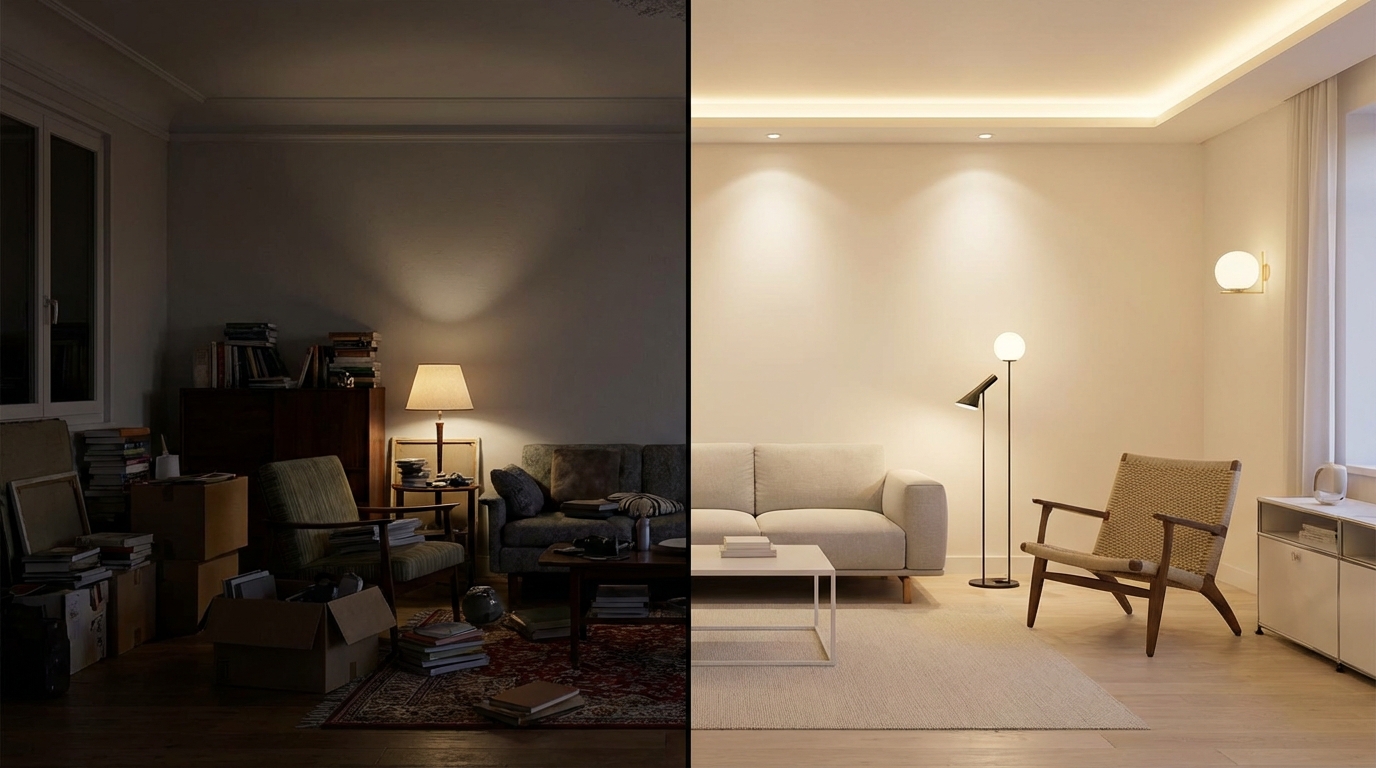
Suomalaisen kodin kannalta tähän listaan kannattaa lisätä yksi vielä: pohjoisen valon testi. Jokainen paletti joka näyttää upealta instagram-kuvassa ei toimi kun marraskuun harmaassa valossa olohuoneen ikkuna näyttää ulos sumumaisemaan. Kokeile sävyt omassa asunnossasi aamuauringossa, keskipäivän hetkessä ja illan hämärässä ennen kuin teet päätöksen. Ne joille tämä tuntuu vaivalloiselta, Homeify-sovelluksen valokuvapohjainen esikatselu tekee tämän saman työn sekunneissa — kuvaat huoneen luonnonvalossa ja näet 80 eri paletin samassa kontekstissa vetolaatikoiden välillä selaten. Se ei korvaa todellista maalitesteriä, mutta se poistaa suurimman osan huonosti harkituista värivalinnoista jo suunnitteluvaiheessa.
Usein kysytyt kysymykset
Makuuhuoneeseen sopivat parhaiten rauhoittavat sävyt, jotka tukevat unta ja palautumista. Suomalaisten sisustusammattilaisten suosituksia ovat pehmeä salvianvihreä, puuteri ja murrettu vaalea sininen — nämä sävyt rauhoittavat iltaisin ja näyttävät raikkailta myös pohjoisen valossa. Vältä kirkasta punaista, kirkkaan keltaista tai sähkönsinistä, jotka stimuloivat enemmän kuin rauhoittavat. Tummansininen tai antrasiitti toimivat yhdellä korostusseinällä sängyn päädyssä, kun muu huone pidetään vaaleana.
Se on sisustusammattilaisten käyttämä suhdekaava joka eliminoi arvailun. 60 % pääväri (seinät ja isot pinnat — yleensä lämmin neutraali), 30 % tukeva sävy (sohva, verhot, iso matto — syvempi sävy joka täydentää pääväriä), ja 10 % aksenttiväri (tyynyt, taide, statement-valaisin — kirkkain sävy paletissa). Esimerkki olohuoneelle: lämmin pellavanvalkoinen seinä (60 %), liuskekivensininen sohva (30 %) ja sinappi-keltaiset tyynyt (10 %).
Terrakotta kuuluu lämpimään oranssinpunaiseen väriperheeseen: sen täydennysväri on petrooli (sinivihreä sävy). Tämä yhdistelmä toimii erinomaisesti olohuoneessa — terrakotta korostusseinänä, petrooliin vivahtavat tyynyt ja matto samoissa sävyissä. Hienovaraisempaa kontrastia haluaville terrakotta sopii myös puuterin ja salvianvihreän kanssa.
Kolme yleisintä virhettä: sävyn valinta kaupan keinovalaistuksessa (testaa aina omassa huoneessasi), kahden vahvan värin käyttö samoissa suhteissa 60-30-10-suhteen sijaan, ja alasävyjen sivuuttaminen (yksi 'valkoinen' voi taittaa kylmään siniseen, toinen lämpimään kermaan — ne eivät sovi yhteen). Testaa isoilla maalitestereillä kahdella eri seinällä ja katso tulosta eri aikoina päivää, erityisesti suomalaisen vähäisen talvivalon oloissa.
Käytä Homeify-sovellusta: valokuvaa huoneesi ja testaa yli 80 sisustustyyliä ja palettia välittömästi. Kokeile tummansinistä korostusseinää, salvianvihreää keittiötä tai terrakottaista eteistä — kaikki omassa todellisessa tilassasi alle 30 sekunnissa ennen kuin ostat ainoaakaan maalipurkkia.
Lue lisää
Oliko tästä artikkelista apua?
Lataa
Muunna mikä tahansa huone tekoälyn avulla – lataa Homeify ja aloita kotisi sisustussuunnittelu ilmaiseksi.
