
Japandi
Wabi sabi kohtaa pohjoismaisen pelkistyksen. Japandi on taito omistaa vähemmän, valita aitoa ja antaa huoneen hengittää.
Japandi yhdistää wabi sabi -filosofian ja pohjoismaisen pelkistyksen. Aidot luonnonmateriaalit, rauhallinen paletti ja hengitystilaa jättävä sommittelu tekevät huoneesta samaan aikaan hiljaisen ja lämpimän. Näe oma kotisi japandi-tyylissä Homeifyn avulla.
Mitä japandi on?
Japandi on se hetki, jossa kaksi erillään syntynyttä sisustusfilosofiaa huomaavat puhuvansa samaa kieltä. Japanilainen wabi sabi arvostaa epätäydellistä ja väliaikaista: käsintehdyn kulhon epätasainen lasitus, oksankohta pöydän kannessa, pellavan rypyt pesun jälkeen. Skandinaavinen tyyli on oma vastauksensa pohjoiseen talveen — valkoiset seinät, vaalea puu, luonnonvalo jokaiseen nurkkaan. Kun nämä yhdistyvät, syntyy huone joka on samanaikaisesti hiljainen ja lämmin: riittävän pelkistetty jotta ajatus rauhoittuu, riittävän elämää täynnä jotta siellä viihtyy.
Suomalaiselle japandi tuntuu yllättävän tutulta. Me tiedämme jo saunarakentamisesta miltä hyvä puu näyttää ja tuntuu, me käytämme pellavaa vuodevaatteissa ilman että pidämme sitä eksoottisena, ja metsä on aina parin askeleen päässä. Japandi vain asettaa nämä arkiset materiaalit näkyviin ja pyytää katsomaan niitä uudelleen. Väripaletti on rauhallinen ja hillitty: lämmin hiekka, pehmeä kermanvalkoinen, salviavihreä, syvä pähkinäpuu. Vuonna 2026 tyyli on kääntymässä tummempaan suuntaan — savutammi, espressopähkinäpuu ja syvä hiilenharmaa luovat ns. Dark Japandi -alatyyliä, joka tuntuu kotelomaiselta ja sopii erityisesti pitkään pohjoiseen talveen.

Japandin väripaletti
Japandin värit noudattavat 60-30-10 -periaatetta: lämpimiä neutraaleja pohjaksi, välisävyjä syvyydelle, tummia aksentteja säästeliäästi. Jokainen sävy on lainattu luonnosta — ajattele metsänpohjaa syksyllä, jokikiveä ja kuivattua savea.
Lämmin hiekka
Pohjasävy seinille (60 % paletista) — rauhallinen ja maadoittava, aivan kuten kuivattu savi tai hiekkaranta kesäaamuna
Pehmeä pellava
Tekstiilit ja katto — hengittävä luonnonvalkoinen joka ei ole puhdas valkoinen vaan pellavakuidun oma sävy
Hiilenharmaa
Yksityiskohdat (10 %) — vetimet, valaisinrungot ja mustemaiset tehosteet jotka jäsentävät paletin aivan kuin japanilainen sumikuva
Salviavihreä
Luontokytkös — huonekasvit, keraamiset lasitukset ja orgaanisia pintoja, tuo metsän viileän sävyn sisään
Pähkinäpuu
Ydinkalusteet — syvän lämmin puusävy joka patinoituu vuosien kuluessa kuin hyvin hoidettu saunanlauteet
Kermavalkoinen
Listat ja pienet pinnat — pehmeä valon heijastaja joka saa tummemmat puusävyt loistamaan
Japandi-sisustuksen inspiraatiogalleria
Huone huoneelta -inspiraatio japandi-tyyliin — olohuoneesta keittiöön ja lukunurkkaukseen — jotta näet miltä tyyli voisi näyttää omassa kodissasi.

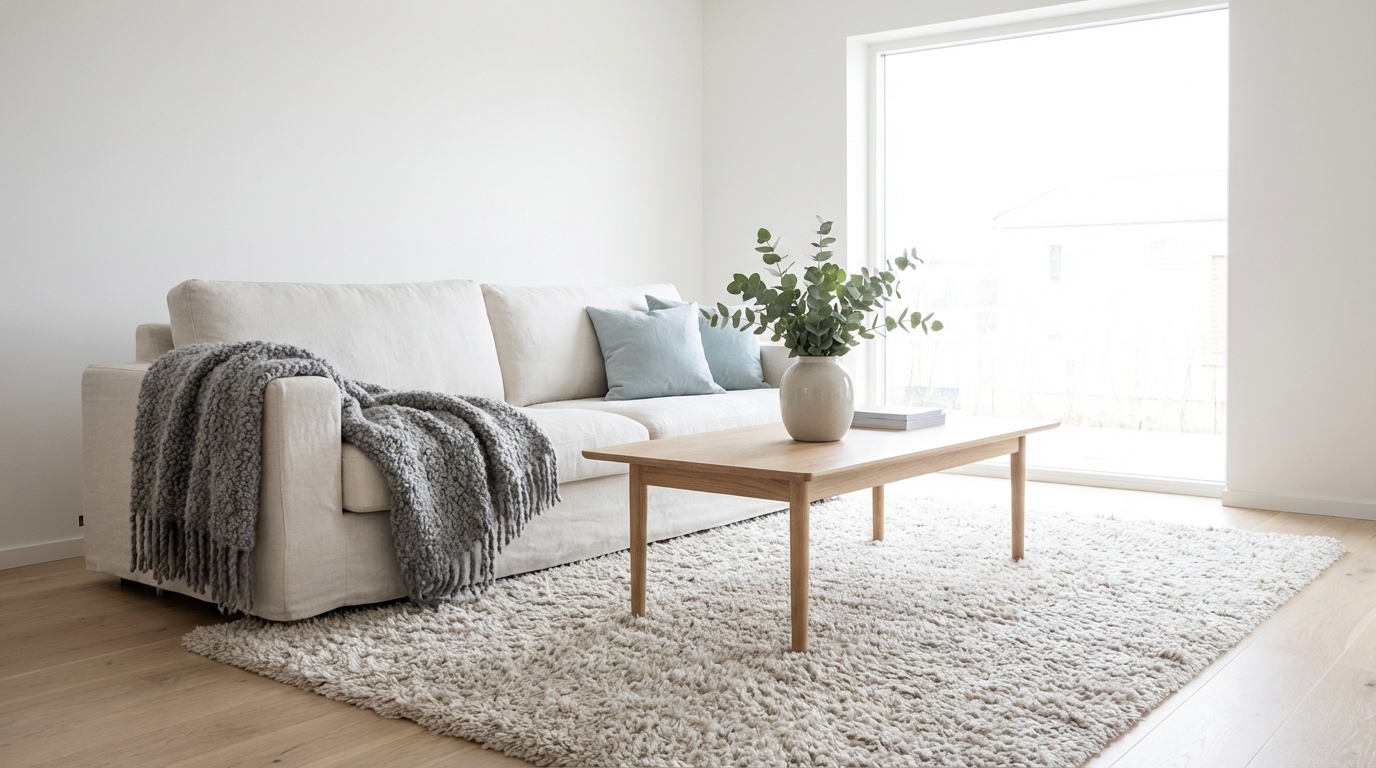
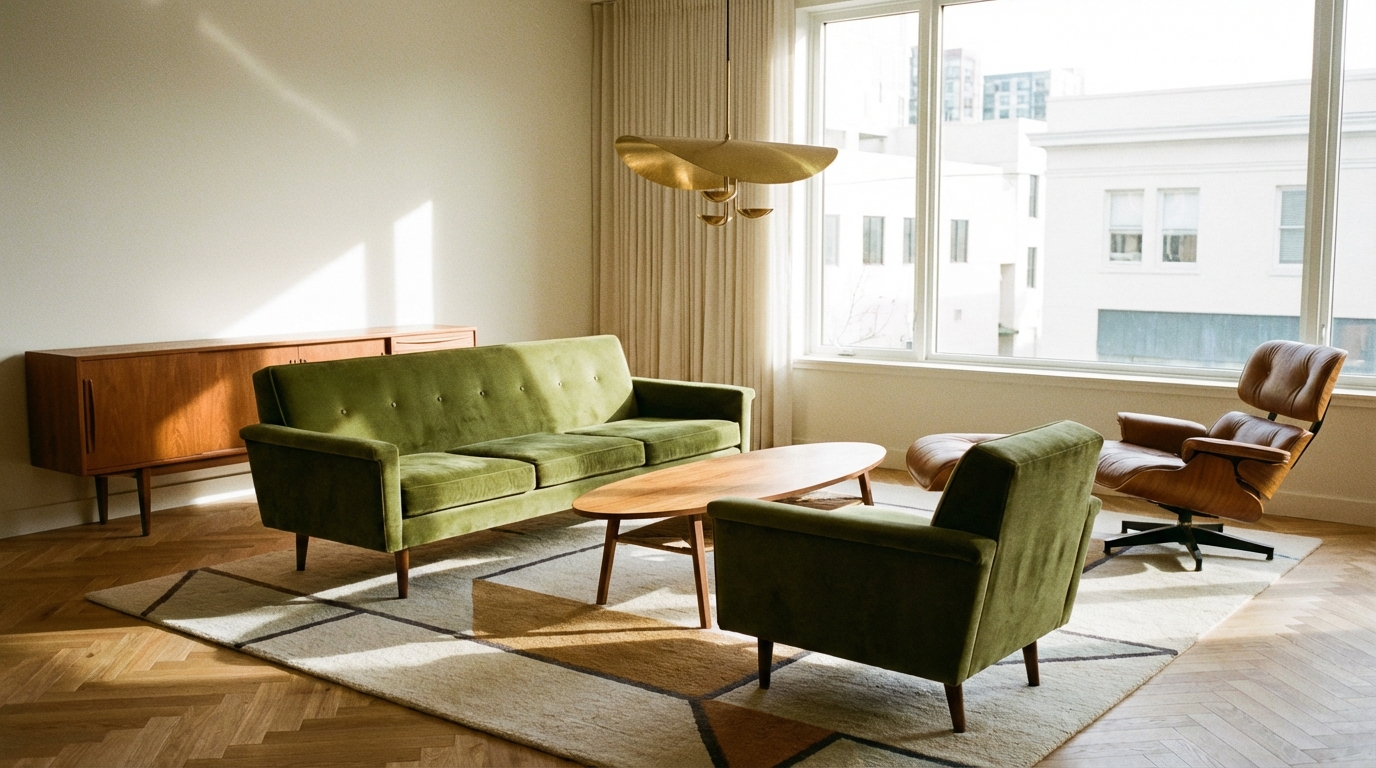
Matala sohva, pähkinäpuinen pöytä ja juuttimatto

Matala lavuode ja rosoista wabi sabi -keramiikkaa

Mattatammi ja käsintehty keramiikka avohyllyillä

Rosoista keramiikkaa ja kuivattuja oksia eteisen pöydällä

Kiviallas, tiikkiallaskaappi ja mattamusta hana

Lukunurkkaus pellavatyynyillä ja lämpimällä valolla
Japandi-sisustuksen vinkit
Rakenna paletti 60-30-10 -periaatteella
Japandin harmonia ei synny sattumasta, vaan suhteista. Peitä 60 % pinnoista lämpimällä neutraalilla perussävyllä — lämmin hiekka, kermanvalkoinen tai pehmeä helmenharmaa käyvät kaikki. 30 % menee välisävyihin kuten taupe, harmaabeige tai pehmeä terrakotta. Viimeinen 10 % jää tummille tehosteille: mustemusta vedin, pähkinäpuinen penkki tai sammalvihreä keramiikka. Testaa sävy aina luonnonvalossa paikan päällä — pohjoiseen antavassa huoneessa lämminkin beige voi kääntyä kylmäksi.
Anna wabi sabi tulla esiin
Japandin sielu piilee siinä mikä ei ole täydellistä. Valitse käsintehtyjä kulhoja joiden lasitus vaihtelee, pöytiä joissa puun syyt näkyvät ja oksankohdat kertovat tarinan, pellavaa joka ryppyyntyy rehellisesti pesun jälkeen. Japanissa kintsugi — rikkoutuneen keramiikan korjaaminen kullalla — tekee vauriosta osan esineen tarinaa. Tuo sama ajatus kotiisi: rosoinen keraaminen kulho kertoo enemmän kuin täydellinen tehdastuote. Aidot materiaalit eivät pelkää jälkiä.
Käytä vain aitoja luonnonmateriaaleja
Japandi sulkee pois muovin, kiiltävän kromin, värjätyn lasin ja synteettiset pinnat. Rakenna huoneesi puusta (vaalea tammi tai tumma pähkinäpuu), karkeasta pellavasta, raakakivestä, käsintehdystä keramiikasta, bambusta, juutista ja villasta. Suomalainen tietää nämä materiaalit jo saunarakentamisesta ja metsäkävelyiltä: ne vanhenevat kauniisti. Pähkinäpuupöytä tummuu vuosikymmenten kuluessa, pellava pehmenee joka pesun jälkeen, ja tuloksena on koti joka kertoo oman historiansa.
Jätä tilaa hengittää
Japanilaisen sisustuksen käsite ma tarkoittaa tarkoituksellista tyhjää tilaa — ei puutetta vaan aktiivista läsnäoloa. Ennen kuin tuot huoneeseen uuden kalusteen, kysy: yksinkertaistaako tämä vai monimutkaistaako? Yksi veistoksellinen tuoli sanoo enemmän kuin kolme geneeristä. Pidä työtasot lähes tyhjinä, säilytys piilossa ja seinät osittain paljaina. Japandin kauneus ei ole esineissä vaan niiden väliin jäävässä tilassa ja hiljaisuudessa. Kohtuullisuus on suomalainen arvo, jota japandi käyttää omaksi vahvuudekseen.
Kerrosta lämmin valaistus 2700 kelvinissä
Yksi kirkas kattovalaisin tuhoaa japandi-tunnelman sekunnissa. Kerrosta sen sijaan useita pehmeitä lähteitä: washi-paperilyhty istuinalueen ylle, pellavavarjostimellinen lattiavalaisin sohvan viereen, kynttilöitä iltahetkiin. Tavoittele 2700 K -hehkulamppuja — myöhäisen elokuun iltapäiväauringon sävyä. Himmennin on välttämätön jokaiselle valaisimelle. Suomen pitkä talvi vaatii kerroksellista valoa, ja japandi on yksi tavoista vastata siihen rauhallisesti.
Tuo luonto sisään tarkoituksella
Japandissa kasvit eivät ole sisustuksen jälkiajatus — ne ovat osa sommittelua. Yksi bonsai hyllyllä, kuivattuja oksia keraamisessa maljakossa ikebanan periaatteiden mukaan tai ruukkusaniainen nurkassa tuo tilaan eloa ilman sotkua. Valitse yksi vahva kasvi-ilmaisu huoneeseen sen sijaan että sirottelet pieniä ruukkuja ympäriinsä. Japanilainen ajatus: vähemmän kasveja, enemmän merkitystä. Suomalaisen metsäkulttuurin puitteissa tämä on erityisen luonteva — me tiedämme jo miltä yksi hyvä pihlajanoksa näyttää.
Japandi-olohuone
Japandi-olohuone rakentuu kolmesta perussäännöstä: matala siluetti, aidot materiaalit ja kerroksellinen lämmin valo. Aloita matalalla pellavasohvalla jonka puujalat näkyvät — ei verhoiluun piilotettuja jalkoja, ei turhia kaarteita. Yhdistä se pyöreään pähkinäpuiseen sohvapöytään joka ankkuroi tilan hallitsematta sitä. Jätä lattiaa näkyviin: yksi juutti- tai villamatto rajaa istuinalueen ilman että peittää huoneen reunasta reunaan. Yksi tai kaksi zabuton-lattiatyynyä lukunurkkaukseen tuo japanilaisen rennon istumatavan hienovaraisesti mukaan.
Valaistus tekee tai rikkoo tämän huoneen. Unohda yksi kattovalaisin: kerrosta useita lämpimiä lähteitä 2700 kelvinissä. Washi-papeririippuvalaisin istuinalueen ylle pehmeää hajavaloa varten, pellavavarjostimellinen lattiavalaisin sohvan viereen, ryhmä kynttilöitä iltoihin. Seinätaide olkoon yksittäistä ja vahvaa — yksi suuri luontoaiheinen teos yksinkertaisessa kehyksessä tai ikebana-asetelma kelluvalla hyllyllä. Japandi-olohuone onnistuu silloin kun katse kiertää huoneen takertumatta mihinkään turhaan ja jokainen pinta kutsuu istumaan tai hengittämään.

Japandi-makuuhuone
Japandi-makuuhuone riisutaan kaikesta mikä ei auta lepäämään. Keskiössä on matala pähkinä- tai tammilavuode, puettuna pestyllä pellavavuodevaatteistolla kermanvalkoisessa, pehmeässä harmaassa tai lämpimän hiekan sävyssä. Jätä sängynpääty kokonaan pois tai valitse yksinkertainen umpipuupaneeli. Yöpöytien kannattaa olla epäsymmetrisiä: toinen korkea, toinen matala. Täydellinen symmetria tekee huoneesta elottoman — wabi sabi rakastuu pieniin eroihin.
Pinnoille päätyy vain se mikä palvelee unta tai rauhaa: yksi lämpimänsävyinen valaisin, yksi kirja, ehkä pieni keraaminen astia johon laitat korun yöksi. Maalaa seinät lämpimään maasävyyn — ulottuen jopa kattoon jos uskallat — ja huone alkaa tuntua kotelomaiselta ja suojaavalta. Valitse lattiaan saakka ulottuvat pellavaverhot pehmeää valon suodatusta varten, sekä painava villahuopa sängyn jalkopäähän. Sääntö on armoton: jos esine ei auta lepäämään, se muuttaa huoneeseen.

Japandi-keittiö
Japandi-keittiössä käsityötaito ja päivittäinen rituaali kohtaavat. Valitse mattakaapit vaaleasta tammesta tai lämpimästä pähkinäpuusta push-to-open -avauksella — ei näkyviä vetimiä jotka katkaisisivat selkeät linjat. Korvaa yläkaapit vähintään yhdellä seinällä avohyllyillä joilla esittelet huolellisesti valittua kokoelmaa käsintehtyjä keraamisia kulhoja, kivitavaramukeja ja yhden tai kaksi lasipurkkia. Pidä työtasot lähes tyhjinä: puinen leikkuulauta, keraaminen välineastia ja ruukkuyrtti riittävät.
Työtasot luonnonkivestä tai mattapintaisesta betonista täydentävät puuta kilpailematta sen kanssa. Valitse hanat ja vetimet mattamustaksi tai harjatuksi messingiksi — ei koskaan kiiltävää kromia. Yksi washi-paperinen tai patinoidusta messingistä tehty riippuvalaisin keskittää työpisteen lämpimään ja pehmeään valoon. Japandi-keittiö toimii siksi, että jokainen näkyvä esine on sellainen jota oikeasti käytät: keraamiset kulhot ovat ne joista syöt, puulaudat ne joilla pilkot. Ei koristeita näytille — vain aitoja työkaluja asetettuna huolella.

Usein kysytyt kysymykset
Japandi on sisustustyyli joka yhdistää japanilaisen wabi sabin ja pohjoismaisen pelkistyksen yhdeksi kokonaisuudeksi. Se suosii aitoja luonnonmateriaaleja (pähkinäpuu, pellava, kivi), rauhallista ja hillittyä väripalettiä sekä tarkoituksellista yksinkertaisuutta. Jokainen esine ansaitsee paikkansa käytön tai merkityksen kautta — koriste koristeen vuoksi ei kuulu tyyliin.
Aloita 60-30-10 -väriperiaatteesta: 60 % lämpimiä neutraaleja seinillä, 30 % välisävyjä tekstiileissä, 10 % tummia aksentteja kalusteissa. Valitse vain aitoja luonnonmateriaaleja — karkeaa puuta, pehmeää pellavaa, rosoista keramiikkaa — ei muovia tai kromia. Pidä pinnat pääosin tyhjinä ja kerrosta valaistus lämpimäksi 2700 kelviniin kirkkaan kattovalon sijaan.
Wabi sabi on japandin sielu. Se on japanilainen filosofia joka löytää kauneuden epätäydellisestä, väliaikaisesta ja epäsymmetrisestä. Käytännössä se tarkoittaa käsintehtyjä keraamisia kulhoja joissa lasitus vaihtelee, pähkinäpuupöytää jossa oksankohdat näkyvät, ja pellavaa joka rypistyy rehellisesti pesun jälkeen. Japandi tuo wabi sabin pohjoismaiseen selkeyteen — täydellisyyden tavoittelu tippuu pois, ja jäljelle jää aitous.
Kyllä — japandi on suositumpi kuin koskaan vuonna 2026, ja se kehittyy tummempien ja tunnelmallisempien sävyjen suuntaan. Savutammi, espressopähkinäpuu ja syvä hiilenharmaa korvaavat vaaleamman paletin luoden Dark Japandi -alatyyliä, joka tuntuu kotelomaiselta ja suojaavalta. Homeifyn avulla näet alle 30 sekunnissa miltä sekä klassinen että Dark Japandi näyttäisivät omissa huoneissasi.
Oliko tästä artikkelista apua?
Lataa
Muunna mikä tahansa huone tekoälyn avulla – lataa Homeify ja aloita kotisi sisustussuunnittelu ilmaiseksi.